
NEW DELHI: Kia's Carens Clavis EV brochure lists HTK+ as a 7-seat version, while the other listed trims offer 6-seat and 7-seat layouts. The distinction is in the passenger arrangement, not simply the battery label. The official material identifies captain seats for the 6-seat second row and a split bench arrangement for the 7-seat cabin.
| Clavis EV trim | Seating plan in Kia brochure | Battery |
|---|---|---|
| HTK+ | 7 | 42 kWh |
| HTX E | 6 or 7 | 42 kWh |
| HTX | 6 or 7 | 42 kWh |
| HTX E ER | 6 or 7 | 51.4 kWh |
| HTX ER | 6 or 7 | 51.4 kWh |
| GTX ER | 6 or 7 | 51.4 kWh |
| HTX+ ER | 6 or 7 | 51.4 kWh |
| GTX+ ER | 6 or 7 | 51.4 kWh |
| X-Line ER | 6 or 7 | 51.4 kWh |
This is a cabin-layout guide, rather than a new price list. Kia's official specification page and downloadable brochure were checked on 6 November 2026. The seat count should remain attached to the full configuration name when comparing paperwork, cabin photographs or an individual vehicle.
Captain seats and a split bench serve different arrangements
Kia describes the captain seats as having sliding, reclining and tumble functions. The specification material also describes a second-row split bench for the larger passenger count. These are different ways of dividing the same row, so the model name alone cannot identify the seat arrangement in a photograph.
For a household that frequently travels with grandparents or children, the useful starting point is the actual passenger roster. A seat-count label establishes the nominal layout. It does not establish personal legroom, the suitability of a child restraint or the ease with which a particular passenger can move into the rearmost row.
Keep the seating choice visible on any configuration comparison: the same trim designation can describe different passenger arrangements, and the battery suffix alone will not identify which cabin is meant.
Third-row access is a separate function
The showroom page highlights the second row's one-touch electric tumble function as the route to the rear seats. That feature concerns access. It should be kept separate from the sliding and reclining adjustments used once passengers are seated, and from the choice between a bench and captain seats.
This distinction is useful during a stationary cabin demonstration. The access movement, seating adjustment and return to a usable passenger layout are different things to observe. A promotional clip showing a seat tumble does not, by itself, establish how easily a particular family member will enter or exit the vehicle.
The official specification page describes a third row with a 50:50 split, reclining and full-flat folding. Folding is a way of changing the space used for luggage. It does not mean an occupied seating position and the space created by folding that position are available simultaneously.
Storage is distributed around the cabin
Kia lists a covered 25-litre frunk in the vehicle's equipment. The front compartment is separate from the space behind the passenger rows. Its existence is useful context for a family EV, but its volume should not be presented as a measurement of the rear boot or a luggage allowance with all seats occupied.
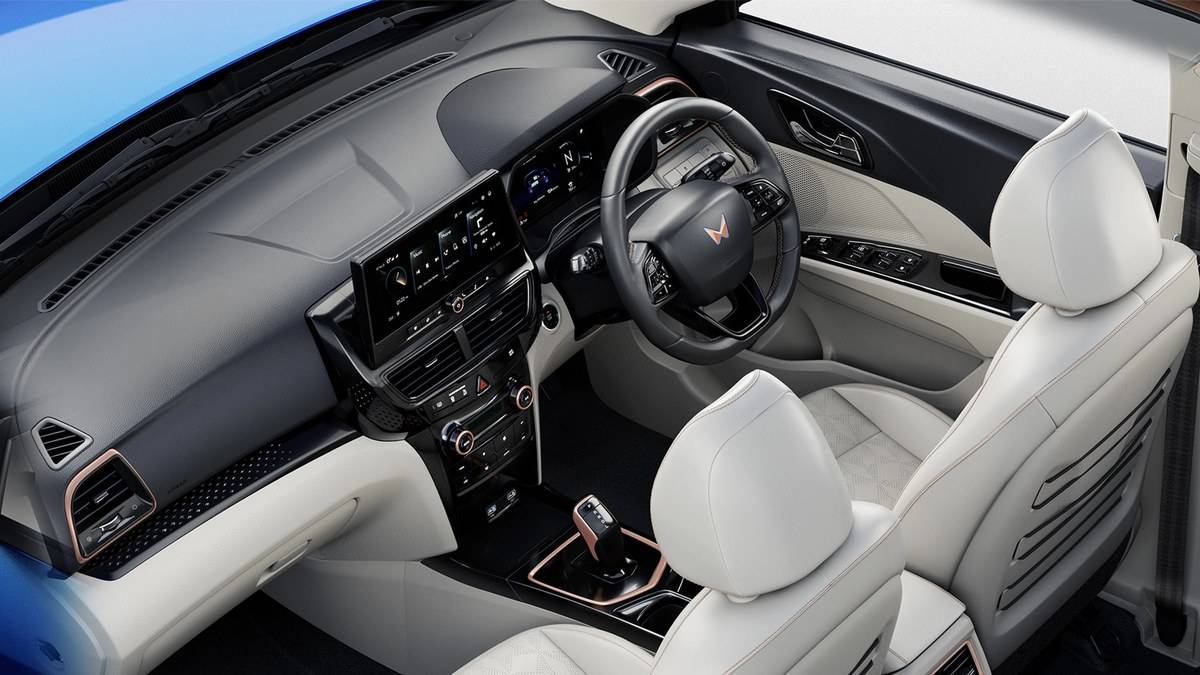
The showroom also shows a floating console with a sliding cover and cup holders, alongside the column-mounted shift-by-wire selector. These illustrate how the front cabin is organised. They are more relevant to small items and everyday access than to a claim about the amount of holiday baggage the vehicle can carry.
The specification lists a body length of 4,550 mm and width of 1,800 mm. These describe the external vehicle package. They are not direct measurements of the aisle, foot space or headroom around the third row. Those questions require looking at the actual cabin arrangement rather than extrapolating from overall dimensions.
Rear comfort features need their own configuration check
The official equipment material includes air vents for the rear passenger rows and rear fan-speed control. The showroom highlights a retractable seatback table and other cabin conveniences across the range. Before attributing a highlighted feature to a particular vehicle, its trim and seating configuration should be matched to the relevant equipment listing.
Our existing Clavis EV price report is the separate price reference. The combustion-engine Clavis report concerns another powertrain range. Similar names should not be used to transfer seating or equipment claims between those vehicles.
For a different Kia people-carrier layout, our Carnival seating explanation provides a separate reference. The Clavis EV's own brochure remains the source for its seat-count map: HTK+ is listed with 7 seats, and the remaining listed trims offer a choice of 6 or 7. Keep that choice visible alongside the trim and battery designation.
Official sources: Kia specifications, showroom and official brochure.