NEW DELHI: Kawasaki's official India page for the 2025 Ninja H2 SX lists the Standard edition at Rs 35,18,000. Its specification brings a supercharged engine together with radar assistance and touring bodywork. This is a guide to that model-year listing, which does not establish current dealer availability. Price as of 15 November 2026, 23:26 IST.
| 2025 Ninja H2 SX Standard | Official figure |
|---|---|
| Listed price | Rs 35,18,000 |
| Engine | 998 cc supercharged inline four |
| Power | 200 PS at 11,000 rpm |
| Power with ram air | 210 PS at 11,000 rpm |
| Torque | 137.3 Nm at 8,500 rpm |
| Curb mass | 266 kg |
| Seat height | 835 mm |
| Fuel capacity | 19 litres |
Keep the model year and edition together
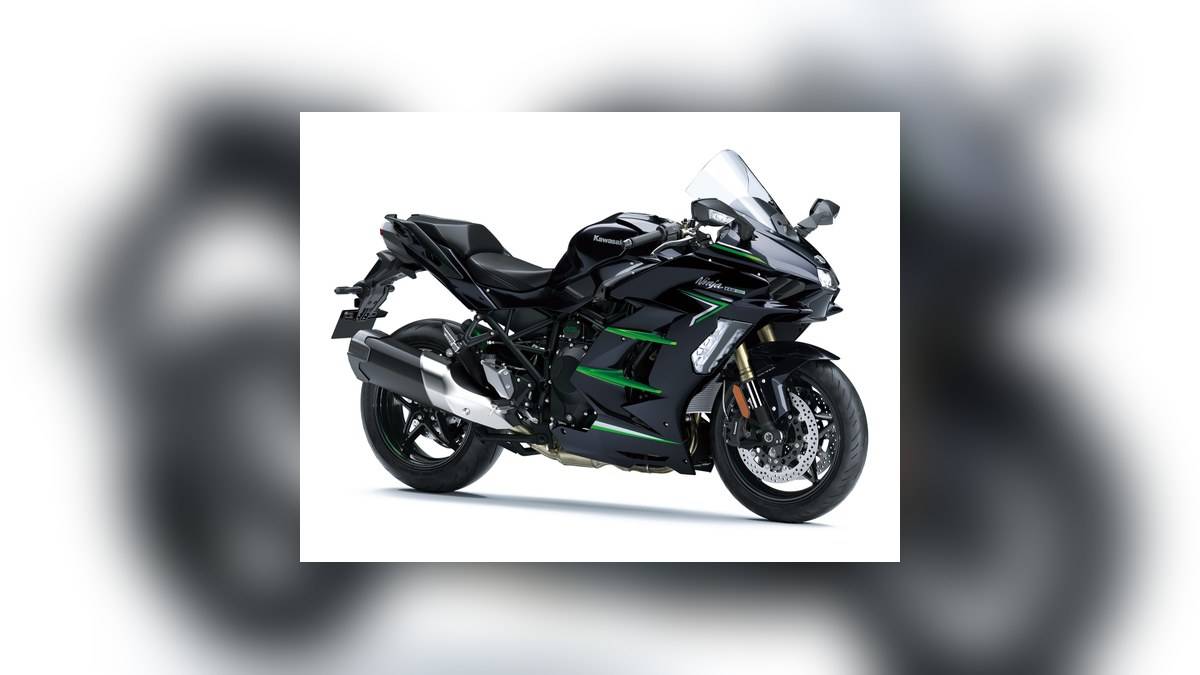
The page identifies this motorcycle as the Ninja H2 SX, with a Standard edition in HD Metallic Diablo Black. It is important to retain that identity. The SX and SX SE names should not be used interchangeably, and equipment from a different edition should not be added merely because the motorcycles share a family resemblance. This guide follows the named page.
The listed figure is a reference for the published motorcycle, rather than proof of an orderable allocation or a delivery commitment. An older model-year page can remain accessible after the wider catalogue changes. For that reason, the price here is explicitly tied to the page and the date checked. It is not presented as a fresh launch announcement or a nationwide stock claim.
Performance figures need their labels
Kawasaki gives both ordinary maximum power and a separate figure with ram air. Keeping those labels is essential. Selecting the larger number without its condition would remove information the manufacturer itself supplies. Neither figure should be converted into an unsupported acceleration result, because peak output and a measured performance test are different kinds of evidence.
The supercharged engine explains the H2 part of the motorcycle's identity, but the SX's full bodywork and touring features explain its intended role. It sits at the intersection of performance and distance riding. That makes luggage provision, wind protection and cockpit integration meaningful parts of a full guide, rather than minor additions after an engine table.
For Indian readers, the interesting question is how those two priorities coexist. A long trip involves time spent at a steady pace, navigation decisions, passenger needs and stopping routines. Maximum power describes only a small part of that experience. The SX specification deserves to be read as an attempt to combine those demands, without assuming that an equipment sheet proves the quality of the resulting ride.
Radar assistance has several distinct functions
The model page describes adaptive cruise control, forward-collision warning and blind-spot detection. These address different situations: following traffic, a developing hazard ahead and a vehicle outside the rider's immediate view. They are assistance features. Treating the collection as autonomous riding would fundamentally misrepresent the relationship between the rider and the motorcycle.
The distinction also matters when interpreting a warning. An alert communicates information; it does not establish that the rider has a clear route around an obstacle. Similarly, maintaining a following distance is not a substitute for reading changing traffic conditions. The relevant ownership task is understanding how the functions behave and how to take control when conditions require it.
Vehicle Hold Assist is described separately as engaging the rear brake after the stopped rider firmly applies the brakes. That belongs to the stopping and starting routine, rather than the engine's performance story. On a substantial touring motorcycle, such low-speed functions can be important even when they attract less attention than the power figure. They still operate within their intended conditions.
Touring hardware and connected equipment
The official page includes a large TFT, Kawasaki SPIN connectivity and tyre-pressure monitoring. These are different layers of information: the motorcycle's instruments, connected applications and tyre condition. A useful assessment considers how readable and manageable that information is for the rider, rather than treating the mere presence of a screen as a complete measure of cockpit quality.
Panniers are described as accessories with an integrated mounting arrangement. That wording matters when interpreting the listed price. A mounting system does not mean the luggage itself is automatically supplied. The same discipline applies to photographs: an accessory shown on a manufacturer's page should not silently become standard equipment in a price guide.
How to place the SX among other touring motorcycles
Our Kawasaki Ninja 300 and Ninja 500 2027 price in India: Rs 3.34 lakh and Rs 5.76 lakh offers related sports-bike context, while the Kawasaki 650 price: Z650 Rs 7,26,000, Ninja 650 Rs 7,91,000, Versys 650 Rs 8,63,000 covers a different touring format. The Ninja 300 clutch explained: two cam functions on the 296 cc twin supplies another reference for readers considering distance-oriented motorcycles. These links do not imply matching availability or equivalent equipment.
The SX listing is most useful when its boundaries stay clear: a particular model year, a named edition and an exact published price. Its engine, assistance systems and luggage arrangements explain the proposition. Current allocation, a final on-road quotation and a ride-based judgement about comfort remain separate matters that this official-page reporting does not claim to establish.
Official source: Kawasaki India 2025 Ninja H2 SX.