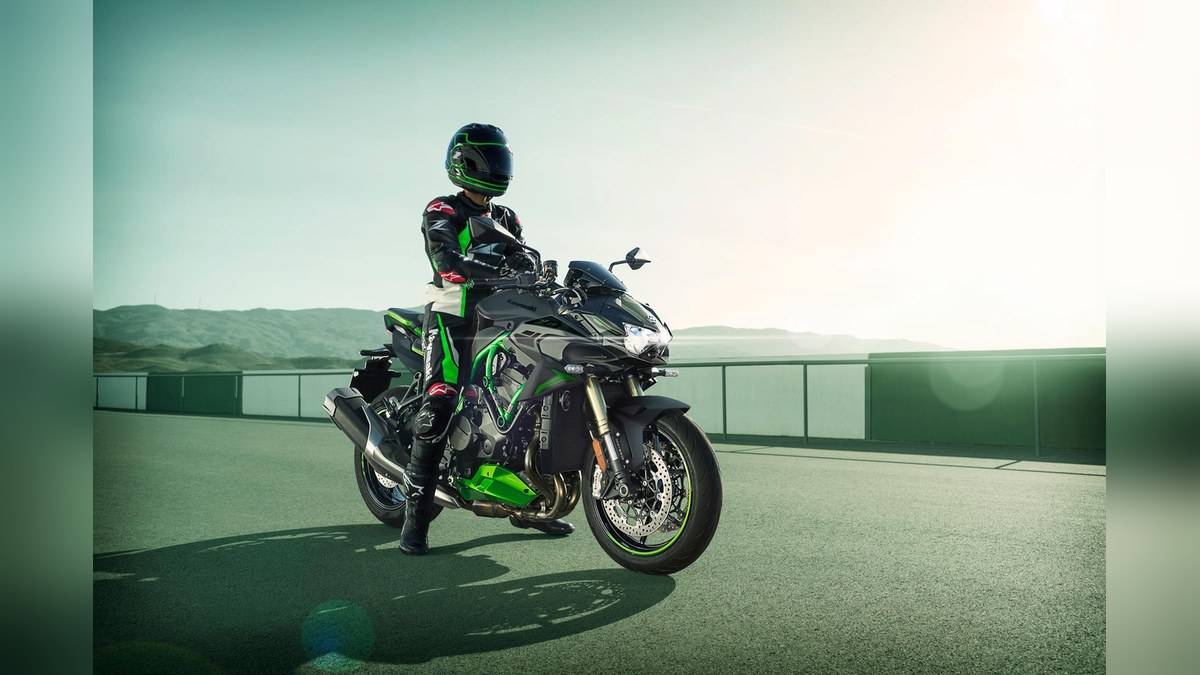
NEW DELHI: Kawasaki's official India page lists the 2025 Z H2 SE Standard at Rs 30,56,000. The supercharged roadster combines electronic suspension with a substantial rider-assistance package. Its price sits alongside a specific model-year specification, rather than a newly announced launch. Price as of 15 November 2026, 23:26 IST.
| Z H2 SE Standard | Official figure |
|---|---|
| Listed price | Rs 30,56,000 |
| Engine | 998 cc supercharged inline four |
| Maximum power | 200 PS at 11,000 rpm |
| Maximum torque | 137 Nm at 8,500 rpm |
| Curb mass | 240 kg |
| Seat height | 830 mm |
| Tank capacity | 19 litres |
What the Standard listing covers
The product page names a Standard edition and a Metallic Matte Graphenesteel Gray, Ebony and Mirror Coated Black colour combination. It supplies a numerical price for that listing. It does not provide evidence of multiple independently priced Z H2 SE trims, so a broad variant-price range would be misleading. Nor does a readable model page establish immediate dealer availability.
The SE suffix is important. This is the version whose equipment includes Kawasaki Electronic Control Suspension with Showa Skyhook technology and Brembo Stylema front calipers. It should not be reduced to a generic Z H2 entry, because that would obscure the equipment being described. A reader comparing quotations needs the full model identity as well as the headline price.
Supercharging changes the roadster conversation
The engine's defining feature is its supercharger. Its presence distinguishes this motorcycle from roadsters that seek their performance entirely through a naturally aspirated engine. That is a mechanical difference, not evidence of a measured advantage in every riding situation. This guide uses the advertised output and does not invent acceleration times, lap times or a top speed.
The published torque peak also belongs in the picture alongside maximum power. These figures occur at different engine speeds, and neither describes the whole delivery curve. A rider interested in how the motorcycle responds during ordinary traffic movement needs more than the peak number. An official specification can establish the engine layout and output; it cannot substitute for a properly conducted ride assessment.
India's large-roadster discussion often starts with capacity, but the Z H2 SE makes that a particularly incomplete sorting method. Its forced-induction layout, electronic suspension and high published mass all influence the kind of motorcycle being considered. Treating it merely as another litre-class naked bike would leave out the characteristics that make its specification unusual.
Electronics serve different jobs
The product page describes cruise control, a quickshifter, traction control, an inertial measurement unit and selectable power delivery. These systems should be understood individually. Cruise control addresses maintaining a chosen pace; shifting assistance addresses gear changes; traction intervention addresses available grip. A long equipment list does not mean that every system is doing the same work or operating in every circumstance.
Electronic damping is another separate function. Its purpose is to alter suspension response as conditions change. Spring preload still needs consideration when the load changes, and the specification identifies manual preload adjustment. That distinction matters for a motorcycle expected to move between solo use and carrying a passenger. Semi-active suspension is not a promise that physical setup becomes irrelevant.
The riding position and bodywork place this motorcycle in the naked-roadster category. For an Indian owner planning substantial highway use, wind exposure is therefore a different question from engine performance. Having ample engine output does not establish the comfort of a particular rider at a particular cruising pace. The same applies to urban use: electronic assistance cannot remove the physical work of manoeuvring the motorcycle.
Display, accessories and ownership context
Kawasaki describes a colour TFT with Bluetooth connectivity through RIDEOLOGY THE APP. The appropriate distinction is between the functions built into the instrument panel and those requiring a compatible connected device. A connectivity label should not be expanded into an unsupported promise that every navigation or phone feature is included. The actual handset and application remain part of that experience.
Accessories shown separately on the model page should also remain separate in any equipment comparison. A photograph containing luggage or another add-on is not enough to treat it as standard. The practical reporting question is what the named Standard edition includes, followed by which optional items change the intended use. This avoids making the entry price appear to cover an imagined complete touring package.
Related roadster context is available in the Kawasaki Z900 Rs 9,99,000 to ZX-10R Rs 20,79,000: big bike price list, the Kawasaki 650 price: Z650 Rs 7,26,000, Ninja 650 Rs 7,91,000, Versys 650 Rs 8,63,000 and the Kawasaki Ninja 300 and Ninja 500 2027 price in India: Rs 3.34 lakh and Rs 5.76 lakh. They provide different reference points for performance-bike readers; their presence here does not imply equivalent specifications or an independently verified price ranking.
Official source: Kawasaki India 2025 Z H2 SE.