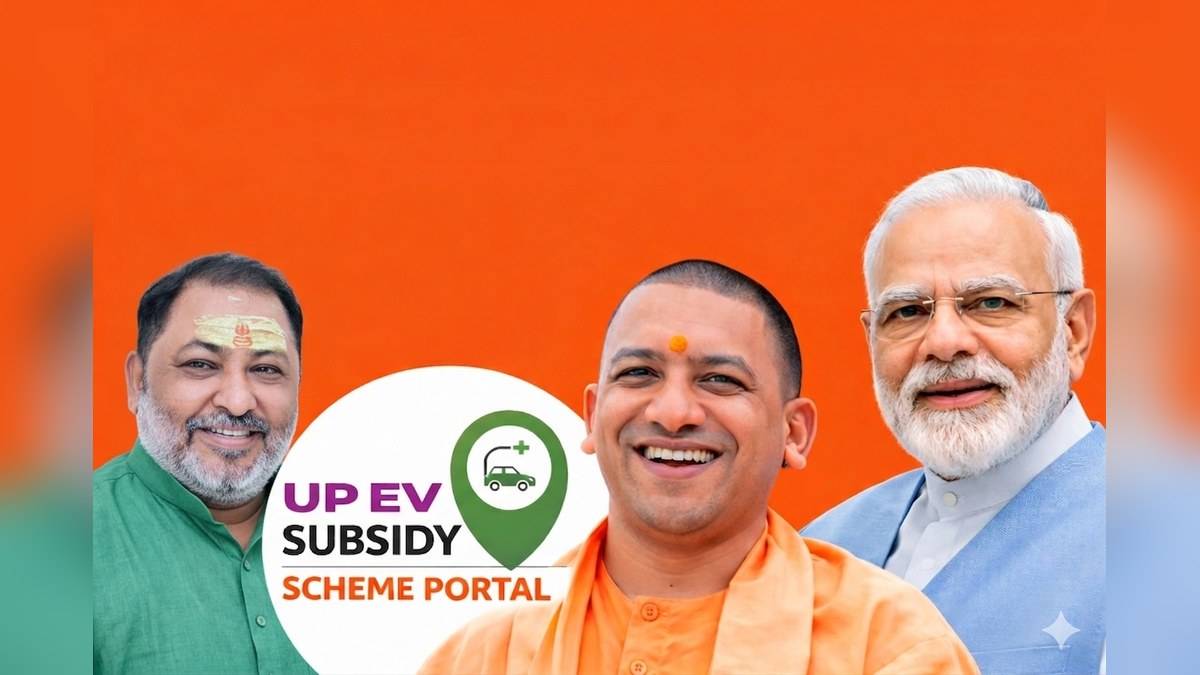
NEW DELHI: Uttar Pradesh's notification dated 5 November 2025 provides a 100% registration-fee exemption for eligible pure electric vehicles purchased and registered in the state from 14 October 2025 to 13 October 2027. The order's operative wording concerns registration fees. Buyers should not use it alone as proof of a purchase-subsidy entitlement or a particular road-tax treatment.
| Question | What the opened official sources establish |
|---|---|
| Registration-fee relief | 100% for eligible pure EVs |
| Current window in the notification | 14 October 2025 to 13 October 2027 |
| Territorial condition | Purchased and registered in Uttar Pradesh |
| Earlier window also recorded | 14 October 2022 to 13 October 2025 |
| Separate purchase-subsidy FAQ | Contains an older eligibility period; check the applicable order |
Start with the specific notification
The English text expressly defines the eligible vehicles for this exemption as pure EVs. A household comparing battery-electric cars with vehicles that also use combustion engines should therefore check the exact powertrain and registration classification. A broad marketing description containing the word electric is insufficient to establish this benefit.
The operative dates cover the policy's fourth and fifth years. The notification does not attach a manufacture-in-UP condition to that window. This matters because the portal's older FAQ describes an earlier formulation linking later-year relief to vehicles manufactured, purchased and registered in the state. Read the dated amendment when assessing registration fees.
That difference should be explained on the quotation. Ask for the registration-fee entry and the document supporting its treatment. If a seller cites the older FAQ instead, request an explanation of how the later notification has been applied to the particular vehicle and registration date.
Keep purchase subsidy in a separate column
The subsidy FAQ describes a four-wheeler incentive of 15% of ex-factory cost, capped at Rs 1 lakh, within an allocation of Rs 250 crore for up to 25,000 vehicles. However, the same FAQ states an older registration eligibility period ending in October 2023. Those entries should not be presented as an unconditional subsidy offer for a fresh purchase today.
The portal homepage also carries an extension notice for pure EVs through October 2027. Its linked document could not be read during this check, so that headline has not been used to expand the purchase-subsidy window. The independently readable November notification establishes the registration-fee position reported here.
For a buyer, the practical consequence is straightforward: require a separate official basis for any promised cash reimbursement. Ask whether the amount is already reflected in the invoice, remains subject to approval, or depends on a claim made after purchase. Record the answer before treating the amount as available money.
Prepare the documents before making a claim
The official application guidance says vehicle details are drawn from the vehicle portal after the registration number is entered. Applicants need to complete the remaining information, including bank details. It also asks for the photograph and signature used during registration, helping align the subsidy application with the underlying vehicle record.
For bank verification, the guidance permits a cancelled cheque or passbook and requires the account to belong to the applicant. Check the account holder's name against the application before submission. A family member arranging the paperwork should keep the purchaser's identity and banking details consistent throughout.
The guidance warns that incorrect information can prevent payment. Its current notice also describes claim disposal and payment through the relevant RTO for applications other than e-buses. Treat the portal as the place to read the applicable process, rather than assuming every category follows the same administrative route.
Compare ownership costs after resolving eligibility
Registration-fee relief and a reimbursement claim affect different stages of the purchase. Keep separate copies of the quotation, final invoice, registration record and any application acknowledgment. This makes it easier to explain a discrepancy later without reconstructing the transaction from a sales message or an informal estimate.
Battery rental proposals add a further contract to examine. Our UP Raises Fair-Price Dealer Margin to ₹125 Per Quintal; Araji Line Joins Launch, EV battery rental explained: BaaS prices for Punch.ev, Syros EV, Creta, BE 6 and MG Windsor EV price: Rs 14,84,800 or Rs 9.99 lakh plus Rs 3.99/km on BaaS provide background for those comparisons. Model pricing cannot establish state-policy eligibility, which depends on the relevant official terms and the actual transaction.
When a quotation describes all these benefits as a single EV subsidy, ask for it to be rewritten. The fee exemption can then be matched to the dated notification, while any purchase incentive can be assessed against its own approval conditions. This avoids committing household funds on the strength of an older FAQ entry.
Official sources: the 5 November 2025 notification, UP subsidy FAQ and application guidance, read on 15 November 2026.