NEW DELHI: Triumph lists the Speed Triple 1200 RS from Rs 21,75,900 on its India product page. The specification combines a 1,160 cc triple with semi-active suspension and extensive electronic adjustment. The starting figure does not provide a complete colour-by-colour quotation. Price as of 15 November 2026, 23:26 IST.
| Speed Triple 1200 RS | Official specification |
|---|---|
| Starting price | Rs 21,75,900 |
| Engine | 1,160 cc inline triple |
| Power | 183 PS at 10,750 rpm |
| Torque | 128 Nm at 8,750 rpm |
| Wet weight | 199 kg |
| Seat height | 830 mm |
| Tank | 15.5 litres |
| Display | 5-inch colour TFT |
Reading the RS as a complete roadster
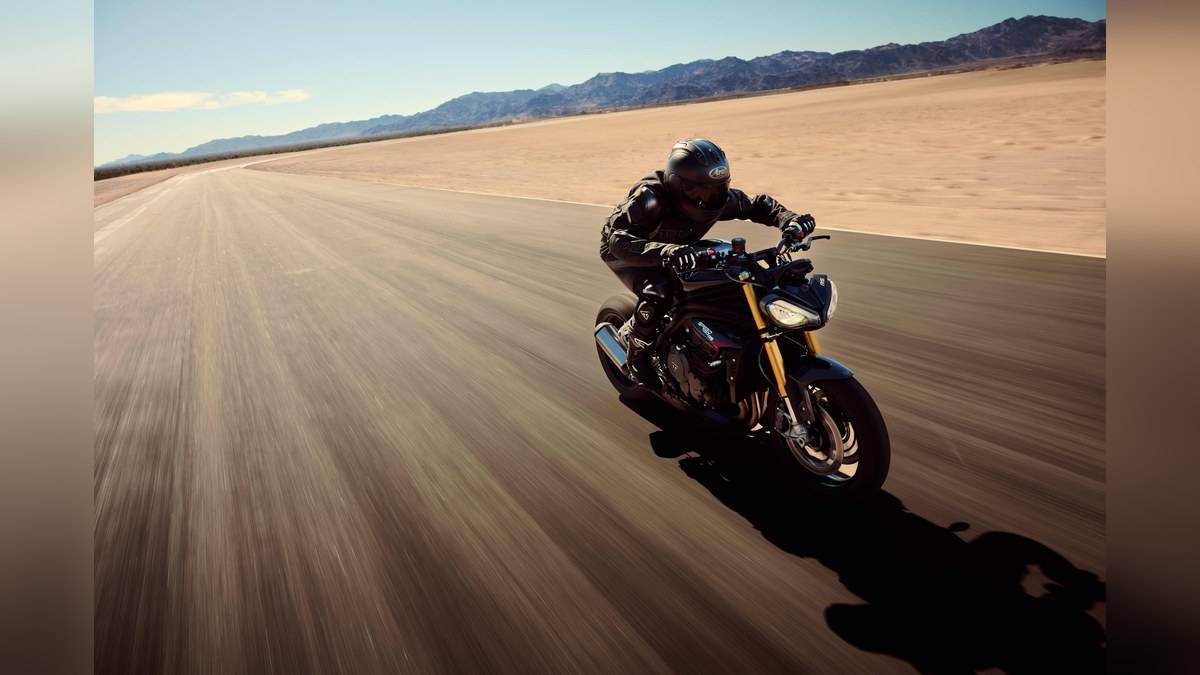
The important feature of this listing is how much of the motorcycle's character is adjustable. Engine response, suspension behaviour and rider assistance all form part of its specification. That changes the question from simply how much power it has to how the rider can configure the complete package. A bare horsepower comparison would miss much of what distinguishes this RS.
Triumph identifies a separate RX elsewhere in the family, but the starting price and equipment in this guide belong to the RS. They should not be transferred between versions. The opened RS page does not provide a complete priced table for the wider family, so this is a guide to the named motorcycle rather than an invented range-wide price list.
Suspension is central to the specification
Öhlins SmartEC3 provides semi-active damping, with a menu-based fixed setup also available. The point of such adjustment is to let the rider change how the motorcycle responds under different demands. It does not turn a sports roadster into every other kind of motorcycle, and it does not remove the effects of tyre choice, load or road surface.
This matters in Indian use because the same owner may want to ride through town, use a highway and attend a circuit session. Those are different demands on suspension and controls. The existence of an adjustable system creates scope to address them, but the specification alone cannot prove that a particular setup is ideal for a particular route. That still requires experience and appropriate adjustment.
The aluminium chassis, single-sided swingarm and sporty tyres further define the package. Their significance is collective: the RS is organised around a performance-roadster brief. It would be misleading to describe the motorcycle as a touring machine merely because it also offers convenience features. Equally, its sports emphasis does not make those convenience features unimportant to an owner using it beyond a circuit.
Separate the assistance systems
The official equipment includes Rain, Road, Sport, Track and Rider modes. It also describes independently adjustable front-wheel lift control and engine-braking control. Those are different tools. A riding-mode label is a starting configuration, while the individual controls concern particular aspects of the motorcycle's response. Counting them together as one undifferentiated safety package loses that distinction.
Brake Slide Assist is specifically described for Track mode. That limitation matters more than a broad claim that the motorcycle has advanced electronics. A function calibrated for circuit use should not be presented as a routine road benefit. The published feature description establishes its intended setting, not permission to ignore the conditions in which it is used.
Cornering ABS, traction control and the up-and-down quickshifter are listed as standard. They support different parts of riding, rather than adding up to autonomous control. The rider continues to choose speed, braking points and a line through a corner. Nothing in this specification justifies suggesting that electronics can compensate for insufficient visibility or grip.
Everyday functions alongside the sporting brief
Triumph also lists cruise control, keyless operation and My Triumph connectivity. These belong in the practical side of the guide because a high-performance roadster still has to be used between favourite stretches of road. Controls, device pairing and security settings become part of ownership, even though they do not appear in an engine-output table.
The accessory section separates items such as heated grips and a flyscreen from the main specification. That boundary should remain visible in any price comparison. The published entry figure cannot fairly be described as including whichever optional equipment appears desirable for a particular use. Nor can a windscreen accessory be treated as evidence that the standard motorcycle has equivalent weather protection.
Rivals and the right context
The relevant conversation includes other performance roadsters, but comparisons need matching assumptions about equipment and use. Our Triumph Speed T4 price: Rs 2,10,158 ex-showroom Delhi offers one reference, while the Plan Speed 400 servicing around 16,000 km or 12 months provides another. The KTM 1390 Super Duke R vs 890 Duke R price: 890 Duke R starts lower at Rs 14,50,000 supplies context within Triumph's own roadster range.
The RS ultimately needs to be understood through its engine, adjustable chassis and standard electronics together. The starting price is precise; the judgement about suitability is personal. This reporting establishes what Triumph publishes, without turning a specification sheet into an unperformed road test or claiming a measurable performance advantage over a rival.
Official source: Triumph India Speed Triple 1200 RS.