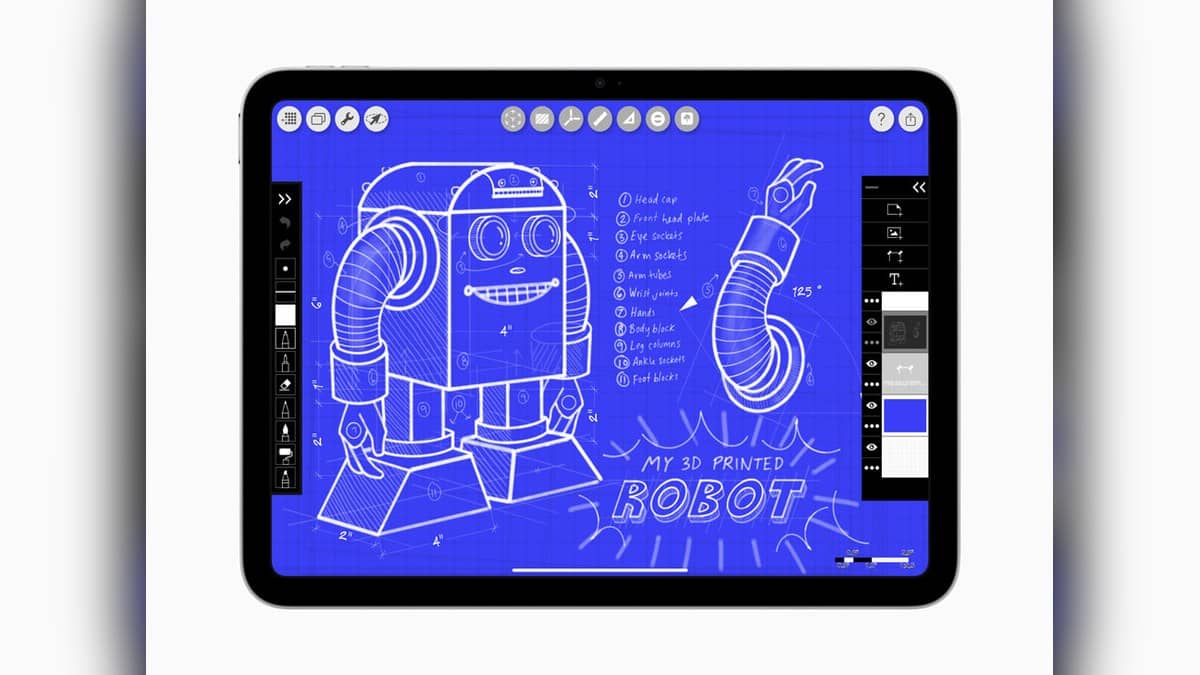
NEW DELHI: Xiaomi Pad 8 starts lower at Rs 35,999 for the 8GB RAM, 128GB Standard version on Xiaomi's India store, while Apple's iPad A16 costs Rs 49,900 with 128GB and Wi-Fi. The Rs 13,901 difference separates tablets with similar storage capacities but different screens, accessories and software. These are device prices before bank cashback or exchange benefits.
| Feature | iPad A16 | Xiaomi Pad 8 |
|---|---|---|
| Compared configuration | 128GB, Wi-Fi | 8GB RAM, 128GB, Standard |
| Official India price | Rs 49,900 | Rs 35,999 |
| Processor | Apple A16 | Snapdragon 8s Gen 4 |
| Display | 11-inch Liquid Retina, 2360 x 1640 | 11.2-inch LCD, 3200 x 2136, up to 144Hz |
| Weight | 477g, Wi-Fi | 485g, Standard |
| Storage choices | 128GB, 256GB, 512GB | 128GB, 256GB |
Price as of 4 November 2026, 00:19 IST.
What the entry prices actually cover
The comparison uses Xiaomi's Graphite Grey Standard tablet and Apple's Wi-Fi iPad. It does not treat a tablet-and-pen bundle as the same purchase. Xiaomi also lists Nano Texture configurations and accessory combinations, which should be checked separately rather than assumed to be included at the entry price.
Apple's store lists the Wi-Fi iPad with 256GB at Rs 61,900 and 512GB at Rs 85,900. Those figures matter if a reader has already outgrown 128GB: a comparison between the cheapest boxes can obscure the storage requirement that brought them to the shop in the first place.
Similar diagonals, different working space
Xiaomi's panel has a higher stated pixel resolution and an advertised refresh rate of up to 144Hz. Apple's specifications list a 500-nit Liquid Retina display. Refresh rate and resolution describe different things, so neither should be read as a promise that every app, streamed film or game will look or run the same way.
For a student reading a scanned textbook beside handwritten notes, the useful question is how much legible content remains after splitting the screen. The diagonal alone cannot answer that. Xiaomi's 3:2 panel and its Workstation Mode make document layouts a central part of this comparison, rather than treating both devices simply as portable televisions.
The Standard Pad 8 is thinner on paper at 5.75mm, against the iPad's 7.0mm, yet the Wi-Fi iPad is slightly lighter. That combination is a reminder that thinness and carrying weight are separate measurements. A cover or keyboard also changes the package a commuter actually carries.
Look past the processor names
The A16 and Snapdragon 8s Gen 4 belong to different software platforms. Their names alone do not establish a performance winner. A family choosing between them needs to check its actual learning, drawing or office applications, including file formats and subscriptions, rather than assume a faster-looking specification guarantees the right workflow.
Xiaomi makes another distinction within its own range: the 128GB version uses UFS 3.1 storage, while the 256GB model uses UFS 4.1. Its headline storage specification therefore does not apply uniformly. That detail matters when reading promotional material for the family alongside the price of this particular entry model.
Accessories and connections change the comparison
The iPad supports Apple Pencil USB-C and Apple Pencil first generation. The latter needs the USB-C to Apple Pencil Adapter for pairing and charging. Anyone reusing an older Pencil should check that setup before assigning a budget to accessories. For a separate ownership question, our iPad A16 battery service guide explains the AppleCare battery threshold.
External storage users should also read our Xiaomi Pad 8 cable guide and iPad A16 USB-C explainer. Matching connectors do not automatically mean matching transfer capabilities, and a cable supplied for charging should not be assumed to unlock every advertised port feature.
The price gap is consequently a starting point for understanding two different tablet packages. The Pad 8 offers the lower verified entry price here; the iPad has its own accessory and application requirements. This comparison reports the official configurations and their practical implications, without turning a specification sheet into a hands-on verdict.
Xiaomi lists a 9200mAh typical battery, 45W tablet charging and a 67W adapter in the box. Its battery specification also names 22.5W wired reverse charging. The Standard model's entry memory uses LPDDR5X RAM, while the 12GB configuration uses LPDDR5T.
Apple lists a 28.93Wh rechargeable lithium-polymer battery and supplies a 20W USB-C adapter plus a one-metre USB-C charge cable. The iPad has a 12MP f/1.8 rear camera and a landscape 12MP Center Stage front camera with f/2.4 aperture. Its A16 specification gives five CPU cores, four GPU cores and a 16-core Neural Engine. Apple also lists Wi-Fi 6 and Bluetooth 5.3.
Official sources: Xiaomi India store, Pad 8 specifications, Pad 8 features, Apple India store and iPad A16 specifications.