Gurugram University and Industry Body Sign Job-Skills Partnership
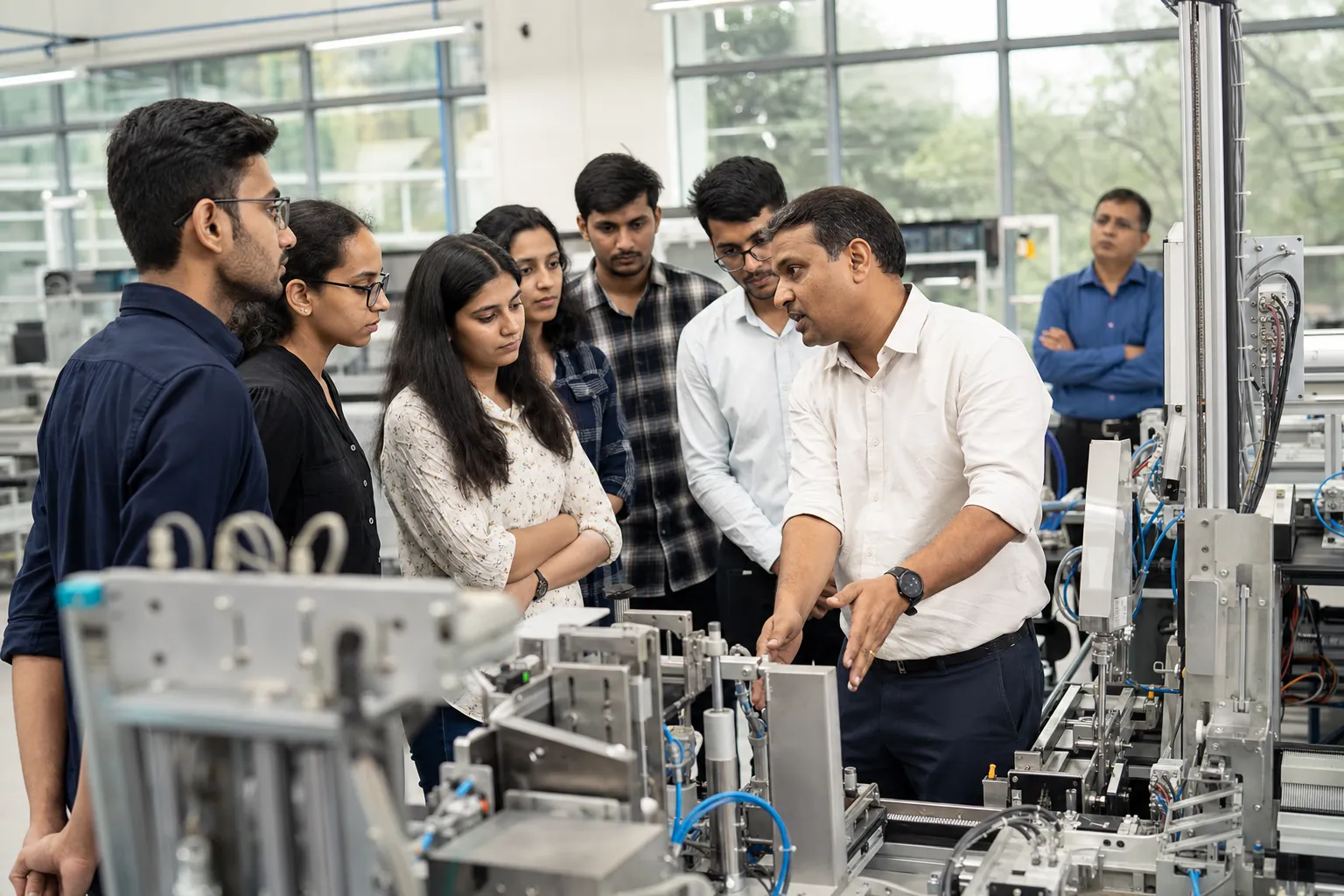
Students at Gurugram University are set to get a more direct view of the factories, offices and technical teams they may eventually join. The university has signed a memorandum of understanding with the Gurugram Industrial Association, laying out a programme of internships, industrial visits, live projects, expert mentoring, placement support and job-oriented skill development.
The partnership is meant to narrow a stubborn gap between a degree syllabus and the way work is actually organised. Under the memorandum, students can be exposed to real production or business problems rather than meeting industry only during a final placement interview. Teachers are also expected to gain opportunities for joint research, professional dialogue and exchange with industry specialists.
Both institutions have described employability as a central aim. Gurugram University's Vice-Chancellor, Professor Sanjay Kaushik, said education gains value when it connects the classroom with industry and society. GIA president Sumit Rao said stronger coordination can help students understand an industrial environment while giving employers access to better-prepared talent.
The document extends beyond short internships. The partners plan to encourage a startup culture, explore centres of excellence and strengthen an executive MBA programme with industry participation. Company-sponsored executive MBA candidates recommended through the association are to receive a 30 per cent tuition-fee concession, according to the announced terms.
The promise is substantial, but students will judge it by delivery. A useful internship needs a defined role, a supervisor, reasonable duration and feedback; a certificate after a few office visits is not the same thing. Live projects should be selected for learning value and should not turn students into unpaid substitutes for regular staff.
There is also a curriculum opportunity. Employers can identify recurring gaps in communication, data handling, shop-floor safety, digital tools or problem-solving, while faculty can decide which of those belong in coursework. Industry advice should inform academic design without reducing a university programme to training for one company's immediate vacancy.
Gurugram is unusually well placed for such a partnership because its employment base spans manufacturing, automotive supply chains, technology, finance, healthcare, logistics and professional services. That diversity can expose students to more than one career track. It can also help smaller local firms reach a university talent pool that is often dominated by large recruiters.
The next useful step would be a public semester calendar naming the number of internship seats, participating sectors, selection process and project outcomes. Placement figures alone will not show whether the memorandum worked. The stronger measure is whether students complete meaningful assignments, receive usable mentorship and enter interviews able to discuss a real problem they helped solve.
Sources and reporting
Based on the university-industry memorandum, programme components and statements from the two institutions' representatives.
Related Stories

NTA displays final UGC-NET June 2026 answer keys for English, Commerce and Sociology
Tamil Nadu releases MBBS and BDS Round 2 management quota allotment list

Tamil Nadu opens M.Sc Molecular Virology applications for King Institute seats

Tamil Nadu issues Master of Optometry prospectus; apply by 22 September

Tamil Nadu opens M.MRIT 2026-27 applications from 18 to 22 September