
Green Paradox: How India’s Clean Fuel Hub Became its Most Polluted Town
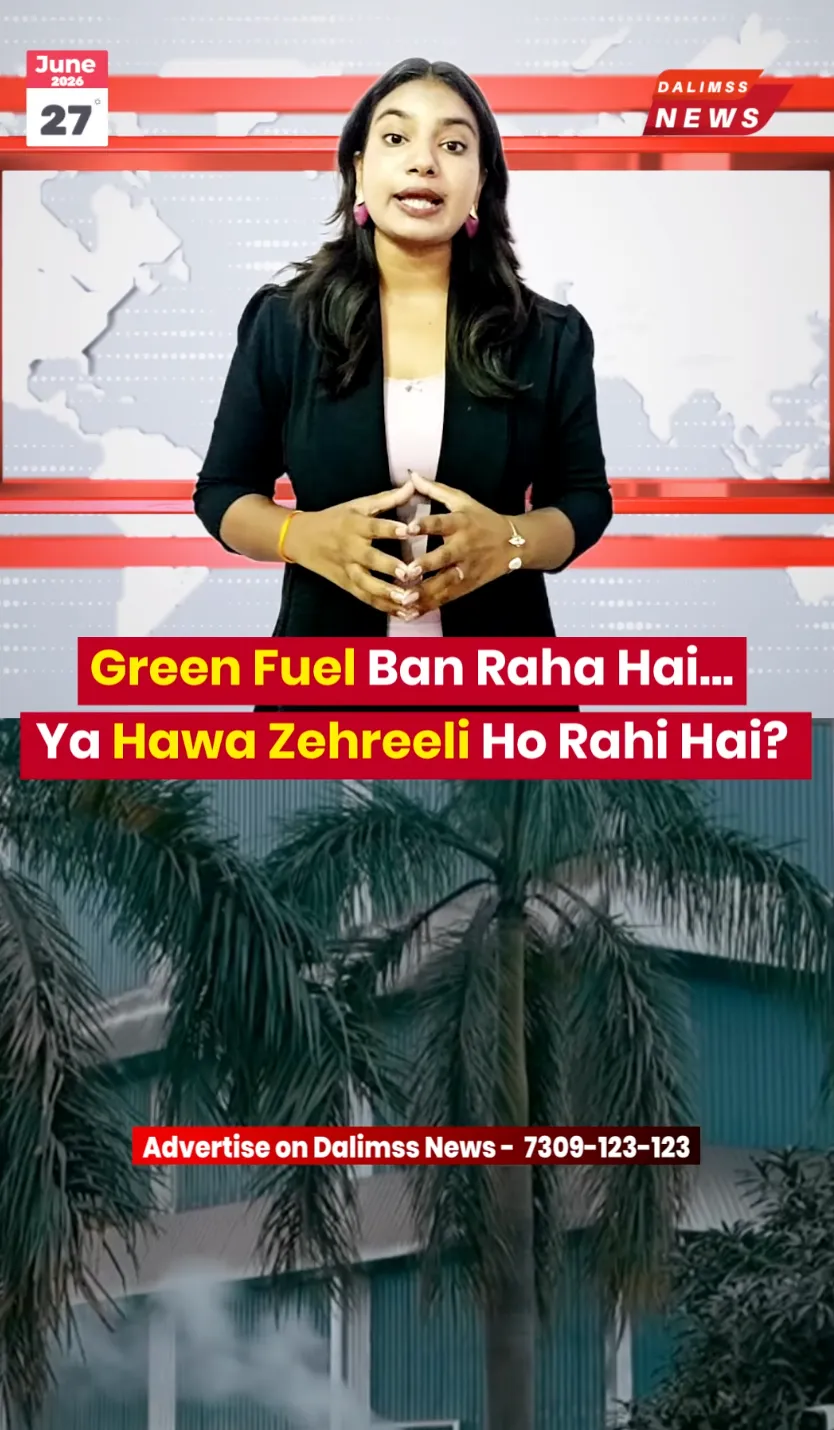
As India aggressively pushes forward with its green energy transition, an industrial border town in the Northeast has found itself at the epicenter of a troubling environmental paradox.
Byrnihat, straddling the sensitive Meghalaya–Assam border, was recently flagged by the Centre for Research on Energy and Clean Air (CREA) and the global IQAir World Air Quality Report as one of the most polluted urban areas. It frequently records an average $PM_{2.5}$ concentration exceeding $130 \text{ \mu g/m}^3$—more than three times India's national safety limit ($40 \text{ \mu g/m}^3$) and vastly higher than World Health Organization guidelines.
Ironically, the town is home to multiple manufacturing units producing ethanol—the very biofuel championed by the Government of India's Ethanol Blended Petrol (EBP) Programme to slash national carbon emissions, curtail vehicle tailpipe pollution, and reduce dependence on fossil fuels. The unfolding situation here has sparked a localized crisis and raised an uncomfortable question for policy planners: Can a country build a green future at the cost of the air local communities breathe?
The Core of the Contention
Environmental scientists and local advocates emphasize that the dispute is not a rejection of ethanol itself. As a final product, bio-ethanol burns cleaner than standard gasoline. Instead, the crisis spotlights a systemic flaw in the production and manufacturing process.
According to Central Pollution Control Board (CPCB) data, Byrnihat’s dense industrial makeup—which includes refineries, distilleries, and heavy manufacturing units clustered close together—continuously discharges high volumes of particulate matter and chemical precursors into a bowl-shaped geographical topography that traps the smog.
"True sustainability cannot be measured only by the cleaner fuel that reaches a vehicle's fuel tank in Delhi or Mumbai," notes an environmental researcher tracking the region. "It must also be reflected in the health of the local ecosystem where that fuel is manufactured."
Local residents have reported a sharp spike in respiratory ailments, chest pain, and skin irritation over the last few years. The relentless industrial output means surrounding communities absorb severe local pollution to supply green solutions to the rest of the nation.
Dual-State Governance and Compliance Gaps
The Byrnihat case exposes a complex environmental governance challenge. Because the industrial belt falls across state lines—divided between Assam and Meghalaya—monitoring compliance is notoriously fragmented.
While state pollution control boards (SPCBs) have recently stepped up enforcement—issuing closure notices to multiple non-compliant "red category" industrial units—the overall air quality footprint has been slow to recover. The Ministry of Environment, Forest and Climate Change (MoEFCC) has faced increasing pressure to step in with unified, cross-border airshed management strategies.
Related Stories

Festive Special to Gorakhpur Gets Gurugram Halt
Fifth Accused Held in Rs 25 Lakh Sector 47 Robbery

Courier Staffer Booked Over 105 Missing One8 Returns

HC Sets Rs 50 Lakh Costs for Accused's Return to India

Gurugram Swimmer, 20, Crosses English Channel