
Kashi Vishwanath Marks Second Sawan Monday With Gauri-Shankar Shringar
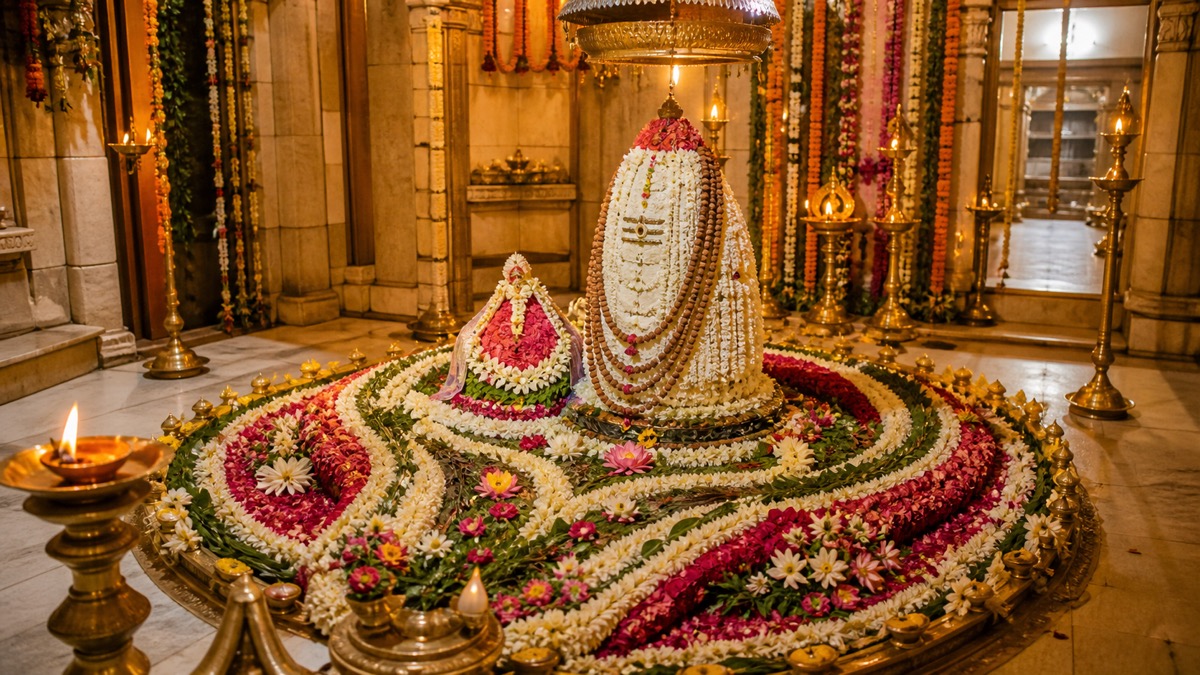
Kashi Vishwanath Temple marked the second Monday of Sawan with the Gauri-Shankar Shringar, the scheduled ceremonial decoration representing Shiva and Parvati together. While long queues defined the approaches outside, the ritual inside gave the day its specific identity. The temple’s 2026 calendar assigns a different form to each Monday of the month, allowing the observance to unfold as a sequence rather than four repetitions of the same ceremony.
The Gauri-Shankar form is associated with the union of Shiva and Shakti, and the decoration brings the paired symbolism into the visual language of flowers, garments, ornaments and lamps. The temple’s own account of Sawan tradition notes that special decoration is performed on every Monday, with the second centred on Bhagwan Shankar and Maa Parvati. Devotees encounter the result during darshan, often after waiting for hours through the managed queue system.
It is important to distinguish the ritual from the crowd story around it. Footfall, barricades and traffic are matters of public administration; the Shringar belongs to the temple’s liturgical and cultural calendar. Both occur in the same space, but they should not flatten each other. Reporting the form accurately preserves the meaning of the day without turning a sacred practice into merely another image of scale.
Behind a short public darshan lies detailed preparation. Flowers must arrive fresh, materials are arranged within time constraints and priests and temple staff work around continuous worship. The decoration is temporary by design. Its value does not lie in permanence but in the discipline of recreating a traditional form for a particular moment in the calendar. Photographers and visitors should respect restrictions around the sanctum and avoid obstructing movement for a closer frame.
The sequence will continue with the Ardhanareshwar form on the third Monday and Rudraksha Shringar on the fourth, according to the announced schedule. Publishing the calendar in advance helps devotees understand what they are seeing and choose a visit, but the temple must still communicate any change caused by security, crowd or operational conditions. Tradition is strengthened, not weakened, by clear public information.
For many who reached the temple on 10 August, the Gauri-Shankar Shringar was the focus at the end of a physically demanding wait. Devotees who could not attend in person also followed official and verified visual updates, making accurate labels important. It gave the second Monday a character of its own—one built around partnership, balance and the shared presence of Shiva and Parvati in Kashi’s most closely watched month of worship.
Sources and reporting
Current observance cross-checked against the official Kashi Vishwanath Sawan tradition and the published 2026 decoration schedule.
Related Stories

Festive Special to Gorakhpur Gets Gurugram Halt

Fifth Accused Held in Rs 25 Lakh Sector 47 Robbery

Courier Staffer Booked Over 105 Missing One8 Returns

HC Sets Rs 50 Lakh Costs for Accused's Return to India

Gurugram Swimmer, 20, Crosses English Channel