Ganga Rise Pushes Water Onto More Varanasi Ghat Steps as Monitoring Intensifies
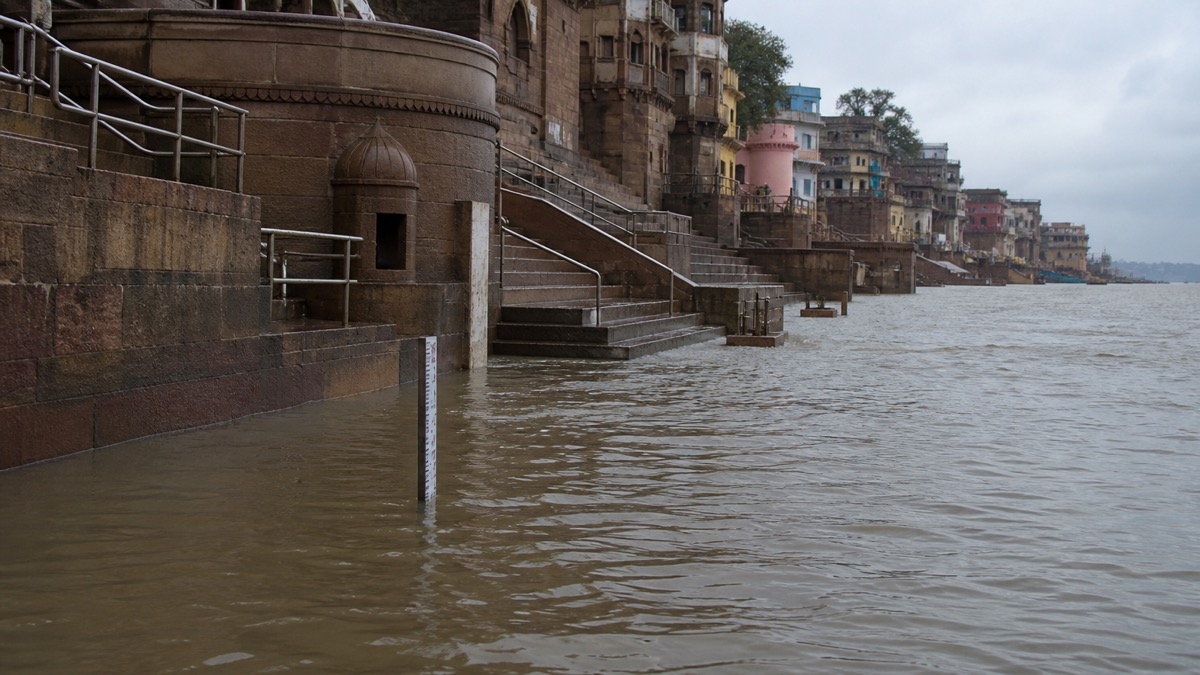
The Ganga is rising again in Varanasi after a period of relative stability, with water moving onto additional steps and lower platforms along the ghats. In the latest local update, the river remained below the danger mark, but the direction of travel was enough to intensify monitoring for the next 24 to 48 hours. For people who use the riverfront daily, the change is visible before any official bulletin: familiar walking links disappear and the safe edge shifts upward.
Varanasi’s warning level is around 70 metres and the danger level 71 metres. Those reference points are useful, but a responsible update should not turn an older reading into a live measurement. What matters between bulletins is the trend, the rate of rise and upstream rainfall. A river can remain below a formal threshold while already disrupting access, cremation activity, small businesses and the movement of residents in low-lying areas.
Ghat users should treat submerged steps as part of the river, not as a wet extension of the promenade. The stone surface can be slick, edges become difficult to judge and currents can pull around structures that are normally dry. Barricades and local instructions should be respected even where water looks shallow. Children, elderly visitors and people arriving for rituals require particular care because the route they remember from a previous visit may no longer exist.
Authorities should keep time-stamped readings and short forecasts visible through official channels. A useful bulletin states the measurement point, time, change since the previous reading and the next review. It should also list operational consequences—boat restrictions, relocated facilities or closed approaches—so residents do not have to translate a number into a practical decision. Rumour grows fastest when the river is changing and official information is sporadic.
This rise does not by itself mean that Varanasi has entered a flood emergency. The distinction matters because alarm can be as unhelpful as complacency. People in vulnerable areas need proportionate preparation: move movable goods, protect documents, identify higher access and remain ready for instructions. Tourists need route guidance. River workers need clear decisions on whether and when operations are permitted.
The Ganga may stabilise or continue to climb as water from upstream reaches the city. Until the trend is clearer, the riverfront should be read with humility. Varanasi is built around the Ganga, but the monsoon regularly redraws the boundary between city and river. Monitoring is the work of keeping pace with that moving line.
Sources and reporting
Fresh Dalimss News Banaras riverfront update published on 10 August 2026; the report avoids presenting older measurements as a live gauge reading.
Related Stories
Railway Police Arrest Rohit Tiwari From Varanasi Over Alleged Train Robberies
‘Kashi Flow’ Four-Day International Art Camp Planned on Ganga Theme in December
JCB Hits Underground 11 kV Line in Dalmandi; Ward 69 Faces Daytime Outage
Two-Hour Feeder Shutdown on 24 Sep for PWD Road-Widening Cable Shift
Rohania Constable Suspended After Alleged Misbehaviour at Pandeypur Outpost