
Women Hold Cleanliness Drive at Assi Ghat With Nari Shakti Message
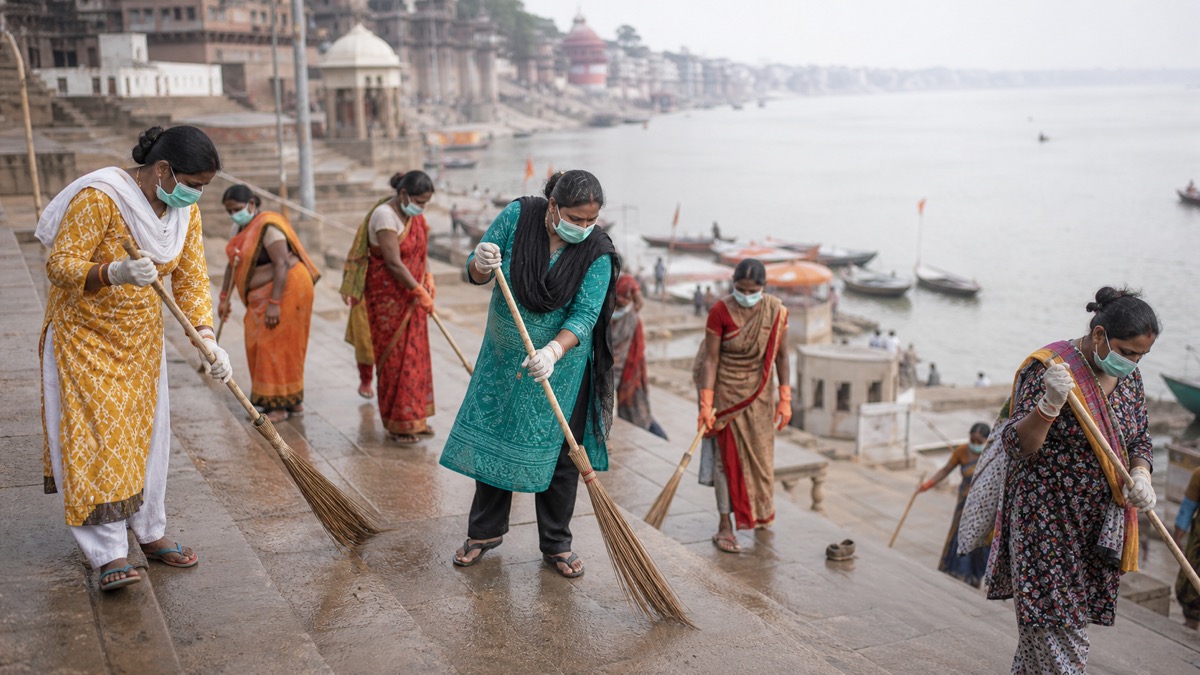
A group of women carried out a cleanliness drive at Assi Ghat on Monday, using the public activity to express support for the Nari Shakti Vandan framework and to criticise political parties that opposed it. Participants swept the stone steps and spoke about women’s representation in public life. The event combined civic work with an explicitly political message, and both parts should be reported plainly rather than presenting the gathering as a neutral sanitation campaign.
Assi Ghat is an effective public stage because it is visible to residents, pilgrims, students and visitors throughout the day. Cleaning it produces an immediate, understandable action; attaching a representation message turns that action into symbolism. Participants said they wanted opponents of the measure to be rejected politically. That is their stated position, not an institutional verdict, and other parties remain entitled to explain their own stance.
The cleanliness component still raises practical questions. One drive can remove litter from a stretch of steps, but keeping the ghat clean requires collection points, frequent lifting, drain management and cooperation from vendors and visitors. Sweepings must be removed rather than pushed towards the river. Gloves, masks and safe handling are important where waste may include broken glass, food residue or material left by a large crowd.
Women’s presence in civic campaigns should not be reduced to an image of brooms. Representation means influence over budgets, planning and enforcement as well as participation in volunteer work. If the event is meant to advance political empowerment, organisers can follow it with ward-level meetings on sanitation contracts, lighting, toilets and safe access to the ghats. Those are areas where women residents and workers hold direct experience that policy often misses.
The drive also demonstrates how national political themes are localised in Varanasi. A constitutional or legislative argument becomes a morning gathering at a ghat; abstract support is translated into a visible act of service. That can broaden engagement, but it can also blur the line between civic duty and party campaigning. Transparent identification of organisers and speakers allows the public to judge the event on its own terms.
By the end, the stone steps were cleaner and the political message was on record. The longer test begins after the participants leave: whether the ghat stays clean, whether local women gain a sustained voice in its management and whether debate over representation moves beyond slogans into decisions that change who holds power.
Sources and reporting
Fresh Akashvani News Gorakhpur report from the last 24 hours; political statements are attributed to participants.
Related Stories

Festive Special to Gorakhpur Gets Gurugram Halt

Fifth Accused Held in Rs 25 Lakh Sector 47 Robbery

Courier Staffer Booked Over 105 Missing One8 Returns

HC Sets Rs 50 Lakh Costs for Accused's Return to India

Gurugram Swimmer, 20, Crosses English Channel