Varanasi Tube-Well Region Reports 11.10-Lakh-Hectare Irrigation Capacity
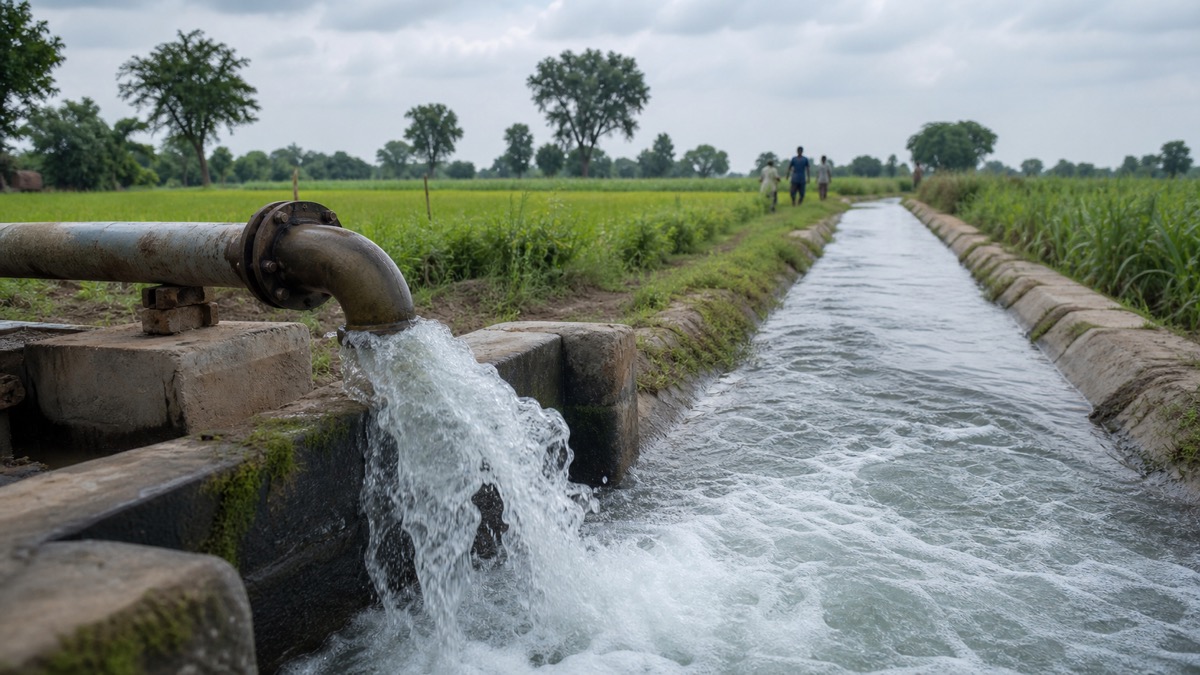
The Uttar Pradesh Irrigation and Water Resources Department says the Varanasi tube-well region has 7,811 state tube wells, 137 minor canals and 14 pump canals, with an irrigation capacity of 11.10 lakh hectares. The figures describe an administrative irrigation region broader than Varanasi city, but they matter locally because the city’s food economy is connected to farms across eastern Uttar Pradesh. They also offer a scale against which maintenance and delivery can be judged.
Installed capacity is not the same as water reaching a field when a farmer needs it. A tube well may exist on paper but be limited by a failed motor, electricity interruption, damaged outlet or silted channel. Minor canals can lose water before it reaches the tail end. The department’s headline numbers should therefore be paired with performance data: functional assets, seasonal operating hours, area actually irrigated and average repair time after a complaint.
The network is particularly important when rainfall is uneven. Monsoon totals can look adequate while individual spells arrive too late for sowing or leave a long dry gap during crop development. Public irrigation gives farmers a degree of control, especially those who cannot afford a private borewell. Reliable scheduling also reduces conflict when several villages depend on the same channel or pump.
Groundwater use requires caution. State tube wells can support equitable access, but continuous extraction without recharge will deepen the long-term problem. The region needs water budgeting, measurement of falling levels and coordination with ponds, check dams and rainwater harvesting. Efficient field channels and suitable irrigation methods can deliver the same crop support with less loss. The goal should be dependable irrigation, not simply maximum pumping.
Farmers need information that is more local than a regional total. Each asset should have a visible identification number, operating roster and complaint contact. A public map showing functional status would make it easier to see where breakdowns cluster and whether repairs favour easily reached sites. Panchayats and water-user groups can validate official records because they know immediately when a pump has not run.
The department presented the network under the theme that irrigation produces prosperity. That claim is credible only when water arrives fairly, equipment works and extraction remains sustainable. The 11.10-lakh-hectare figure is impressive as a statement of scale. The next, more useful disclosure would show how much of that promise was delivered in the current season and where farmers are still waiting.
Sources and reporting
Fresh figures published by the official Uttar Pradesh Irrigation and Water Resources Department during the last 24 hours; numbers refer to the Varanasi tube-well region, not the city boundary alone.
Related Stories
Festive Special to Gorakhpur Gets Gurugram Halt
Fifth Accused Held in Rs 25 Lakh Sector 47 Robbery

Courier Staffer Booked Over 105 Missing One8 Returns

HC Sets Rs 50 Lakh Costs for Accused's Return to India

Gurugram Swimmer, 20, Crosses English Channel