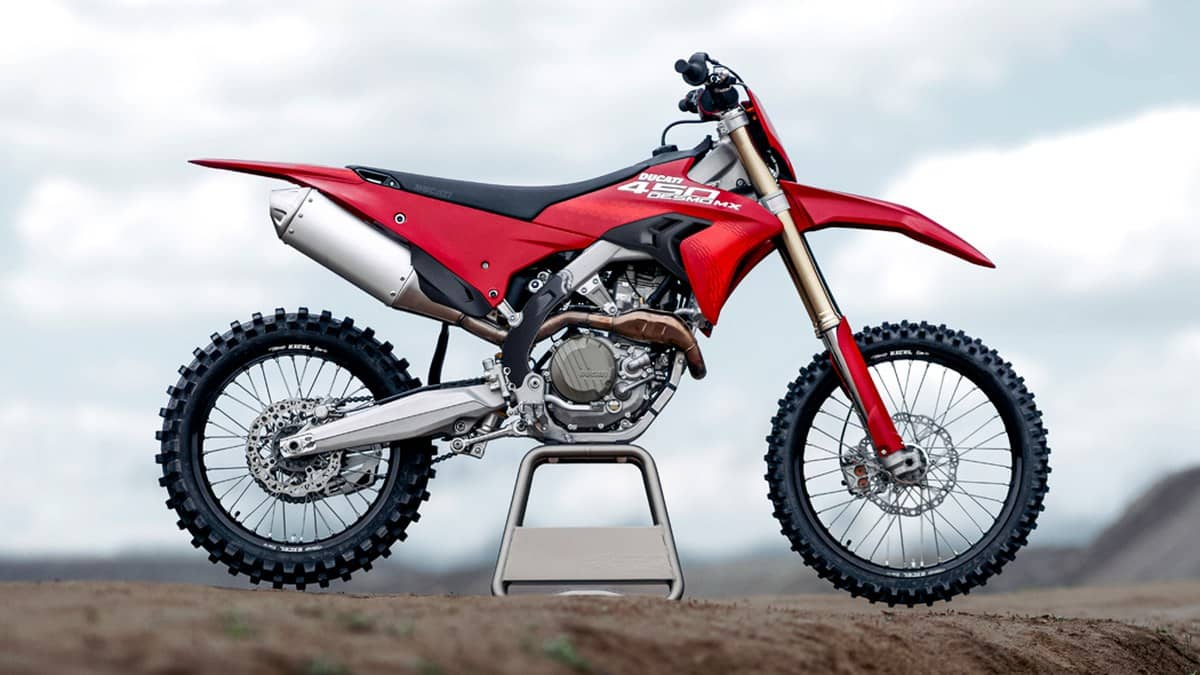
NEW DELHI: Ducati lists an oil and oil-filter service every 15 operating hours for the Desmo450 MX. Its motocross motorcycle also has separate piston, valve-clearance and main-engine service schedules. The important ownership detail is the unit: these are hours of use, so a road bike's kilometre-based service habits cannot simply be carried across.
| Work | India model-page schedule |
|---|---|
| Oil and oil filter | 15 hours |
| Piston replacement | 45 to 60 hours |
| Valve-clearance check | 45 to 60 hours |
| Main engine service | 90 to 120 hours |
Why the hourmeter belongs in the service record
The official specification lists an hourmeter as instrumentation. That makes it central to maintenance planning. A useful record should preserve its reading when work is carried out, alongside the date and the work recorded on the invoice. A calendar reminder alone does not explain how much the machine has actually operated.
For an Indian rider using a motocross venue intermittently, the distinction can be easy to miss. A motorcycle may spend much of the month parked or being transported, then accumulate operating time during practice. The service question follows the use recorded by the bike, rather than the distance travelled by the vehicle carrying it to the venue.
Nor does an hour-based interval supply a legitimate conversion into kilometres. There is no single road speed that represents a motocross session. Turning the service schedule into an estimated distance would add an assumption that Ducati's published table does not make.
The longer intervals need careful reading
Ducati's overview currently gives ranges for the more substantial jobs, as shown above. Its engine-insights text separately states 45 hours for piston replacement and valve-clearance checking, and 90 hours for a full engine service. Those are the lower ends of the overview's ranges. The pages do not provide a clear public explanation of when an individual owner can use the longer interval.
That difference should remain visible when planning maintenance. The upper end of a range is not, by itself, permission to postpone a job. The applicable manual and service documentation for the particular motorcycle need to establish the schedule. This report does not choose between the published endpoints or claim that an extension applies to every rider.
It is also useful to keep the jobs separate in the record. An oil change does not document a valve-clearance check, and a valve check is not the same operation as replacing a piston. Combining all of them under a generic service entry makes it harder to establish what has actually been completed.
The engine explains the specialist brief
The Desmo450 MX uses a 449.6 cc single-cylinder engine with desmodromic valve control. Ducati quotes 63.5 hp at 9,400 rpm and 53.5 Nm at 7,500 rpm. Its engine description places the rev limiter at 11,900 rpm. These are figures for a competition-focused package, rather than evidence that routine maintenance can follow a commuter motorcycle's timetable.
Ducati says its reliability testing used official riders as the reference for service intervals. The engine-insights page also describes gasket sealing for the alternator, clutch and head covers to simplify maintenance access. That is a revealing design detail: ease of opening and resealing components has been considered alongside outright performance.
A chassis built around movement and access
The vehicle description emphasises an aluminium perimeter frame and compact bodywork that allows the rider to move. It also describes a handlebar arrangement with four possible positions. The underlying theme is adjustment and control at a motocross venue, rather than passenger accommodation or everyday luggage provision.
That context matters when reading the maintenance schedule. A Desmo450 MX service story belongs with preparation for practice, record keeping and workshop planning. It would be misleading to judge its operating-hour requirements by the ownership pattern of a road-going Ducati simply because both carry the same badge.
What to preserve between workshop visits
A practical service file can bring together the hourmeter reading, itemised work, parts used and any instructions given for the next visit. Keeping these details together allows a workshop to distinguish completed maintenance from a future recommendation. It also prevents an oil-service receipt from being mistaken for evidence of more extensive engine work.
For a comparison of how different Ducati models organise maintenance, see our DesertX 937 service explainer and Multistrada V4 valve-check report. Our Hypermotard 698 Mono price list covers another single-cylinder Ducati, but its model-specific details should not be substituted for the Desmo450 MX schedule.
Keeping an accurate operating-hour history also makes the next workshop discussion more concrete. It gives the technician a record of use and completed jobs, rather than a rough recollection of how many weekends the motorcycle has been ridden.
Official sources: Ducati India Desmo450 MX specifications and Ducati engine and vehicle insights.