
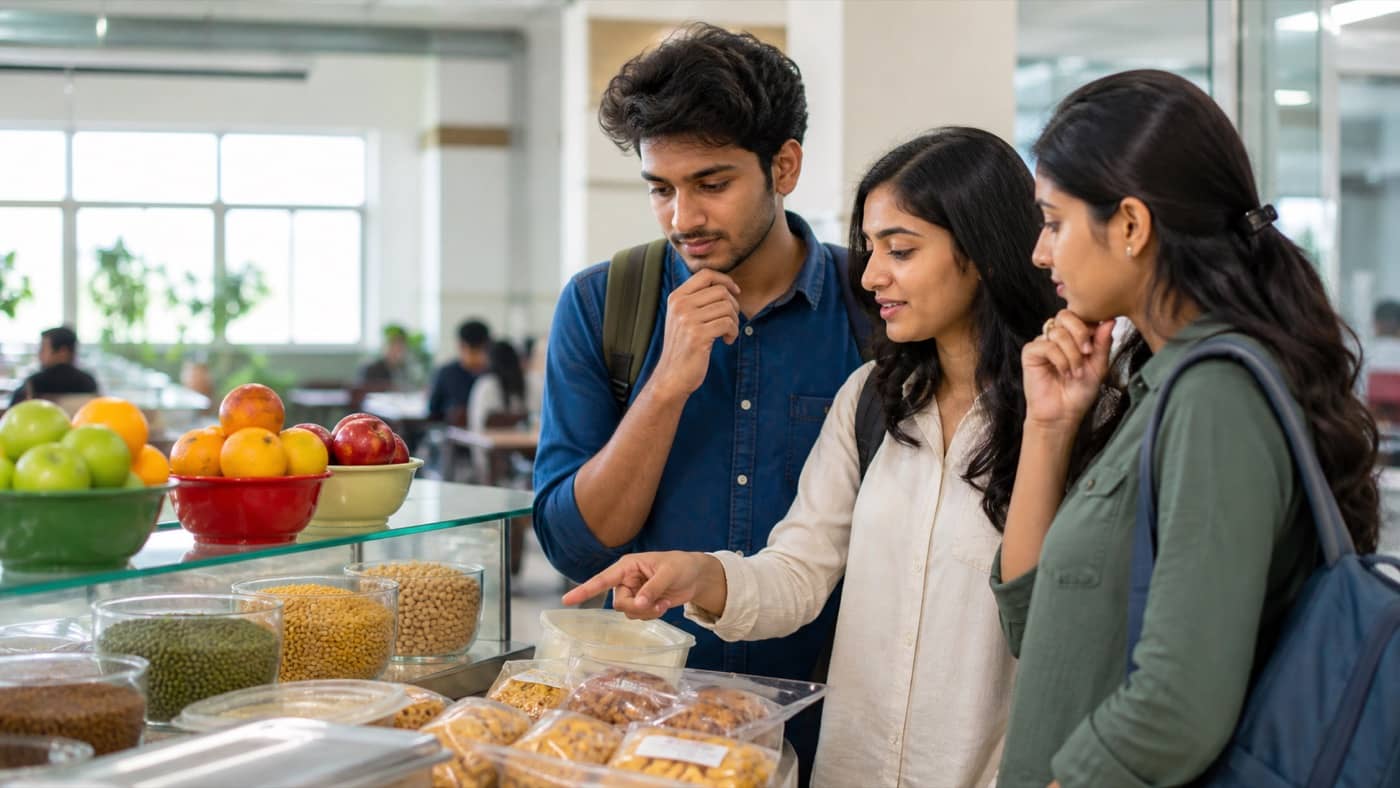
VARANASI: Young adults often know the difference between nourishing food and heavily processed options, yet that knowledge does not guarantee what lands on the plate. A qualitative study involving a Banaras Hindu University Home Science team found that price, convenience, cooking ability, social influence and digital marketing all shape everyday food decisions.
The research examined the experiences of 68 young people across Mumbai, Pune, Hyderabad, Kolkata, Ahmedabad, Chennai, Delhi and Bengaluru. It was conducted with researchers linked to BHU, Ahmedabad University and Deakin University in Australia. Because the participant group was small and qualitative, the findings describe patterns and perceptions rather than a statistical portrait of every Indian young adult.
Participants generally recognised fruits, vegetables, pulses, grains and minimally processed foods as healthy. Deep-fried and ultra-processed products were commonly identified as unhealthy. The gap appeared when intention met daily life: long work or study hours, limited cooking skills and the easy availability of inexpensive ready-to-eat food made the less healthy option simpler.
Cost was repeatedly important. Fresh fruit and organic products were often perceived as expensive, while junk food was seen as affordable and readily available. Friends, family routines and the social setting around a meal could override an individual plan. Digital advertising added another layer by keeping packaged food visible, convenient and culturally current.
One notable observation was that participants did not report depending on nutrition labels or health claims to classify food. That does not necessarily mean labels are useless; it may mean they are not prominent, trusted or easy enough to interpret at the moment of purchase. Front-of-pack information only helps when consumers notice it and can compare it quickly.
The practical lesson is that nutrition campaigns cannot stop at telling young people to “choose better.” A realistic intervention might pair basic cooking skills with affordable meal planning, healthier canteen menus and convenient options near colleges and workplaces. Policymakers also need to consider how digital promotion and price discounts favour ultra-processed products.
The BHU-led work puts environment alongside personal responsibility. A person can understand healthy eating and still face a neighbourhood, schedule or budget that works against it. Better choices become more likely when the healthy option is not merely available, but affordable, quick, socially normal and satisfying. That is a harder task than an awareness poster—and a more honest one.
Future research could test these themes with a larger and more diverse sample, including smaller cities and young people outside universities. It could also compare stated preferences with actual purchases. The current work does not close the question; it gives educators and public-health planners a sharper set of barriers to examine instead of assuming that awareness alone changes behaviour.