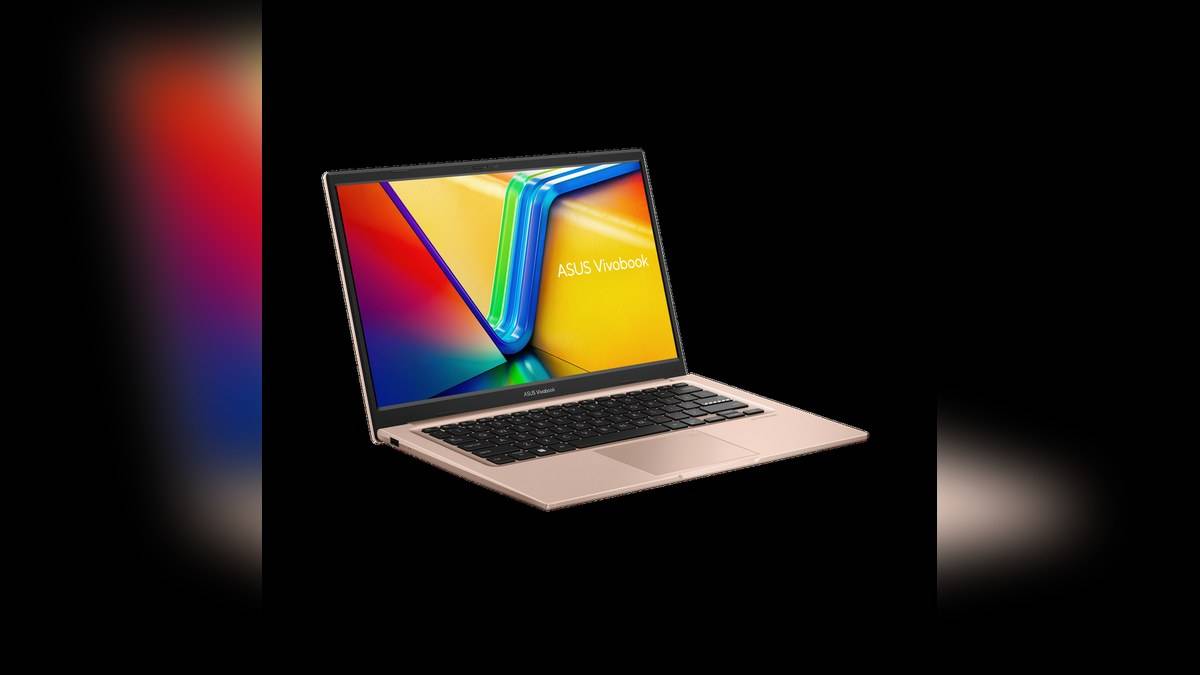

NEW DELHI: The ASUS Vivobook 16 M1607GA-MB029WS sold on ASUS's India store has a 60Hz display, not the up to 144Hz panel advertised across the wider global Vivobook launch range. The exact configuration is listed at Rs 86,990 with a Ryzen AI 7 445 processor, 16GB memory and a 512GB SSD. Its Copilot+ classification does not change that screen specification.
| Item | M1607GA-MB029WS |
|---|---|
| India store price | Rs 86,990, taxes included |
| Screen | 16-inch, 1920 x 1200, 16:10, 60Hz, 300 nits |
| Processor | AMD Ryzen AI 7 445 |
| NPU | AMD XDNA, up to 50 TOPS |
| Memory | 16GB onboard DDR5, expandable up to 32GB |
| Storage | 512GB PCIe SSD |
| Battery | 42Wh |
| Camera | FHD with IR for Windows Hello and privacy shutter |
Price as of 11 November 2026, 23:51 IST. This is a Copilot+ specification explainer above the budget-laptop bracket, rather than an under-Rs 60,000 entry. The quoted amount is the opened configuration page's selling price, without a bank discount or an exchange valuation.
Why the global display claim needs narrowing
ASUS's global announcement covers Vivobook models with different screen sizes. Its headline specification uses the fastest panel available across that range. The detailed table for the M1607GA itself identifies a 60Hz panel, consistent with the India configuration and the India technical-specification page. There is no basis here for assigning the broader maximum to this SKU.
For an Indian office user comparing listings, that is a useful example of why a launch banner cannot replace a configuration sheet. A higher refresh-rate ceiling elsewhere in the range does not make this screen faulty or incomplete. It simply describes different hardware. The invoice model and the detailed display line should tell the same story.
The practical appeal of this panel is its taller document workspace. Its shape suits a report, a spreadsheet or a browser alongside reference material. How much fits comfortably still depends on application layout and Windows scaling. The resolution alone does not establish comfortable text size for every reader, so a real display check remains more useful than a promotional photograph.
CPU and NPU figures answer different questions
AMD's processor reference lists the Ryzen AI 7 445 with six cores and twelve threads, alongside an NPU rated up to 50 TOPS. Those are separate parts of the chip. The NPU figure describes AI processing capability; it is not a measurement of spreadsheet completion, video-call quality or the speed of every installed application.
That matters because a Copilot+ badge can be mistaken for a promise that any AI-branded function works identically across processors. Microsoft's Windows Studio Effects guidance says availability depends on the NPU and device hardware. It specifically reserves portrait lighting, teleprompter eye contact and creative filters for Snapdragon Copilot+ devices in the page checked for this report.
This Vivobook uses AMD hardware. Its Windows camera settings and supported applications therefore need to establish the effects actually available. A feature demonstrated on a Snapdragon laptop should not be added to its specification by association. Our Vivobook 16 X1607QA compatibility explainer covers that separate platform.
The desk features are more concrete than an AI slogan
The India specification lists USB-C connections supporting both display output and power delivery, alongside USB-A and HDMI. Those are useful foundations for a desk shared between home and office. A peripheral still needs a compatible connection, but the published functions give the administrator something specific to match against an existing monitor and charger.
The FHD IR camera and physical shutter are similarly tangible. Face sign-in is a stated hardware capability, while the shutter gives a visible camera cover. Neither determines whether an employer accepts a particular device for managed work. That remains a question about the organisation's operating-system, security and application requirements.
The backlit keyboard includes a numeric keypad, a concrete advantage for spreadsheet entry when working without a separate keyboard. That arrangement is a more relevant detail for an accounts desk than a broad claim about AI productivity.
Who it is for
Our reading is that this configuration fits a document-focused user who wants a larger workspace, supported desk connections and a route to expand memory, while also having dedicated AI hardware. It is less suitable for someone whose essential requirement is the range's faster display. Paying for the AI platform does not supply that missing panel characteristic.
Battery claims also need the right configuration. The India SKU lists the smaller battery option named in the global materials. An unplugged-runtime claim from a different battery or test setup would not be a measured result for this unit. Our Vivobook S16 battery-test explanation and Vivobook S14 test conditions illustrate why the test setup matters.
Official sources: ASUS India configuration, India specifications, global announcement, AMD processor reference and Microsoft Studio Effects guidance.