The World Meteorological Organization reported record atmospheric levels of carbon dioxide, methane and nitrous oxide for 2025 in its Greenhouse Gas Bulletin released on October 27. The latest annual assessment separates two developments that can otherwise appear contradictory: concentrations continued rising even though some gases accumulated more slowly than in the preceding year.
The bulletin puts global average surface carbon dioxide at 426.8 parts per million, with an uncertainty of 0.2 ppm. Methane reached 1,948 parts per billion, with an uncertainty of 2 ppb, while nitrous oxide reached 339.1 ppb, with an uncertainty of 0.1 ppb.
Compared with 1750, the three concentrations were respectively 53 per cent, 167 per cent and 26 per cent higher. The figures describe gases already present in the atmosphere, not a tally of emissions produced during the reporting year.
A slower increase is still an increase
WMO says the carbon dioxide increase between 2024 and 2025 was smaller than the previous annual increase but remained above the average for 2016 to 2025. Methane's increase was below both the preceding year's rise and its decade average. Nitrous oxide's increase matched the preceding year and was close to its decade average.
The organisation's accompanying release says carbon dioxide rose by 2.8 ppm between 2024 and 2025. It attributes the slower growth than in the exceptional preceding period to a recovery of the land carbon sink and reduced fire emissions following the 2023 to 2024 El Niño.
Natural absorption does not remove all the carbon dioxide being added. WMO says roughly half of annual carbon dioxide emissions remain in the atmosphere, with the balance absorbed by land ecosystems and oceans. Its assessment draws on observations from 179 stations, rather than treating any one monitoring location as the global result.
The bulletin also examines sulphur hexafluoride, used in electricity distribution equipment. WMO reports a record annual increase in its atmospheric concentration in 2025. Although much less abundant than carbon dioxide, the gas persists for more than a thousand years and has a high warming effect per unit released.
What the warming index measures
A separate measurement-based indicator from the US National Oceanic and Atmospheric Administration provides context for those accumulating gases. NOAA's Annual Greenhouse Gas Index, updated in autumn 2026, puts their effective radiative forcing in 2025 at 56 per cent above the 1990 level. Carbon dioxide accounts for 81 per cent of that increase.
Radiative forcing describes the additional influence on Earth's energy balance. It is not a percentage increase in the planet's temperature. NOAA's index covers 23 long-lived gases and is not presented as a forecast of future climate conditions.
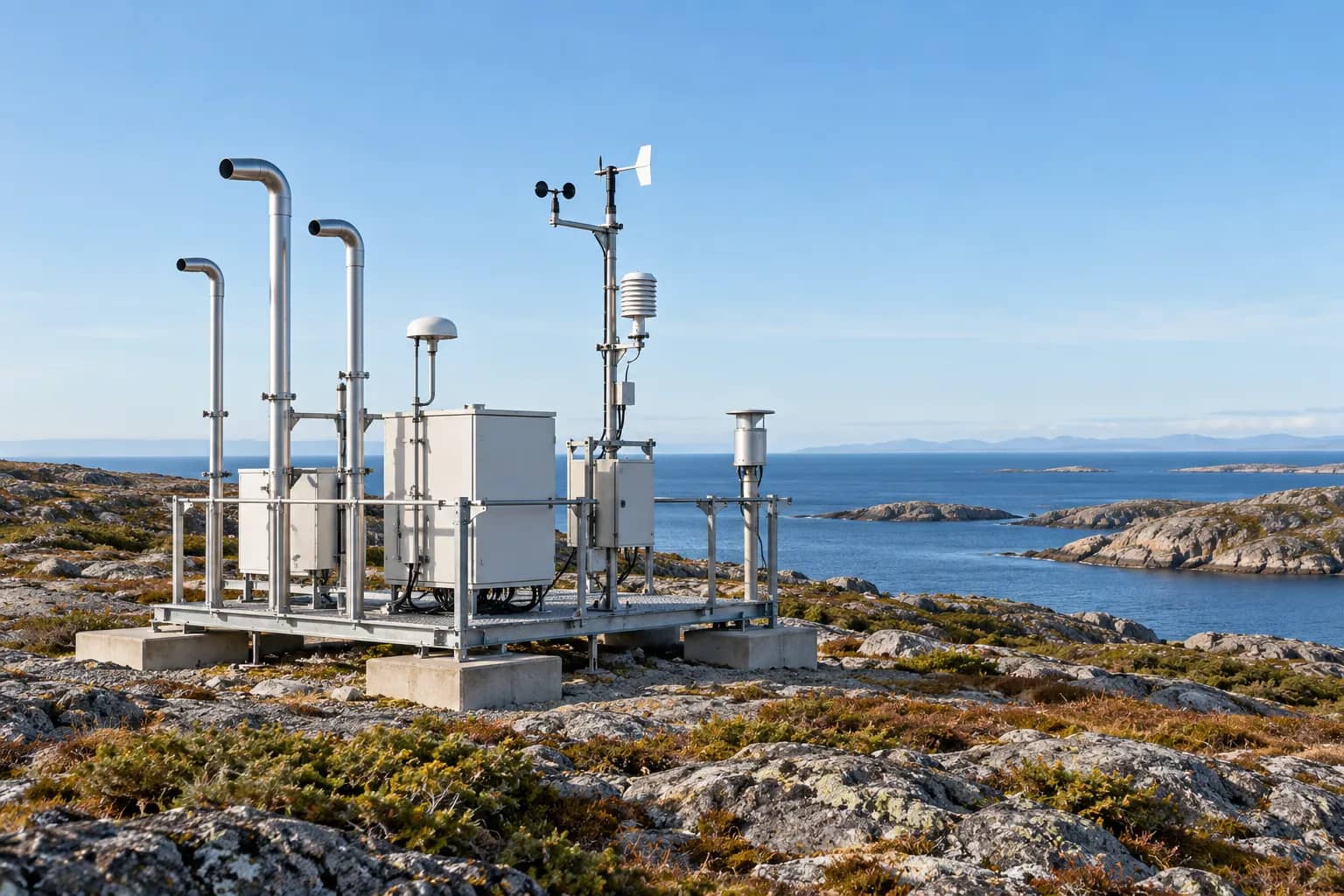
NOAA builds its global estimates from air collected approximately weekly at remote monitoring sites. Laboratory measurements are used to construct latitude profiles and global averages. Three major gases are assessed alongside 20 less abundant gases that also influence warming.
The agency cautions that predicting future climate requires consideration of other influences, including aerosols, surface reflectivity, solar radiation and feedbacks. The index therefore answers a narrower question about long-lived gases; it should not be read as a complete account of every influence on climate.
Why the observation network matters
NOAA's wider reference network combines baseline observatories, tall towers, volunteer sampling at more than 50 locations, aircraft measurements and balloon-based vertical profiles. Its measurements are quality-controlled and, where possible, traceable to internationally accepted calibration scales. The network maintains WMO calibration scales for several important atmospheric gases.
The documented data are freely available for comparison with other international laboratories and regional studies. They support research estimating where greenhouse gases are being emitted or removed, using results consistent with atmospheric observations. NOAA also distributes observation packages combining measurements from national and university laboratories. These include prepared datasets, accompanying metadata and summaries identifying the datasets included, helping users understand the provenance of the measurements they are comparing.
Seasonal changes need similar care. NOAA explains that northern land plants draw down carbon dioxide during the growing season and return it outside that season. Scientists remove this seasonal cycle when examining growth rates, allowing year-to-year changes to be considered separately from recurring biological variation.
Related coverage: WMO's call for early El Niño preparation and New South Wales' assessment of climate risks to essential services.