New South Wales released its first statewide assessment of interconnected climate risks on 26 October, examining how damage to one service can spread into households, businesses and public services. The Climate Change Risk and Opportunity Assessment identifies 47 risks and 12 opportunities across nine systems, giving agencies and councils a common basis for adaptation planning.
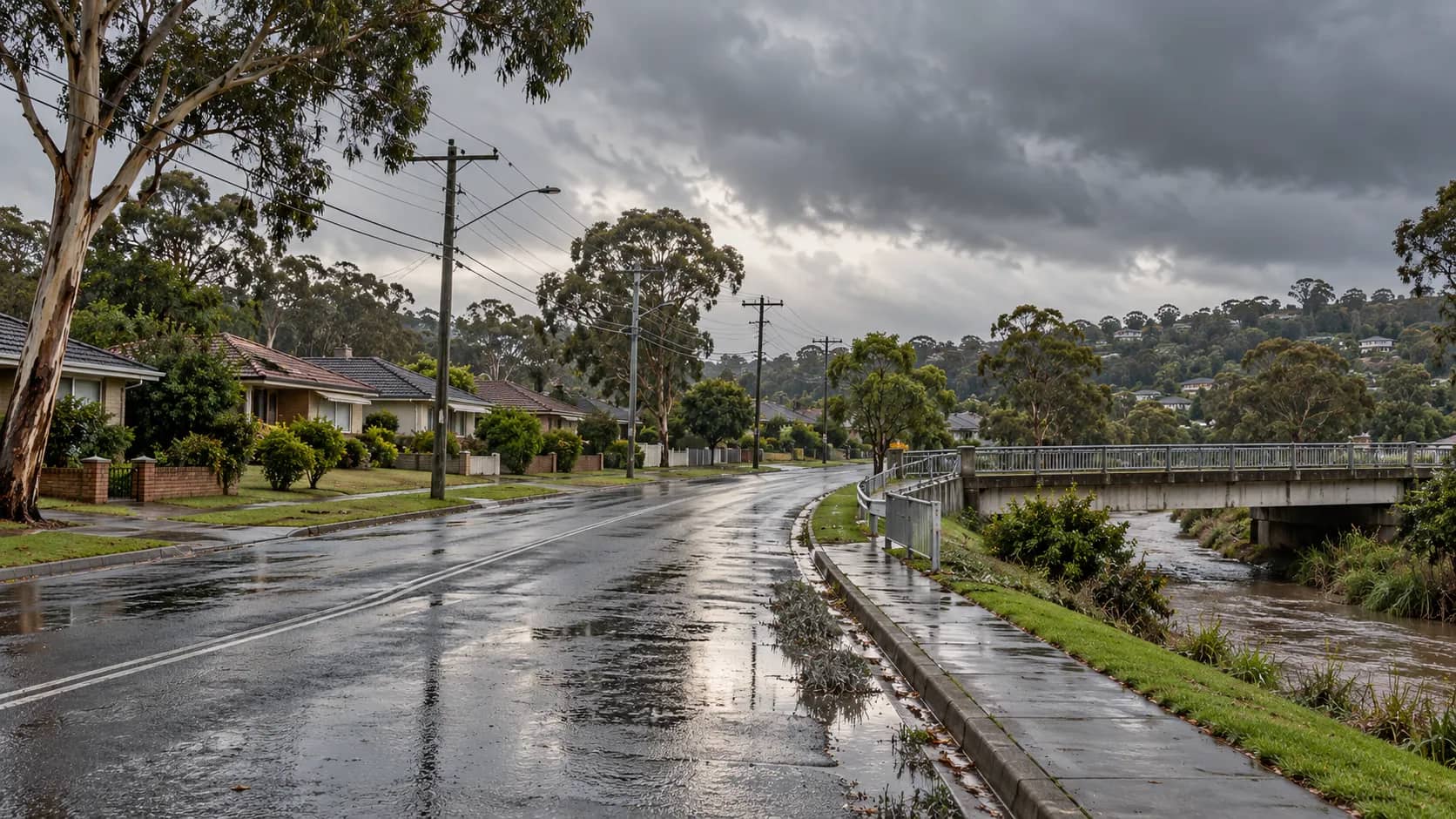
The report's central concern is the chain of disruption rather than a weather hazard in isolation. An electricity failure can interrupt transport, which can then disrupt supplies. Flood or bushfire damage to water and telecommunications networks can affect schools, hospitals and businesses even when those services are not directly damaged.
Published by the NSW Department of Climate Change, Energy, the Environment and Water, the assessment is intended to guide planning and future decisions. It does not announce a new household assistance scheme, prescribe particular projects or replace the assessments needed for individual properties and infrastructure assets.
Why service connections matter
For residents, the report connects climate exposure with the everyday reliability and cost of living in a place. Its housing findings identify risks from damage to homes, declining building performance and disruption to community life. Renters, lower-income households and disadvantaged communities can face a disproportionate share of these pressures, according to the assessment.
The consequences extend beyond repairs. The department identifies interacting pressures on insurance availability, employment and continuity of services as factors affecting household wellbeing. Repeated or overlapping extreme events can also weaken a community's capacity to recover, making the next disruption harder to manage.
Health services face a related problem. The assessment identifies the potential for damage to healthcare infrastructure and supply chains to restrict access to care and essential goods. At the same time, climate-related events can increase demand for emergency, community and mental health support. That combination puts service continuity alongside physical protection of buildings in the planning task.
Infrastructure operators are asked to look beyond the condition of their own assets. The report describes how power or telecommunications failures can affect water, waste, transport and emergency services. It also identifies a particular difficulty when damaged infrastructure obstructs emergency responders just as demand for their assistance rises.
Businesses face similar connections through their suppliers, workforce and the services on which they depend. The assessment identifies repeated climate events as a strain on available capital and the capacity to keep operating. These are risk findings, not predictions that every business or region will experience the same losses.
What the assessment can and cannot decide
The nine systems covered also include primary industries and food security, the natural environment, water security and management, government and governance, and the wellbeing of Aboriginal and Torres Strait Islander peoples. Their inclusion means the exercise is wider than an inventory of roads, buildings or flood defences.
The assessment uses a qualitative approach. It does not rank every climate risk numerically, provide an exhaustive list of local hazards or calculate the likelihood and consequences of damage to a particular asset. Detailed hazard modelling and local assessments remain necessary for project design, statutory planning and operational decisions.
It also concentrates on physical climate risks rather than comprehensively examining the effects of the transition to a lower-carbon economy. Policy changes, technology adoption and market shifts are addressed through other state strategies and risk frameworks. Readers should therefore not treat the document as a complete forecast of economic change.
The department identifies nine adaptation focus areas intended to address shared causes of risk. Its approach includes improving infrastructure resilience, protecting natural systems and reducing inequality. The report argues that planning across connected services can avoid responses that solve a problem in one area while worsening exposure elsewhere.
For councils and regional bodies, the assessment offers a way to connect local planning with wider pressures on services and infrastructure. For state agencies, it is intended to support coordinated risk management and decisions about future service needs. Neither use removes existing legal or planning responsibilities.
The next stage is to apply the findings through those established processes. The department says the assessment is intended to inform future updates to the NSW Climate Change Adaptation Action Plan, agency and hazard-specific planning, and government performance frameworks. It will be updated at least every five years as new evidence and experience become available.
Related coverage: WMO’s call for early climate preparation and Britain’s wildfire response plans.
Assessment material adapted under CC BY 4.0. © NSW Department of Climate Change, Energy, the Environment and Water, 2026. For current information go to energy.nsw.gov.au. Independently written, without government endorsement.