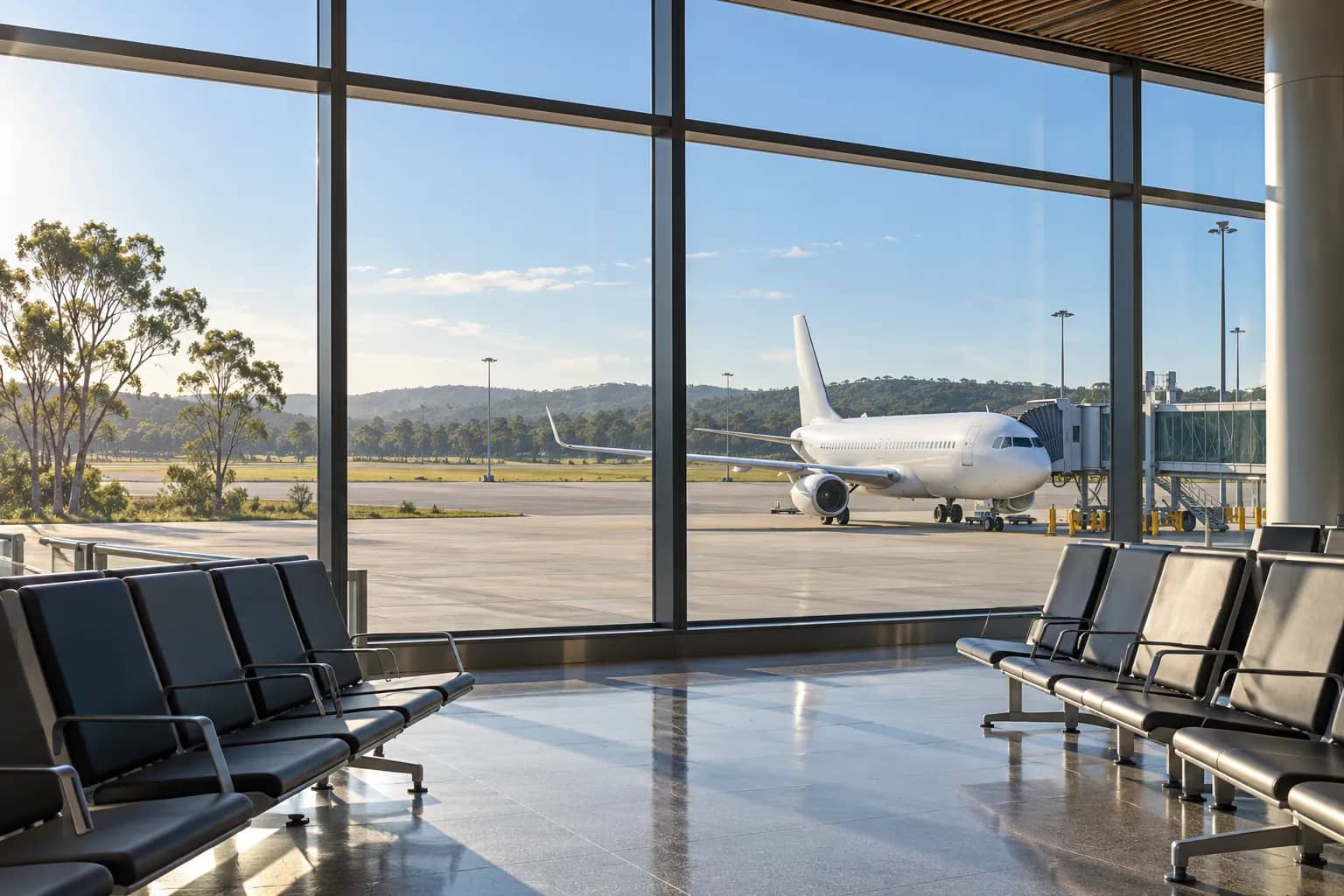
Western Sydney International Airport received its first international passenger flight on October 26, with Air New Zealand flight NZ165 arriving from Auckland before NZ166 departed on the return journey. The Australian government's announcement on Monday confirms that both movements took place, turning the previously announced trans-Tasman route into an operating service.
The Auckland connection starts with three return services a week, on Mondays, Wednesdays and Fridays. The government said the first outbound flight was full. That describes the inaugural departure, not future bookings or a continuing occupancy rate. Auckland is the first international destination served from the new airport, formally named Western Sydney International (Nancy-Bird Walton) Airport.
Check which Sydney airport is on the ticket
Air New Zealand's route information distinguishes the new airport, coded WSI, from Sydney Kingsford Smith Airport, coded SYD. The airline continues to operate from Kingsford Smith. Its advice is to check the airport code when booking, rather than treating every Sydney flight as a departure from the same location.
The airline lists Airbus A320 and A321 aircraft for its Western Sydney route and describes the service as economy-only. Its comparison page still says lounge arrangements at WSI are to be confirmed. Those details are separate from the government's confirmation that the first flight has landed: an operating route does not establish that every planned passenger facility is available.
Further international services are scheduled rather than already operating. Monday's government release lists daily non-stop Singapore flights from November 23, followed by Ho Chi Minh City services in January 2027 and Nadi services in March 2027. These future connections should not be confused with the Auckland arrival and departure confirmed on October 26.
A new terminal, with rail still to come
The airport has been designed to handle 10 million passengers a year and to accommodate later expansion, according to the government. That is a design capacity, not a forecast of actual first-year traffic. Its round-the-clock cargo precinct has been operating for nearly three months; the government says it increases Sydney's air-cargo capacity by around a third.
The October 25 opening announcement describes a terminal serving domestic and international passengers under one roof, with more than 40 check-in kiosks and 34 bag-drop kiosks. It identifies Jetstar's Gold Coast service as the opening domestic route. The international flight confirmation follows that passenger-opening programme, rather than announcing another construction start.
Transport for NSW's airport access guide says there is currently no direct train service to WSI. The 23-kilometre airport metro is still under construction, with six stations planned between St Marys and Bradfield, including the airport terminal. For now, the temporary fare-free WSI Link connects St Marys Station with the terminal every 30 minutes, from 4.30am to midnight Sunday to Thursday and until 1am on Fridays and Saturdays.
Five other bus routes connect WSI with Mount Druitt, Penrith, Liverpool and Campbelltown, running every 30 minutes from 5am to 10pm daily. Unlike WSI Link, these services require payment using Opal or an accepted contactless card or device. The distinction matters when choosing a connection: the free shuttle does not make every bus serving the airport free.
The transport guide also identifies the toll-free M12 motorway as a direct road connection. It says airport taxis have no fixed-fare arrangement and must use the meter unless pre-booked. These are access arrangements for the new airport, not a claim that travel times or total journey costs will be the same for every passenger.
Opening follows years of construction
The government's opening account puts construction at seven years, followed by a year of testing, with more than 13,000 workers involved across the precinct. It traces the site's selection at Badgerys Creek to 1986. More than nine million working hours went into the terminal itself, according to the October 25 release.
The airport forms part of a wider Australian government investment of A$18 billion in Western Sydney, which also includes the future airport metro connection and surrounding road upgrades. The first international flights are therefore a completed step within a broader transport programme. The metro link and the later overseas routes remain separate developments with their own delivery schedules.
Related reading: New Zealand's parent resident visa selection changes and Australia's student visa application rules.
Source material adapted from the Commonwealth of Australia under a Creative Commons Attribution 4.0 International Licence. The Commonwealth of Australia does not necessarily endorse this reporting.