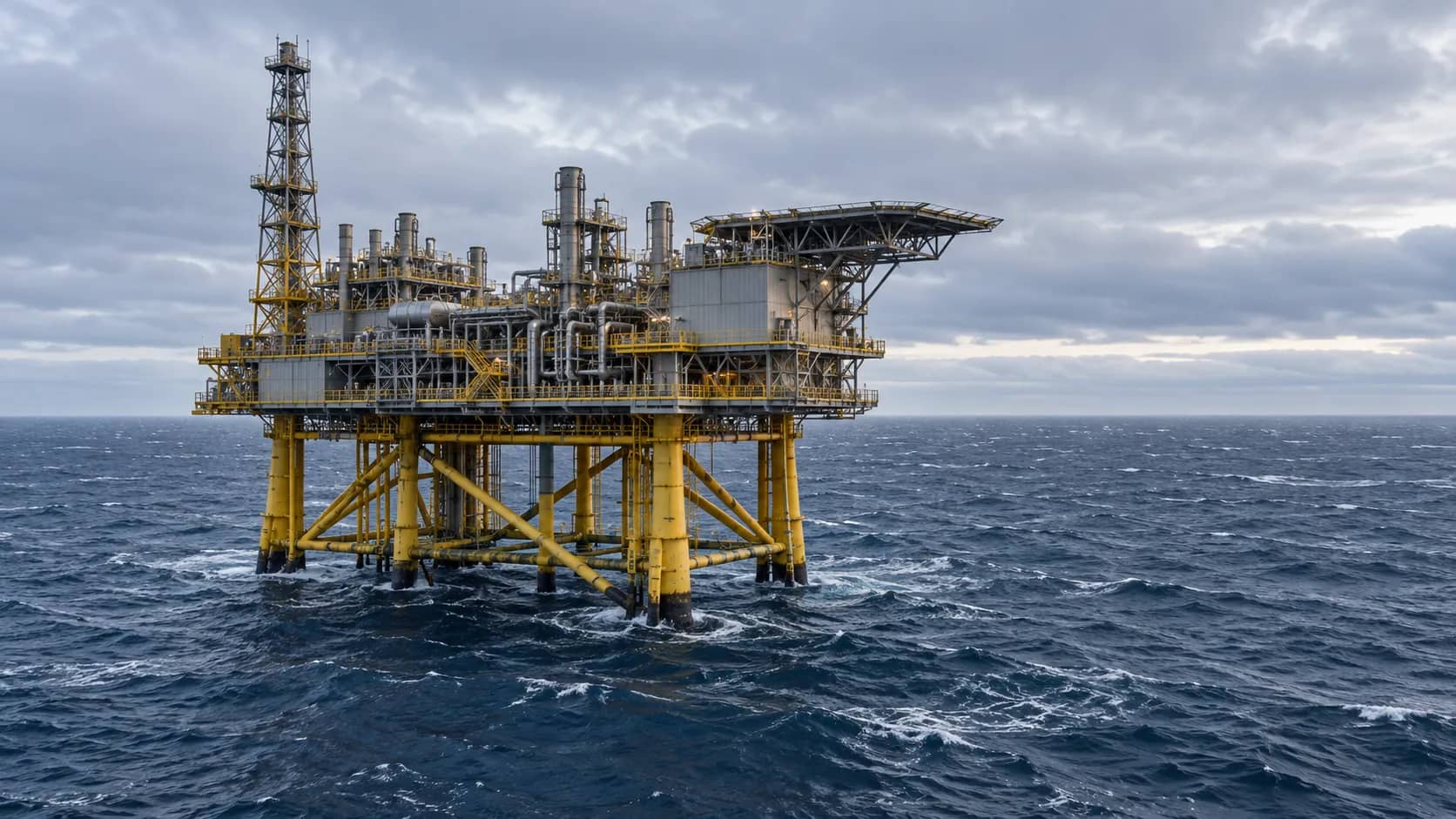
The UK has cleared the Jackdaw gas development to proceed and announced a £2 billion initial contribution to a new Energy Wealth Fund, linking continued North Sea production with investment in renewable and low-carbon infrastructure. The package was announced on October 21, with the government saying gas from the field could begin reaching Britain as early as the end of this month.
That timetable makes the decision relevant ahead of winter, but approval is not confirmation that production has started. The North Sea Transition Authority's announcement says the owners can produce gas once development work is completed. It identifies Adura as the owner of the field off north-east Scotland.
Consent is separate from an existing licence
The official decision notice sets out two stages. The Energy Secretary agreed on October 14 that the regulator could grant consent after considering the environmental effects. The regulator then granted consent on October 21. The notice says the project may proceed; it does not report the first delivery of gas.
A licence gives a company exclusive rights over an area for exploration and production, but does not itself authorise a particular development to go ahead. The government's explanation says project consent is a separate approval, requiring the Energy Secretary's agreement following an environmental impact assessment. This distinction matters when assessing claims that an already licensed field was automatically entitled to begin operating.
According to the October 21 government release, Jackdaw could increase domestic gas production by about 6 per cent at its peak over an operating life of up to 11 years. The release estimates lifetime output equivalent to about 40 million barrels of oil. It separately cites developer estimates of 27 new direct jobs and the protection of 273 existing jobs. These are forecasts, not measured production or a count of jobs already created.
Environmental conditions remain part of the approval
The October 19 letter to the developer, published with the decision papers on October 21, attaches operating conditions. These cover management of the export-gas specification through the amine unit, routing extracted carbon dioxide to a dedicated vent point and maintaining a meter that meets recognised industry standards.
The letter also requires production from other fields using the Shearwater installation during Jackdaw's production period to be phased to minimise cumulative carbon dioxide venting as far as reasonably possible. The approval therefore includes specific operating obligations. It should not be read as a finding that the project has no environmental effects.
The government says the Energy Secretary assessed the project as compatible with the UK's legally binding carbon limits and 2050 net-zero target. Its release describes the assessment of emissions from burning extracted fuels as part of the decision-making framework following the Supreme Court's 2024 Finch ruling. That is the government's stated assessment, rather than an independent prediction that future climate targets will necessarily be met.
What the new fund is intended to do
The Energy Wealth Fund is to sit within the National Wealth Fund and invest in renewable and low-carbon energy infrastructure across the UK. The announced £2 billion is an initial contribution. The government says North Sea oil and gas tax revenues will flow into the fund over time, in an announcement made ahead of the forthcoming Budget.
Its stated purpose is to turn proceeds from existing fossil-fuel resources into longer-term clean-energy investment. Ministers argue that expanding renewable and low-carbon generation will reduce how often gas determines electricity prices. The announcement does not give a household-by-household saving or establish an immediate reduction in a supplier's tariff.
The government also says it has asked the regulator to consider urgent cases involving already explored areas near licensed fields before legislation for proposed Transitional Energy Certificates is in place. This is not an announcement that unrestricted new exploration licences will be issued. The release maintains the distinction between managing existing resources and exploring new unlicensed areas.
For readers, the next concrete developments are the start of production and the fund's detailed implementation. The October 23 update to the release added a historical-revenue footnote, not a second Jackdaw approval. The current story remains the October 21 consent announcement and the accompanying investment policy, with output, economic benefits and future bill effects still to be demonstrated.
Related coverage: Britain's separate standby-power proposals and Welsh electricity-line planning proposals.
Contains public-sector information licensed under the Open Government Licence v3.0.