
The UK government has added draft regulations to its consultation on electricity used by household and office equipment when it is not performing its main function. The draft was published on October 22, following the consultation's launch on October 16. It proposes tighter limits for some low-power modes in Great Britain, rather than an immediate change to household bills.
The Department for Energy Security and Net Zero is seeking responses until 11:59pm UK time on December 24, 2026. Its consultation documents describe a proposed single set of requirements replacing two existing regulations. Manufacturers, importers and other businesses supplying covered equipment would need to consider the changes if they are adopted.
The proposal concerns England, Scotland and Wales. Northern Ireland follows the relevant EU ecodesign rules under the Windsor Framework. The department says the updated EU regulation has applied there since May 9, 2025. This is therefore not a newly announced, uniform UK-wide requirement for every electrical product.
Different limits for different low-power modes
Under the published consultation, the proposed ceiling for equipment in off mode would fall from 0.5 watts to 0.3 watts. The limit for standby equipment displaying information or its status would fall from 1 watt to 0.8 watts. Standby with only a reactivation function would retain its 0.5-watt limit.
Those distinctions matter because a product that can wake when a remote control is used is not necessarily in the same operating state as one maintaining a display or network connection. The proposals also specify networked-standby limits of 7 watts for equipment with high network availability and 2 watts for other networked equipment. They should not be read as a blanket 0.3-watt ceiling for every device left connected to electricity.
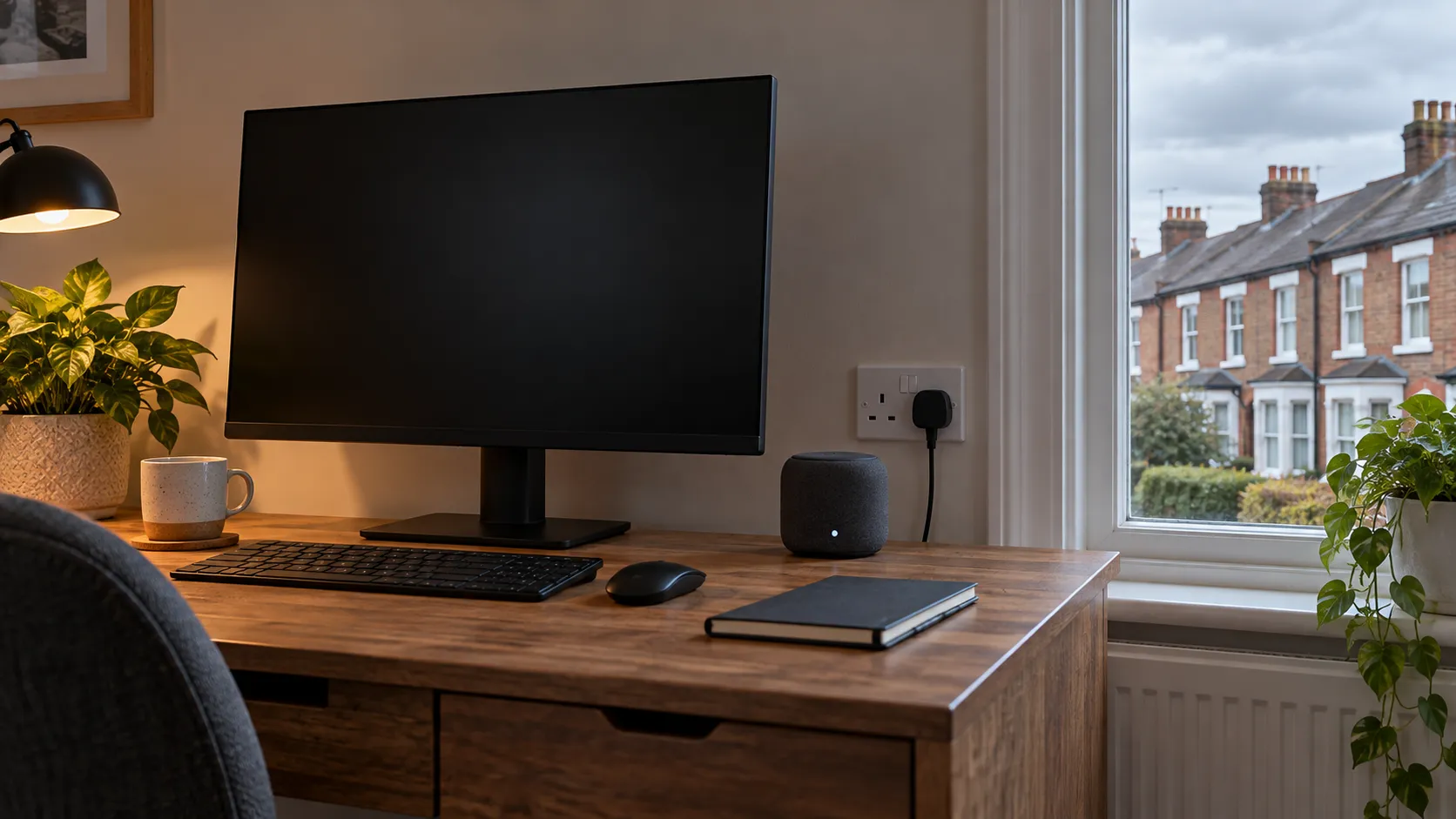
The department proposes extending coverage to categories that include motor-operated adjustable furniture and blinds, certain equipment supplied through low-voltage external power supplies, and battery-powered products with a recharging circuit used while connected to the mains. Examples in the document include adjustable desks, smart speakers and rechargeable toothbrushes. Coverage would depend on the regulation's definitions and product scope, not simply whether something has a plug.
Automatic shutdown and a proposed 2027 start
Most covered equipment would need to move automatically into an appropriate low-power mode after 20 minutes without user interaction or network activity. Different inactivity periods are proposed for certain coffee machines. Existing exceptions would remain where automatic shutdown is inappropriate or unsafe, including examples involving medical devices, emergency equipment and some server products.
The purpose is to reduce electricity consumed between uses without relying on people repeatedly switching equipment off themselves. However, these are requirements being considered for products supplied to the market. The consultation is not a notice telling households that their existing appliances must now meet the proposed limits.
For Great Britain, the department proposes introducing the full requirements in one step in the second quarter of 2027, instead of adopting the EU's two-stage approach. It is seeking evidence about whether businesses would have enough preparation time and what redesign, cost or functionality issues might arise. The proposed timetable remains subject to the consultation and legislative process.
Lower electricity use is not a guaranteed bill saving
The department's assessment does not promise a fixed saving for each household. It says the overall household financial effect is expected to be broadly neutral, varying with the number and combination of products owned. Potential electricity savings need to be considered alongside possible increases in equipment purchase prices.
That is different from a supplier bill credit or a change to an energy tariff. Dalimss News has separately reported on European leaders' energy-cost proposals. Those measures are distinct from the British standby-power consultation and do not establish what an individual household would save under it.
The draft also addresses how manufacturers demonstrate compliance. The department proposes clearer measurement conditions and technical documentation, alongside restrictions on software or firmware that makes a product perform better during testing than in everyday use. These provisions aim to make the measured low-power performance reproducible, rather than relying only on a claimed efficiency figure.
Businesses and residents can read the draft and submit evidence through the official consultation page before the deadline. Questions cover product scope, thresholds, implementation and effects on consumers. As with Canada's separate regulatory framework changes, the relevant territory, legal status and implementation date need to be distinguished: publication of a draft does not mean its requirements are already in force.