
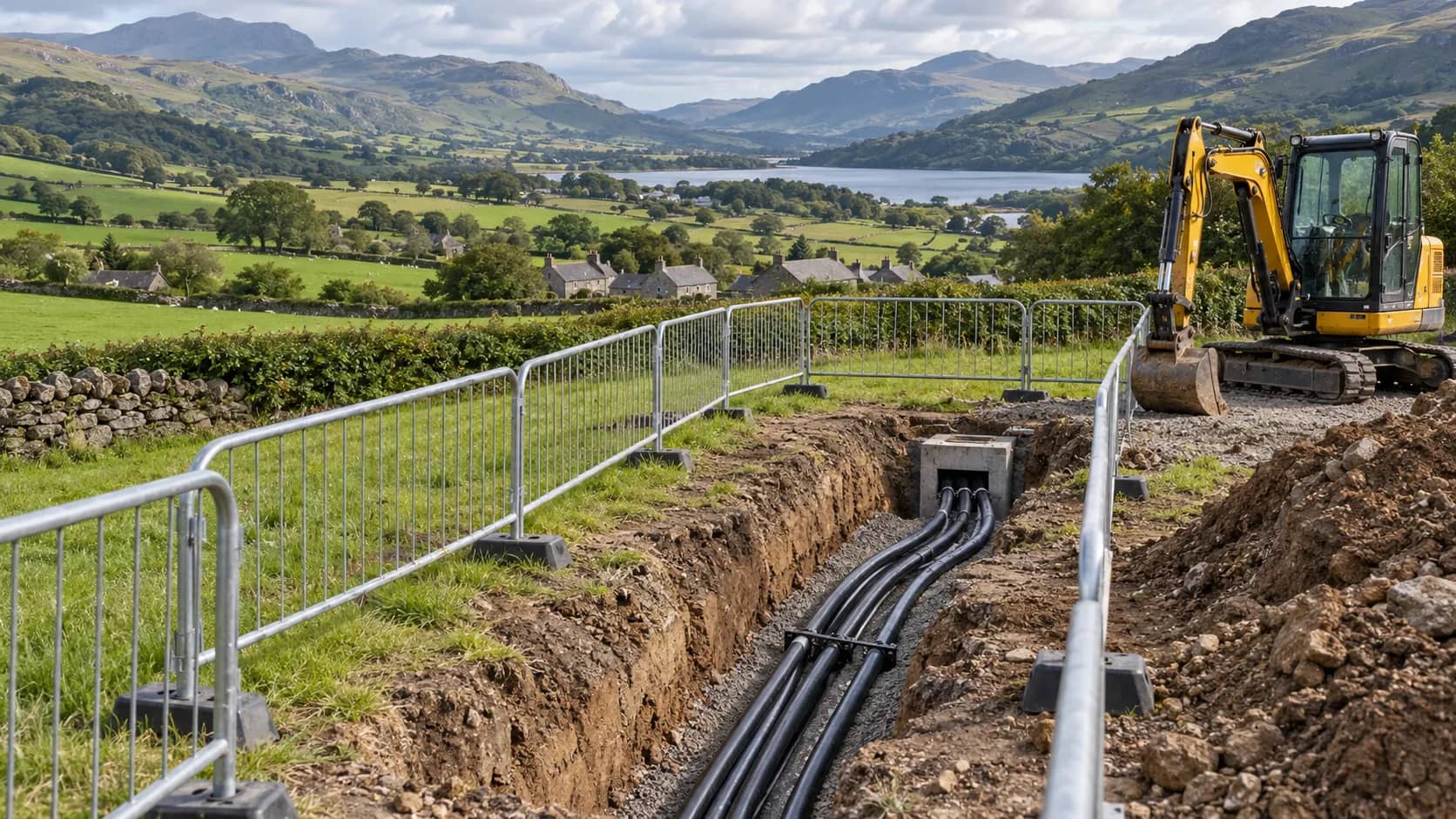
Wales is consulting on a planning policy that would make underground cables the first choice for new electricity circuits within a defined part of its network, while ending the use of large steel lattice pylons for those projects. The proposal concerns onshore lines operating between 11 and 132 kilovolts associated with devolved electricity generation projects. It is not a ban already in force across every Welsh power line.
The Welsh Government published the consultation documents on October 22. Its consultation landing page lists the launch date as October 23 and invites responses by January 15, 2027. The questions cover how an underground-first policy should work, when an overhead connection could be justified and how the change should enter planning decisions.
For communities following a proposed electricity route, the scope matters. The consultation does not decide where a particular line will run or approve a generating station. It excludes transmission infrastructure above 132kV and does not cover the consenting of generation projects, energy-storage facilities or other associated infrastructure.
Evidence would be needed for overhead exceptions
Current Welsh planning policy already expresses a preference for new electricity lines to go underground where possible. It also calls for a balanced assessment of costs that could make an otherwise acceptable project unviable. The proposed replacement would establish undergrounding as the default, with explicit tests for exceptional overhead solutions.
One proposed test would require evidence that burying a circuit would have a greater environmental impact than an overhead route. Another would address physical impossibility, including geology or geography, or an unacceptable engineering risk. A separate economic test would require evidence that undergrounding would make the proposed project financially unviable. These are proposed assessment criteria, not findings about any named development.
The government also proposes an order in which design options should be considered. Underground circuits would come first, followed by wooden poles and then other less intrusive infrastructure where justified. Applicants would need to explain an overhead solution rather than treating it as an equally preferred starting point. The consultation asks whether previous options should have to be exhausted before moving to the next.
Network operators would also be expected to demonstrate how individual applications fit wider strategic electricity plans. Proposed guidance would ask for evidence that route selection considered alignment with existing or planned infrastructure where appropriate. The aim is to let decision-makers assess a connection within a coordinated network, rather than only as a standalone route.
Landscape benefits come with construction and cost questions
The consultation describes potential benefits from putting circuits underground, including reduced visual effects and less exposure to some severe-weather hazards. But it also acknowledges that underground installations are generally more expensive to build and maintain, and that installation itself can affect the environment. It does not describe burial as the best engineering answer in every location.
Respondents are asked about different installation methods, including trenching, cable ploughing and horizontal directional drilling. Other questions seek evidence on environmental effects, installation speed, maintenance and the suitability of less intrusive overhead structures. The government is seeking practical experience and data, rather than presenting a completed assessment for every type of route.
Costs are relevant to consumers because network repairs, reinforcement and expansion are ultimately funded through utility bills. The document distinguishes Welsh planning responsibilities from electricity-price regulation and asks how greater undergrounding could affect households and businesses. It does not promise a particular bill reduction or specify an additional charge for individual customers.
How the proposed policy would take effect
The government intends first to issue an Interim Ministerial Planning Policy Statement, then incorporate the change when Planning Policy Wales is next revised. It also proposes an Infrastructure Policy Statement under the Infrastructure (Wales) Act 2024 for significant infrastructure projects. Those steps are intended to make the policy relevant to decisions taken by both Welsh Ministers and local planning authorities.
The document says the policy would not apply to circuits covered by permitted development rights or projects consented by the UK Government. Welsh ministers would nevertheless expect UK decision-makers to consider Welsh policies for projects in Wales. Responses to the consultation will inform the final approach and impact assessment; publication of the questions does not itself complete that process.
Readers can find the consultation document and response options through the Welsh Government's official page. Responses can be submitted online, by email or by post by January 15, 2027. The invitation is to comment on the policy framework, not to replace a project-specific planning application or its consultation arrangements.
In separate planning coverage, Dalimss News has reported on England’s local-plan submission extension and Scotland’s large-landholding community consultation. Those measures concern different processes and do not change this Welsh proposal.