
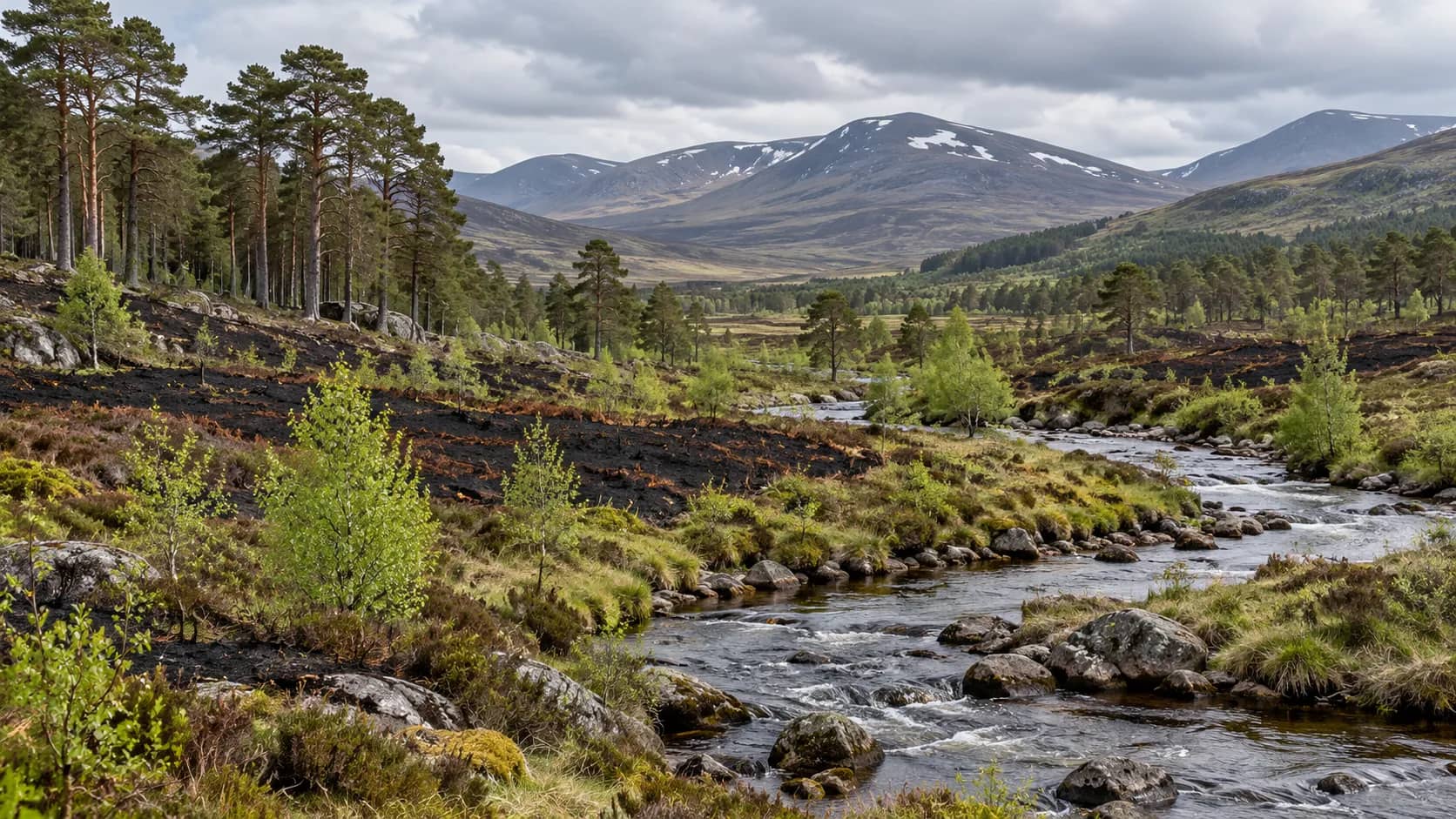
Scotland has allocated £1,347,018 to nature recovery projects, including work in the Cairngorms after the summer's Abernethy wildfire. The Scottish Government announced the package on October 24, setting out separate amounts for damaged habitats, rivers, species restoration, deer management and action against invasive species.
The allocation includes £150,100 for wildfire recovery and nature restoration through the Cairngorms National Park Authority. It is part of Scotland's existing £23 million nature restoration budget for 2026-27, rather than a new fund of that size on top of the annual budget. The government says most of the wider budget was allocated to delivery partners and local authorities at the Autumn Budget Revision in August.
Climate Action Secretary Gillian Martin announced the funding during her address to the ninth Summit for Subnational Governments and Cities at COP17 in Armenia. The practical work will be delivered through the national park authority and NatureScot. Public-body recipients will distribute funding to organisations and local contractors.
What the Cairngorms allocation covers
The Abernethy allocation consists of £128,100 in capital funding and £22,000 in resource funding. The stated purposes are to restore damaged habitats, help wildlife recover and reduce the risk of future wildfires. Those are the programme's aims, not a claim that restoration has already been completed.
Cairngorms National Park Authority chief executive Grant Moir identified two examples of the work: replacing wildlife-monitoring cameras damaged in the blaze and restoring a section of the Duack burn affected by emergency firebreaks. He also described plans to explore nature-based approaches to reducing future wildfire risk.
The authority will receive a separate £150,000 capital allocation for the Edendon river restoration project. That money is listed separately from the £150,100 wildfire allocation and should not be confused with the total for work following Abernethy. Together, the two national park authority entries account for £300,100 of the announced package.
Species, reserves and rivers receive separate funding
NatureScot's part of the package includes £125,000 for native oyster restoration and habitat restoration for chough on Islay. The government describes chough as rare members of the crow family. Of that allocation, £115,000 is capital and £10,000 is resource funding; the announcement does not divide the money further between the oyster and chough work.
Another £145,000 in resource funding is assigned to priority habitat restoration in four National Nature Reserves. The work is intended to support peatland restoration, coastal habitats and improved deer management. The release does not identify the four reserves, so it does not establish a separate allocation for any particular reserve.
Invasive non-native species projects receive £138,000 in resource funding. That covers control work, training and monitoring intended to help identify and respond to outbreaks before they become established. Separately, the Species Rich Grasslands Funding programme receives £240,000 in capital funding to support urban meadows.
The largest single listed river-work allocation is £248,918 in capital funding. It covers Polmaddy Burn, Selcoth Burn and the Findhorn river at Forres. The government lists improvements to river flow, habitat restoration, floodwater storage, woodland restoration and deer management among the work, without specifying a separate amount for each location.
Delivery is distinct from the funding announcement
A further £150,000 in resource funding supports deer management. The named examples are the Scottish Agricultural Organisation Society's low-ground venison supply-chain project and the Loch Lomond and the Trossachs National Park deer incentive scheme. The release does not publish individual awards within that combined allocation. The six NatureScot entries total £1,046,918, with projects covering both rural landscapes and urban areas.
The October 24 statement sets out funding and intended work, but does not provide completion dates or report finished restoration. It also does not announce a general application window for households or landowners. Readers should distinguish these named allocations through public bodies from an open grant offer.
This is separate from the UK government's October 22 wildfire-response package, which Dalimss News covered in its report on military aircraft support and England's peatland funding. The Scottish allocation concerns named nature-restoration projects. It was announced alongside the COP17 biodiversity discussions, rather than as a new agreement adopted by the conference.
Contains information from the Scottish Government licensed under the Open Government Licence v3.0. This independent report is not endorsed by the Scottish Government.