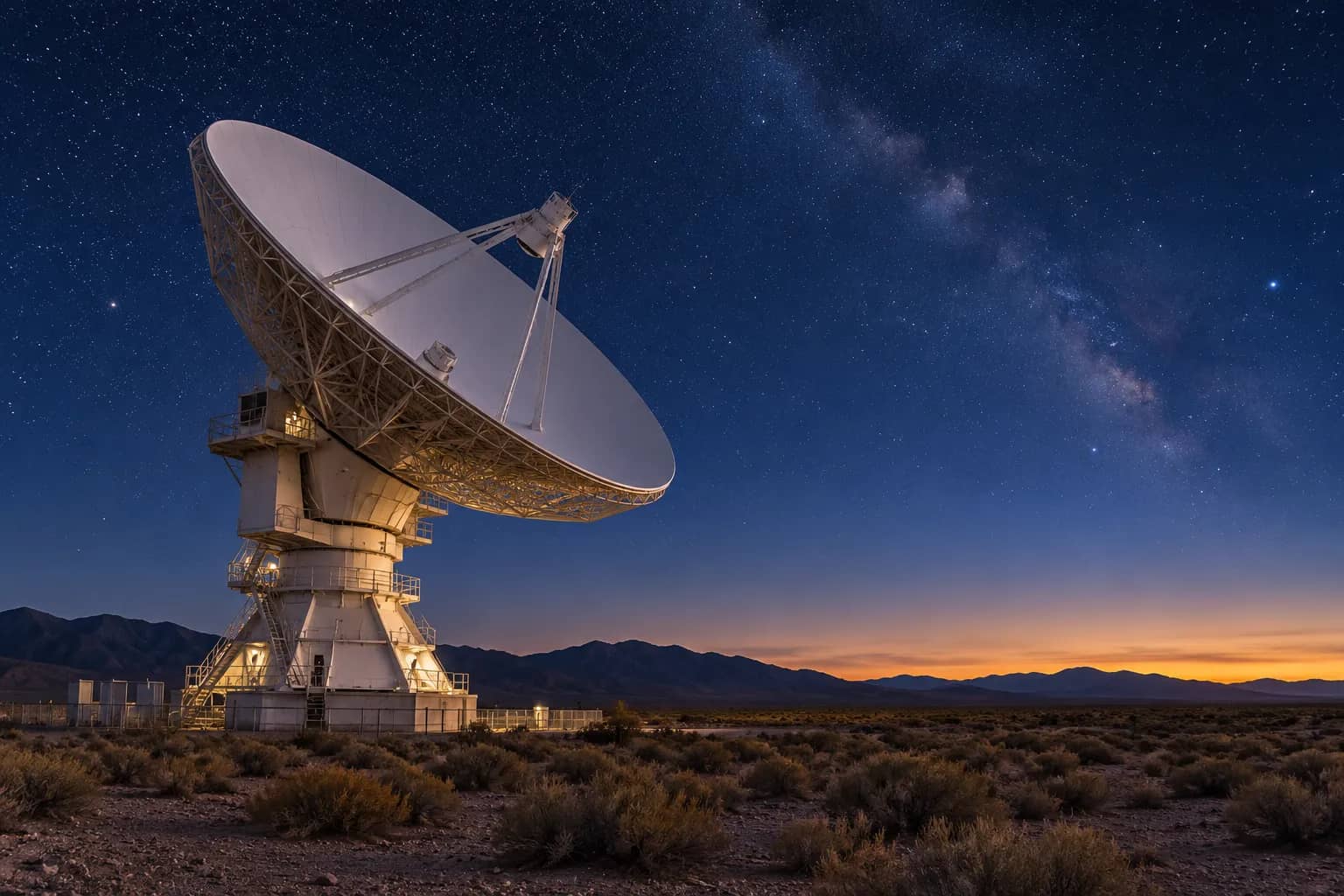
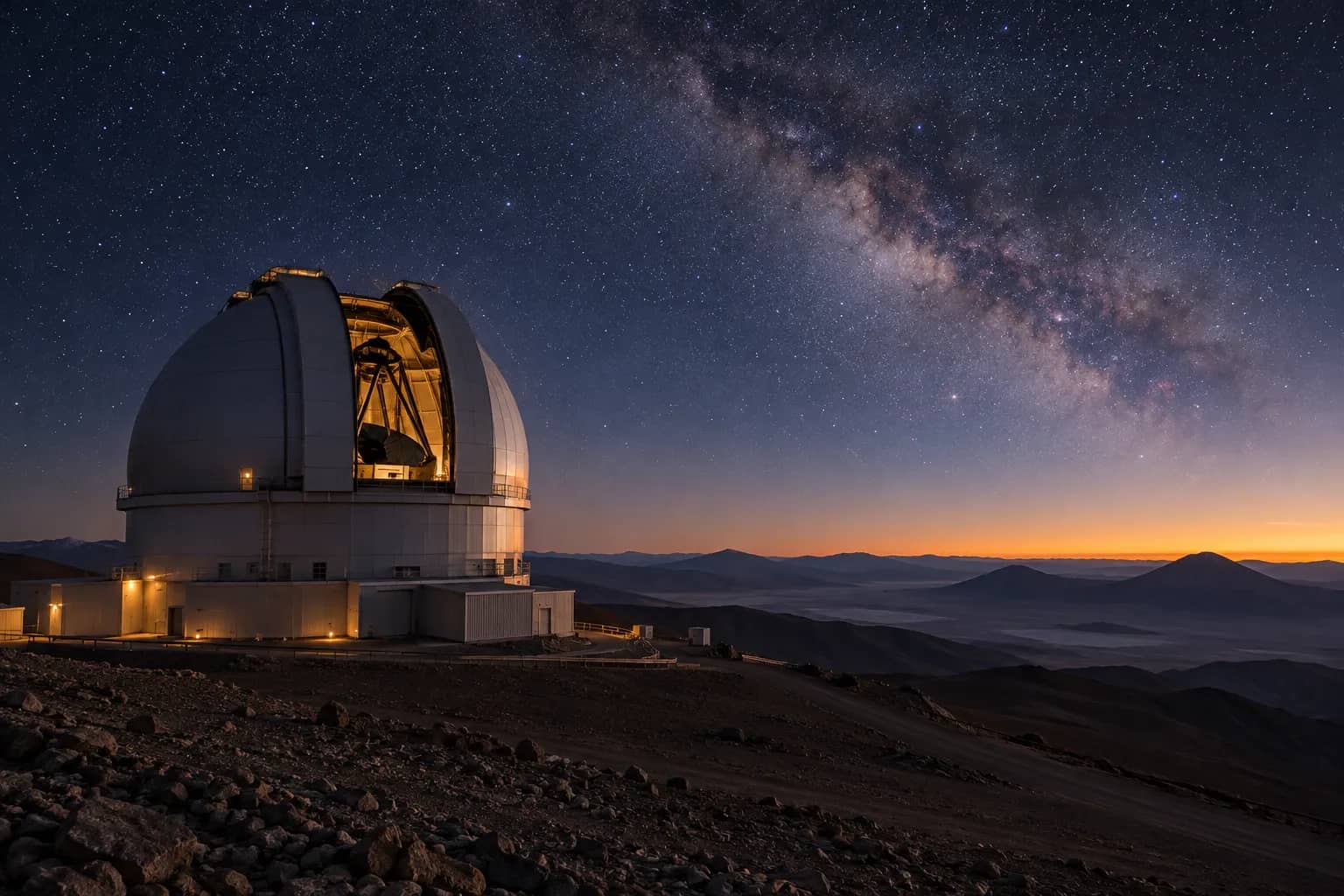
Astronomers have identified two separate rings of gaseous debris around a dead star, a structure that differs from previously observed systems of this kind. The European Southern Observatory announced the finding on October 27. The researchers suggest that two surviving planetary bodies may be supplying the gas, but those objects have not been directly observed.
The star, known as WD J1328-1450, is a white dwarf, the dense remnant left when a star similar to the Sun exhausts its fuel. ESO says the debris contains calcium, oxygen, magnesium and iron. These are ingredients associated with rocky planetary material, rather than evidence that intact Earth-like planets have been photographed beside the star.
The study appeared in Nature Astronomy. Its proposed explanation includes an inner body comparable in size to an asteroid and an outer object that could be much larger. Those comparisons describe possibilities inferred from the system, not measured diameters. The finding concerns what can remain after a star's transformation, rather than a prediction of an imminent event in our Solar System.
Four peaks instead of two
The research paper describes how the team first identified excess infrared radiation from the star, then obtained spectra with the Very Large Telescope. Calcium and oxygen emission lines showed four peaks where previously known gaseous debris systems showed two. The researchers interpret that pattern as light coming from two distinct rotating rings around the same stellar remnant.
Their model places the inner ring between 0.14 and 0.34 times the Sun's radius from the white dwarf. The outer ring extends from 0.54 to 1.93 solar radii. These are modelled boundaries, with uncertainties reported in the paper. The measurements therefore describe a compact system around the star, not rings spread across distances comparable with the outer Solar System.
The authors also examine alternatives. A single disc with a vertically extended part casting a shadow could produce a similar pattern, they write, but no existing theoretical model supports that arrangement for white-dwarf debris. Their preferred two-ring explanation must account for both the generation of gas and the gap remaining open instead of being filled as gas spreads.
What the chemistry can reveal
The University of Trieste, which led the research, places the system about 1,600 light-years from Earth. Its October 27 account says repeated observations between 2021 and 2023 showed that the structure remained stable for more than two years. The newly announced result is an analysis of those observations, not a claim that the star changed into this configuration this week.
The university describes a chemical difference between the rings: magnesium is abundant in the inner ring but much scarcer relative to calcium in the outer one. Material from two different bodies could explain that contrast. Another possibility is debris from different layers of a single body, such as its crust and mantle. The observations do not settle that question.
In the team's proposed mechanism, surviving bodies interact with surrounding dust to generate gas. As that gas cools, it becomes solid again before spreading far enough to erase the separation. The university says the bodies would need to be compact and resistant to survive the white dwarf's tidal forces. Their actual sizes cannot be measured directly from these observations.
The instrument behind the finding
ESO's X-shooter instrument separates incoming light into wavelengths, allowing researchers to examine a spectrum rather than relying only on an image. Its three arms cover ultraviolet, visible and near-infrared light, recording these different parts of the spectrum at once. That breadth helps explain why a telescope observation can reveal information about chemical composition and motion even when the proposed planetary bodies themselves remain unseen.
X-shooter operates at ESO's Paranal Observatory in Chile. Its instrument description lists a wavelength range of 300 to 2,500 nanometres. In this study, spectroscopy supplied the evidence for the unusual ring arrangement; the illustrations accompanying the announcements are visual interpretations, not direct photographs resolving two surviving planets.
For other space reporting, Dalimss News has covered the deployment of Dhruva Space's LEAP-2 satellite and explained Satleo Labs' TAPAS-1 thermal-imaging payload.