NASA said on October 29 that Voyager 1 was communicating again after a brief interruption earlier this month, while engineers had completed a separate power-saving operation intended to keep its science instruments running longer.
The signal was missing during scheduled contacts on October 18 and 19, then returned on October 20 before engineers sent troubleshooting commands. NASA says communication has continued since. Engineers found that a group of thrusters had switched off and backup thrusters had taken over, but the reason for the interruption remained under investigation.
In early September, three devices were swapped for lower-power alternatives while preserving heat distribution. NASA says the change postpones another science-instrument shutdown, which otherwise could have been needed as early as summer 2027.
What Voyager can still measure
NASA's published instrument-status table lists Voyager 1's magnetometer and plasma-wave subsystem as operating. Its cosmic-ray subsystem was switched off in February 2025, followed by its low-energy charged-particle instrument in April 2026. Those entries explain why conserving a small amount of power matters: the work protects the instruments that remain, rather than restoring the full collection carried at launch.
The table also lists Voyager 1's cameras as switched off in February 1990. Readers following the mission should therefore distinguish its continuing measurements from new photographs. NASA's public status page offers an interactive spacecraft-position visualisation, but that is a way to follow the journey, not a live camera view from the probe.
That page says Voyager 1 is expected to reach one light-day from Earth on November 18. A light-day is a distance, defined by how far light travels in 24 hours. The forecast is a coming marker on the journey, not an event that has already occurred.
Power without sunlight
NASA's radioisotope-power programme explains that these systems produce electricity from heat released by the natural decay of plutonium-238. They let spacecraft operate where sunlight is too weak or conditions make other sources impractical. Their output does not depend on keeping solar panels illuminated, a useful distinction for a mission travelling far beyond the planets.
Heat is also part of keeping equipment alive. NASA says surplus heat from radioisotope systems can help spacecraft operate in extreme cold. Electricity and temperature therefore cannot be treated as unrelated problems when engineers change which equipment draws power. Saving electricity is useful only if the resulting arrangement still allows the spacecraft to function.
Voyager 2 provided an earlier test of the approach. In an August 4 update, NASA said its engineers had completed the corresponding simultaneous swap on the twin spacecraft. At that point the agency expected the savings to keep Voyager 2's three science instruments operating for at least an extra year, instead of turning another off before the end of 2026.
That August statement described the Voyager 1 operation as work still to come. The October update now reports its completion. The distinction matters because the earlier estimate for Voyager 2 is not a newly announced guarantee of how long Voyager 1 will last.
How Earth stays in touch
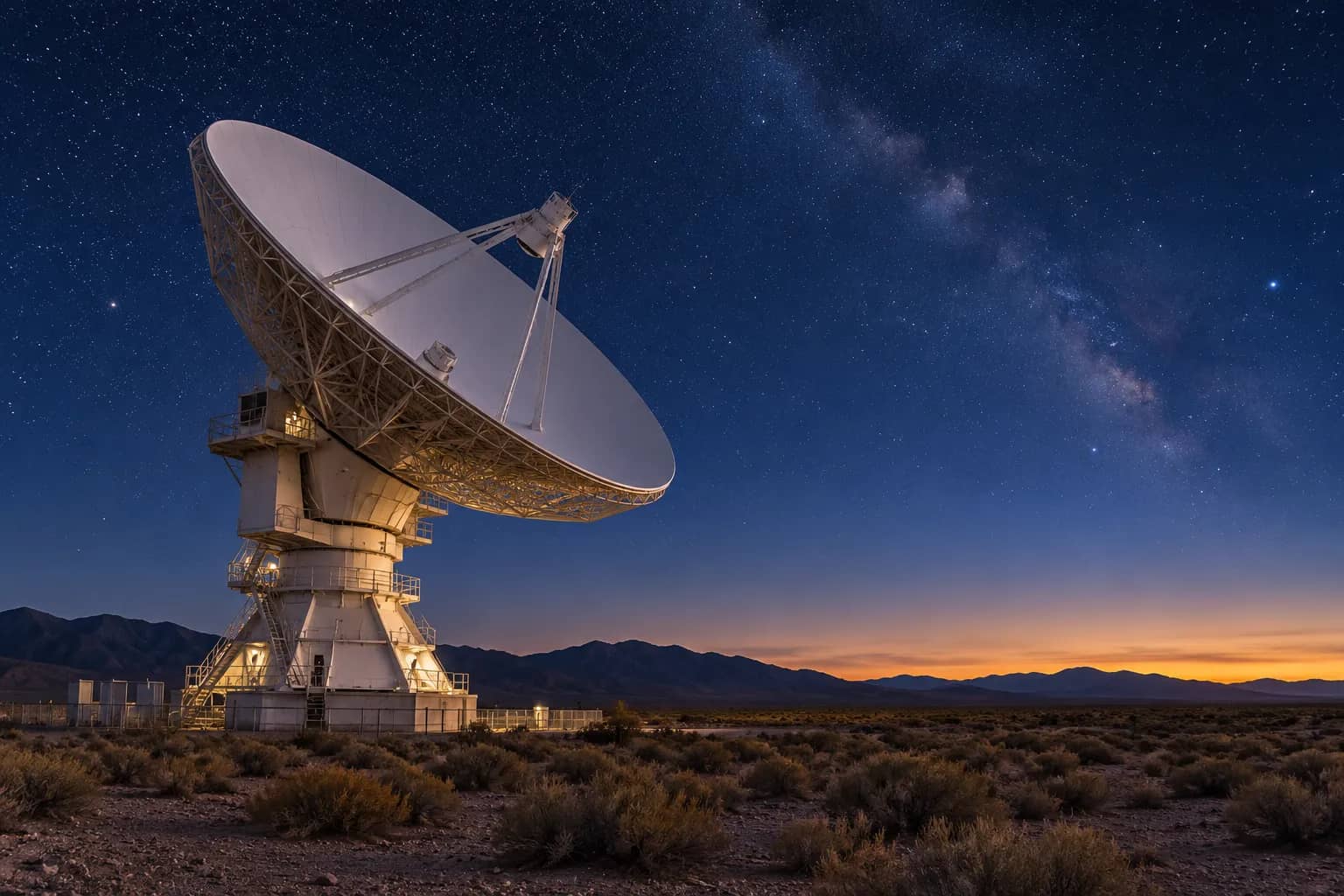
The ground connection runs through NASA's Deep Space Network. Its complexes near Goldstone in California, Madrid in Spain and Canberra in Australia are positioned so another site can take over as Earth's rotation carries a spacecraft below one site's horizon. The network sends commands and receives scientific data as well as helping teams track spacecraft.
NASA explains that engineers can determine a spacecraft's motion by measuring changes in the frequency of its radio signal, using the Doppler effect. Communication is therefore also a navigation tool, not merely a channel for messages. Readers can follow current network activity through DSN Now, linked from NASA's network page. NASA says the display uses actual ground-station data refreshed every five seconds, rather than a timetable of planned contacts. It shows network activity, not a promise that Voyager is connected continuously. For readers comparing different missions, Dalimss News has also covered Dhruva Space's LEAP-2 deployment and Satleo Labs' thermal-imaging payload. Those Earth-orbit projects serve different purposes from Voyager's continuing interstellar measurements.