A beginner warm-up at home can follow the NHS sequence of marching, heel digs, knee lifts, shoulder rolls and shallow knee bends. The NHS says this routine should take at least six minutes, with longer allowed if needed. Start with controlled movements and a comfortable range. The purpose is preparation for the activity that follows, so do not turn the warm-up into a test of speed or how low you can bend.
| Movement | Target shown by the NHS |
|---|---|
| March on the spot | Three minutes |
| Heel digs | Aim for 60 in 60 seconds |
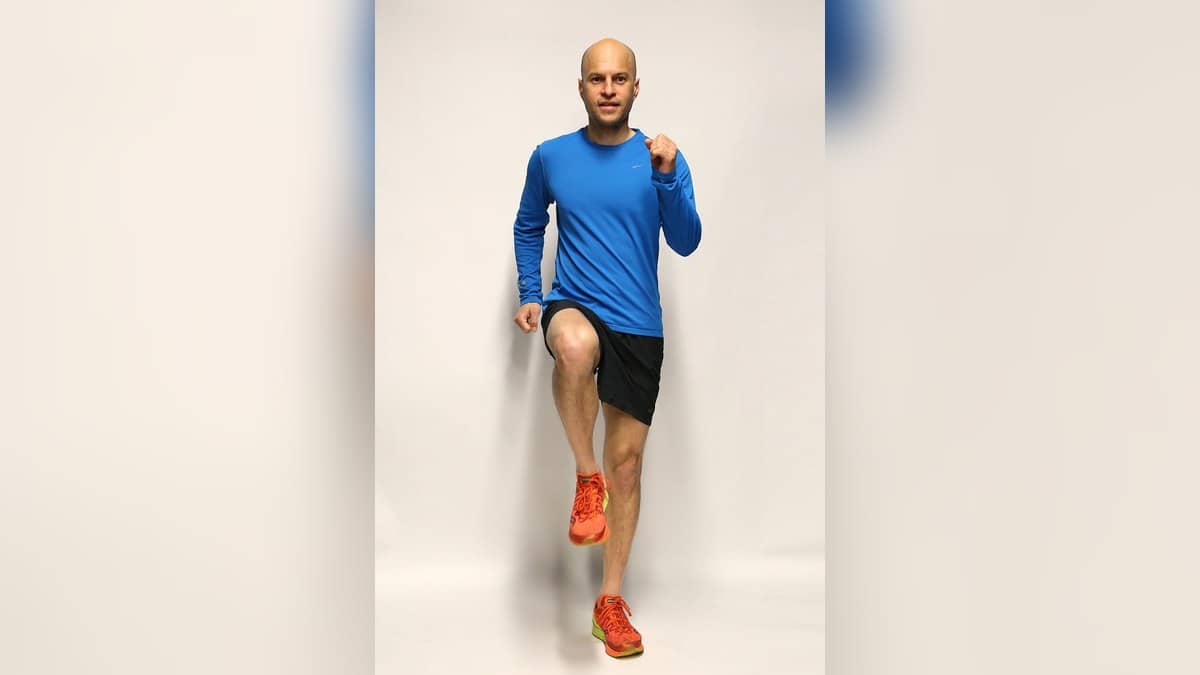
| Knee lifts | Aim for 30 in 30 seconds |
| Shoulder rolls | Two sets of 10, rolling forwards and backwards |
| Knee bends | 10 repetitions, lowering no more than 10 cm |
How to warm up before exercising at home
Read the official NHS warm-up instructions before trying the sequence. They include photographs of the positions and safety information. The targets above describe that published routine. If you need a slower pace or smaller movements, allow more time rather than trying to force every repetition into the suggested seconds.
Marching: begin on the spot, then move forwards and backwards if you have room and can do so comfortably. Keep your elbows bent and your hands relaxed while your arms move with your steps. For a simpler start, stay in one place and keep the steps small. There is no need to add forward and backward travel before you feel steady.
Heel digs: place alternate heels in front, with the front toes pointing upwards and a slight bend in the supporting leg. The NHS describes punching out with each heel dig. Begin with a short reach and unhurried changes of foot if coordination is unfamiliar. Focus on the position and balance before attempting the published repetition target.
Knee lifts: stand upright and bring each knee towards the opposite hand, keeping your back straight and a slight bend in the supporting leg. A beginner adjustment is to raise the knee less high. Do not round your back or jerk the leg upwards to reach your hand. If you cannot perform the movement comfortably, leave it out and seek advice about a suitable alternative.
Shoulder rolls and knee bends: keep the movement small
For shoulder rolls, the NHS says to keep marching, roll forwards five times and backwards five times, and complete two sets of 10 repetitions. Let your arms hang loosely at your sides. Use small, comfortable circles at first. Pause if coordinating the marching and shoulder movement makes you feel unsteady.
For knee bends, stand with your feet about shoulder width apart and extend your hands in front. Bend your knees to lower yourself no more than 10 cm, then come back up. The target is 10 repetitions. This is a shallow movement; the instruction does not call for a deep squat. A smaller bend is a reasonable beginner adjustment if that is your comfortable range.
The NHS page also contains a separate basic warm-up video labelled five minutes. That is not the same as the written sequence’s instruction to allow at least six minutes. Follow the timing for the version you are using, and do not assume the video title overrides the written routine. The important practical point is to move with control rather than rush between exercises.
Who should get medical advice before trying this routine?
The NHS safety notes describe these as general exercises for most people in good health with a reasonable fitness level. They are not exercises to treat a particular cause of pain. If you have a medical condition, consult a qualified doctor before beginning a new exercise routine. Also seek professional advice if you have an injury, feel unwell, have had a recent operation or other significant health event, or are pregnant or have recently given birth.
Stop immediately if you feel pain or become unwell. Seek medical help for symptoms that concern you or do not settle. Do not treat a lower repetition count as a failure, and do not use a published target as permission to continue through discomfort. A routine that is unsuitable for you needs adjustment with appropriate professional guidance.
Keep preparation separate from planning the rest of your session. The NHS exercise hub has separate guidance for activity levels and different exercise types. For related reading on our site, see a beginner home workout, chair and wall strength exercises and gentle stretching. Choose the next activity according to your ability and health, and leave time to prepare for it.