Children and adolescents aged 5 to 17 should do an average of at least 60 minutes of moderate to vigorous physical activity a day across the week, under WHO guidance. Most of that activity should be aerobic, with vigorous activity and movement that strengthens muscles and bones included at least three days a week. The recommendation includes active play and everyday movement, so it does not mean that every child needs an hour of formal gym training.
| Part of the recommendation | Meaning for families |
|---|---|
| Age group | WHO’s child and adolescent group is 5 to 17 years |
| Amount | Average of at least 60 minutes a day across the week |
| Variety | Mostly aerobic movement, plus vigorous and muscle and bone strengthening activity |
| Starting point | Some activity is better than none; build gradually |
How much physical activity do children need?
The figure is set out in WHO’s Everyday actions for better health recommendations. Read “average” together with “across the week”. It is a way to understand a regular pattern of movement, rather than a reason to judge a child by one unusually busy or quiet school day.
For a parent looking at a timetable, the first useful question is where movement already happens. Walking to school, playing outdoors, a physical education lesson and dancing can all be relevant. A sports class is one opportunity among several. The next question is how active the child is during that time: simply being at a playground does not tell you how much time was spent moving.
The WHO physical activity fact sheet defines activity broadly and stresses that all physical activity counts. It also says any amount is better than none. A child who currently does little activity therefore needs an achievable starting point, rather than a sudden demand to match a much more active classmate.
What counts as moderate or vigorous activity for children?
The NHS child activity guide describes moderate activity as movement that raises the heart rate, makes breathing faster and leaves a person feeling warmer. Its simple indicator is being able to talk but not sing. That is more useful for understanding effort than assuming every minute of an activity has the same intensity.
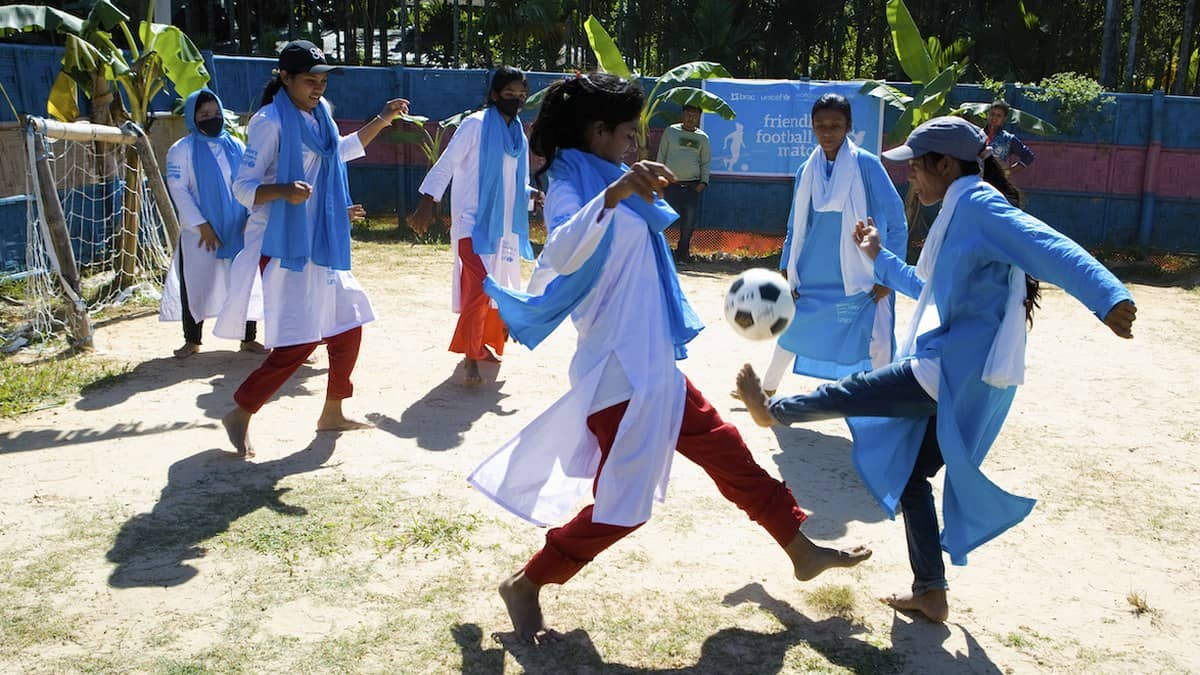
Examples in the NHS guide include playground running and catching, football, swimming, skipping and dancing. Choose activities suited to the child’s age, ability and experience. A family can discuss which of these the child actually enjoys and which are possible in the available space. The purpose is regular participation, without making an adult competition programme the default.
Muscle and bone strengthening need not mean lifting weights. The NHS lists jumping, gymnastics and football among its examples. WHO’s three days a week recommendation is about including these kinds of demands within a varied activity pattern. Families do not need to add a separate strength session on top of every already active day to make the guidance meaningful.
How can parents fit activity around school?
Use a simple diary of opportunities rather than an elaborate performance chart. Note the school’s physical education days, regular play time and any weekend activity. Ask where long periods of sitting could be interrupted with movement. The NHS advises spreading activity through the day and breaking up long periods of not moving; the whole amount does not have to happen in one continuous session.
For example, an active journey, a short period of playground play and a dance session at home could all form parts of a day. This is an illustration of arranging opportunities, not a fixed prescription or a claim that those activities always reach the required intensity. The child’s actual participation and effort matter more than the label on the timetable.
Do not confuse this age group with preschool guidance. WHO has separate recommendations for children under five. Likewise, individual support matters for a child living with disability or a long term condition. A general age-based figure is not a substitute for an activity plan that reflects mobility, fatigue, symptoms and the advice of the child’s care team.
When should a child get medical advice before exercise?
Children with a health condition should consult a qualified doctor about suitable activity before starting a new exercise programme. The NHS also advises starting new exercise slowly and increasing it bit by bit. Stop an activity if it causes pain or the child becomes unwell, and seek appropriate medical advice. Never use the daily figure as a reason to push through symptoms.
Parents building their own routine can read our guides to understanding exercise intensity, walking and weekly activity and breaking up long sitting periods. Those adult-focused explanations provide context, while the child’s age, abilities and official child guidance should determine the family’s approach.