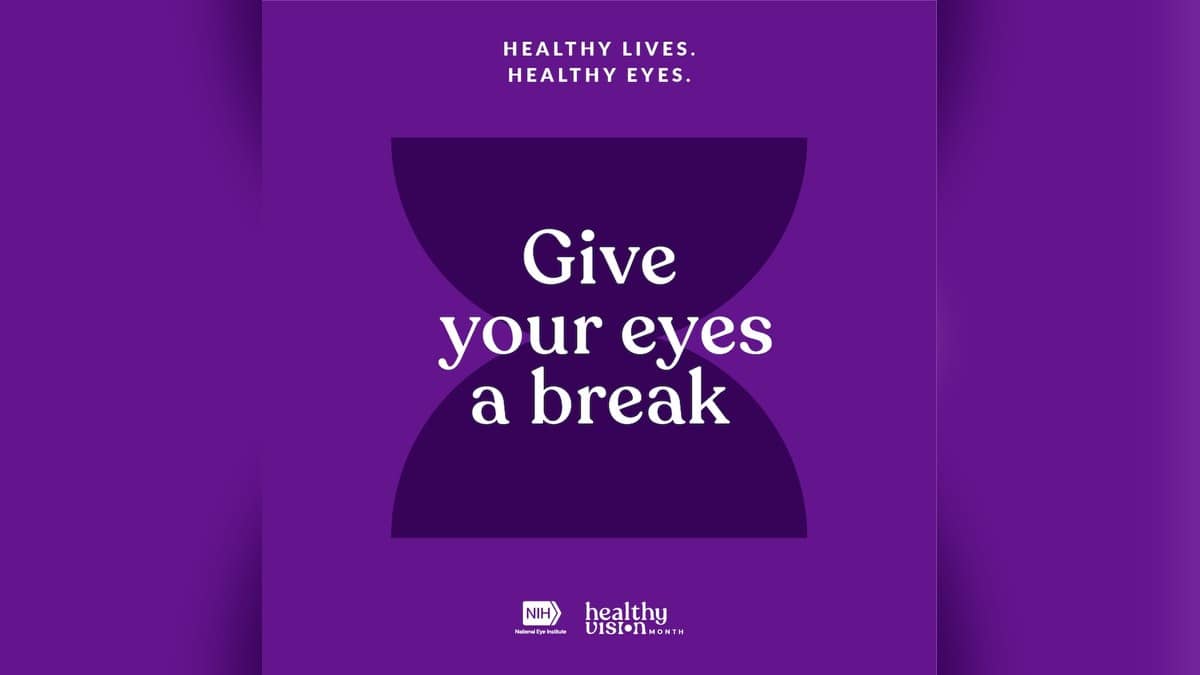
The 20-20-20 rule for eyes means looking at something about 20 feet away for 20 seconds after every 20 minutes of close screen work. The US National Eye Institute recommends it as a way to give your eyes a break. Twenty feet is approximately six metres. The rule is a reminder to pause, not a test of eyesight or a treatment for an eye condition.
For students following online lessons and adults doing long periods of desk work, the attraction is that the instruction is easy to remember. Its three numbers describe the interval, the viewing distance and the length of the break. They do not mean that every symptom during screen use has the same cause or that a short pause removes the need for an eye examination.
| Number | What it means |
|---|---|
| Every 20 minutes | Pause the close viewing task |
| About 20 feet | Look at a distant object, roughly six metres away |
| For 20 seconds | Keep the brief break before returning to the task |
How to follow the 20-20-20 rule for eyes
The National Eye Institute’s healthy vision tips say that staring at one thing for too long can tire the eyes. Its Healthy Vision Month guidance repeats the same break pattern for screen users. Both pages were checked on 2 November 2026.
Before a study or work session, choose an ordinary distant object you can look at without strain. It might be something across a large room or beyond a window. The institute says “about” 20 feet, so the instruction is not an exercise in measuring an exact line with a tape. Choose a safe view and never look directly at the sun.
Use a simple reminder if you tend to lose track of time. When it comes, pause reading and look at the distant object for 20 seconds. This reminder is an optional way of organising the habit, not a product recommendation or a special medical device requirement. You can follow the instruction without installing an app.
The break should interrupt the close viewing task. Switching immediately to another page of small text does not follow the distance part of the instruction. If you share a workspace or attend a lesson, plan a discreet way to look away without leaving your place or disturbing others. You do not need to make the reminder more complicated than the habit it supports.
Does the 20-20-20 rule cure eye strain?
The official material recommends breaks; it does not provide a guarantee that they will resolve every complaint. Avoid interpreting the rule as a cure for dry eyes, a way to change a glasses prescription or a promise to prevent every form of eye disease. A general habit cannot establish why your eyes feel uncomfortable.
The NHS dry eyes guidance identifies long periods looking at screens without a break as one factor associated with dry eyes. It also lists other factors, including contact lenses and dry or dusty environments. Symptoms can include soreness, a gritty feeling, blurred vision and watering. Those symptoms should not be used as a checklist to diagnose yourself.
For basic desk habits, the NHS recommends taking breaks and keeping the screen just below eye level. Its guidance also advises against spending too long in smoky, dry or dusty places. These are practical environmental points, not a reason to buy a particular display, eyewear product or supplement. This guide makes no product or treatment recommendation.
When should you get an eye problem checked?
If you have an eye condition or another medical condition affecting your eyes, consult a qualified doctor about suitable care. A screen break reminder should sit alongside the care you have already been advised to follow. Do not stop prescribed medicine because you suspect it is contributing to dryness; the NHS says to seek medical advice first.
Seek prompt medical attention for an eye that is painful and red, or for a red eye when you wear contact lenses. Sudden changes such as flashes or loss of vision, an eye injury or pain when looking at light need urgent assessment through local medical services. Do not wait for the next scheduled break to see whether a concerning symptom disappears.
Children should tell a parent or teacher if their eyes bother them or their vision changes, as the institute’s children’s guidance advises. For adults, persistent discomfort is also a reason to arrange professional assessment. Repeating a break routine does not identify the cause of a symptom, especially when it is changing or interfering with ordinary reading.
Make eye breaks part of a workable day
Keep the eye reminder separate from the other habits you need. Looking into the distance is not the same task as being physically active, and a brief screen pause does not settle how much sleep you need. Our adult sleep guide explains that separate question.
For a broader routine, see our walking activity explainer and beginner home workout guide. The useful starting point here is modest: remember what each of the three numbers means, take the break, and get symptoms checked when a general habit is not enough.