VDA Moves Building Compounding Applications Online With Trackable Deadlines
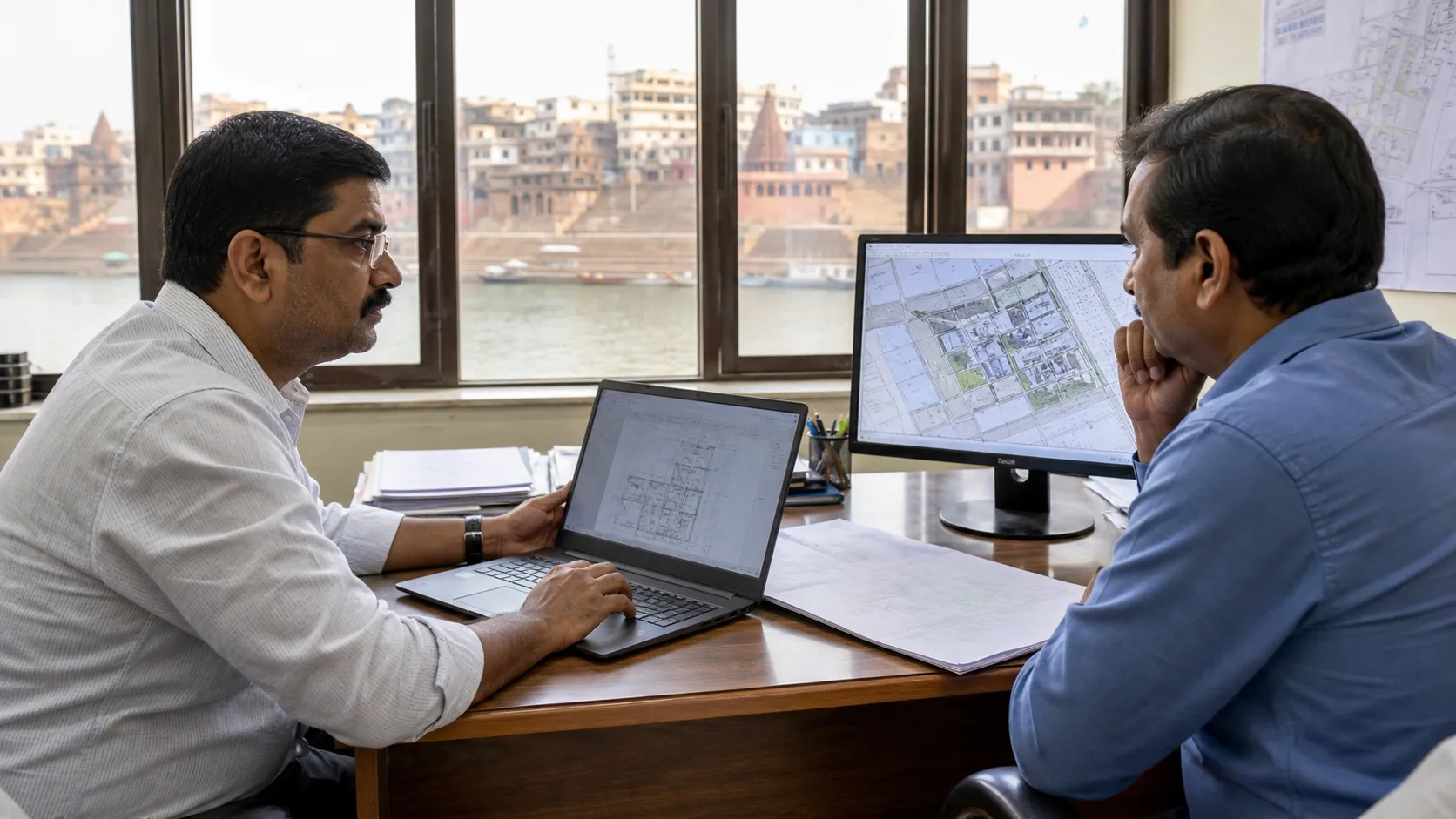
Varanasi Development Authority has moved building-compounding applications into a fully online workflow, allowing property owners and architects to upload documents, pay fees and track a file without repeatedly visiting the VDA office. Vice-Chairman Purna Bora launched the Online Voluntary Compounding System at the authority’s headquarters on Tuesday.
Compounding is the legal process through which certain permissible deviations from an approved building plan may be regularised after scrutiny and payment. It is not a blanket amnesty for every unauthorised construction. A building that violates non-compoundable safety, land-use or public-space requirements cannot become lawful merely because an application has been uploaded.
Until now, compounding files were submitted offline, making it difficult for applicants to know where a case was pending or whether an objection had been raised. The new system is intended to create a visible trail from submission to final decision. Time limits have been assigned at each administrative level, from the junior engineer upward to the vice-chairman, according to the launch details.
That visibility can change the everyday experience of urban regulation. An applicant should be able to see when a file was received, which officer is examining it, what document is missing and when the response is due. Architects also gain a common record instead of relying on phone calls and handwritten follow-ups.
The portal’s real test will be the quality of its objections. A generic message such as “documents incomplete” simply moves the old counter online. Notices should identify the exact drawing, certificate or rule involved and allow a response through the same system. If a case is rejected, the order should explain whether the deviation is non-compoundable and what remedy, if any, remains.
Digital access also requires an assisted route. Not every property owner is comfortable scanning large plans, making online payments or converting old documents into the required format. A help desk at VDA headquarters can prevent applicants from becoming dependent on unverified middlemen. The authority should publish official fees and avoid any design that forces users to buy private technical help for a basic status check.
Bora said the objective is not only to put the process online but to make services more transparent and accountable. He also directed zonal staff to maintain regular inspections and prevent illegal construction. That second part is important. Compounding should deal with eligible past deviations; it should not become a business model in which builders violate first and expect approval later.
Public reporting would strengthen the system. Monthly data on applications received, approved, rejected, returned and pending beyond deadline could show whether the workflow is actually faster. Personal property details should remain protected, but institutional performance need not be hidden.
Varanasi’s construction pressure is intense, and the rules are often experienced only when a notice arrives. A trackable system cannot simplify the law by itself, but it can make the administration explain what it is doing. If deadlines and reasoned orders are enforced, the launch will replace more than paper; it will replace uncertainty with a record.
Sources and reporting
Based on the Online Voluntary Compounding System launched at Varanasi Development Authority headquarters on 4 August 2026 by Vice-Chairman Purna Bora.
Related Stories

BHU: Below 4.0 CGPA Will Cost Hostel and Health Facilities
Sewer and Water Pipeline Work Starts in Four Wards Under CCTV Watch
BHU Issues 69-Page PhD Bulletin for About 1,500 Seats in Three Modes

Lolark Shashthi Draws Long Queues at Bhadaini’s Lolark Kund

Ganga Level Keeps Falling; Silt Clearing Starts as Boat Ban Holds