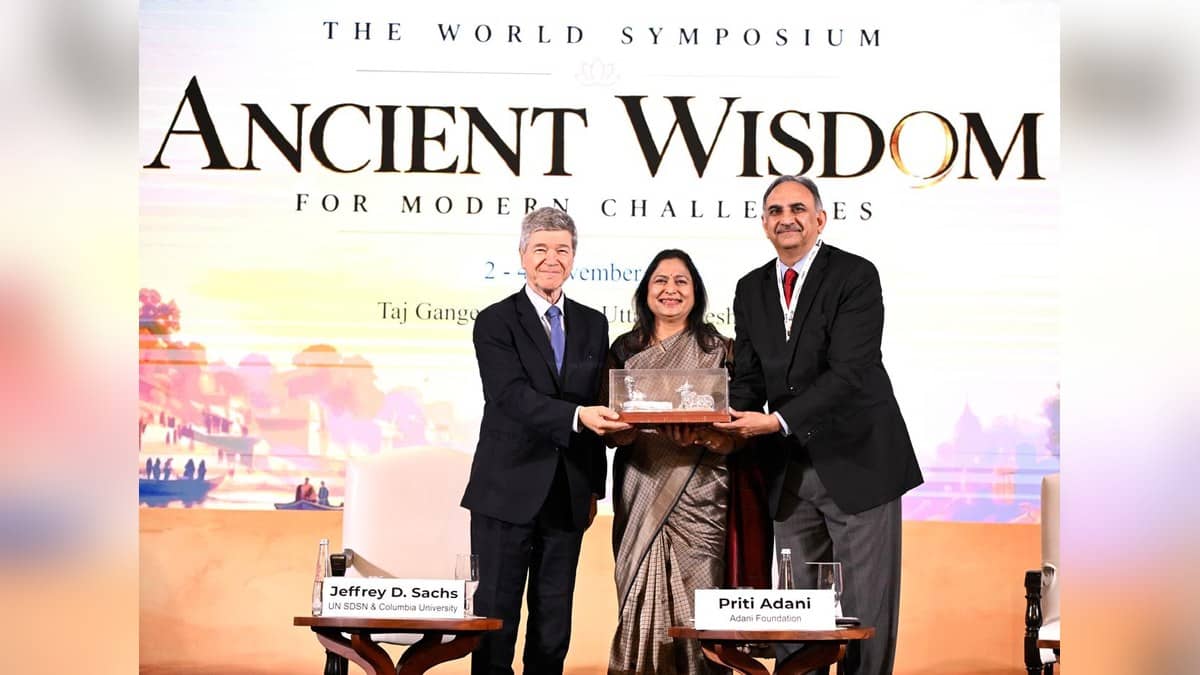
VARANASI: The World Symposium on Ancient Wisdom for Modern Challenges opened on Monday, November 2, 2026, bringing an international discussion on ethics, peace and sustainable development to the city. The three-day programme continues through November 4, with conference discussions followed by visits to local heritage sites, including Sarnath.
Residents and students hoping to attend the November 3 discussions should confirm access with the organisers before travelling. The sources checked for this report do not give a public walk-in procedure or ticket price. The programme's heritage visits are for participants; they do not establish a separate public event at Sarnath.
The announced schedule places the main conference on November 2 and 3, with November 4 reserved for cultural engagement and site visits. That distinction matters for anyone seeking a discussion session rather than joining a sightseeing itinerary. Exact public entry hours and a site-by-site visiting timetable have not been established.
Opening session connects philosophy with public life
In its official release dated November 2, Adani Group confirmed that foundation chairperson Priti Adani addressed the opening session. She argued that inherited knowledge should be judged by how it helps people deal with current problems, including suffering, inequality and conflict.
Her address brought together Aristotle's concern with human flourishing, the Buddha's response to suffering and Confucius's emphasis on ethical behaviour and responsibility. She related these ideas to the Indian concept of the world as one family. In discussing community work, she emphasised listening to people and giving communities a role in shaping their future.
Jeffrey D. Sachs addressed the changing distribution of global economic influence in a session titled The Return of a Multipolar World. Culture Ministry secretary Vivek Aggarwal also spoke, while Columbia University's Nirupam Bajpai addressed the inaugural session. Their participation was recorded in the official account of the opening.
What the programme will discuss
The programme brings scholars, practitioners and leaders into conversations across philosophical traditions. The stated focus includes Hindu, Buddhist and Jain thought alongside Aristotelian, Confucian and other traditions. The organisers' outline emphasises the ethical exercise of power, governance and dialogue between different intellectual backgrounds.
Four broad themes frame the gathering: peace and dialogue among civilisations; sustainable development and care for the planet; ethics and governance; and inner development and human well-being. These are discussion themes. The checked material does not announce a municipal scheme, a new local service or a binding policy decision arising from the symposium.
Speaking to reporters before the opening, Sachs described the gathering as a way for philosophers and people working in public life to discuss shared goals such as peace, social justice and environmental sustainability. He also spoke of circulating the outcomes beyond the meeting. A final outcome document has not been established in the sources checked so far.
Utrecht University philosopher Chiara Robbiano described an exchange in which different traditions can supply concepts that help participants recognise weaknesses in their own assumptions. Her emphasis was on learning how to sustain dialogue across differences, rather than limiting the discussion to a single philosophical tradition.
Workineh Kelbessa of Addis Ababa University discussed indigenous environmental knowledge in Africa. He described it as knowledge developed through practical experience, borrowing and adaptation, and argued for examining its useful contributions carefully when addressing environmental and social problems. His remarks add a community knowledge perspective to the conference's sustainability theme.
What residents should do
Anyone planning around the remaining programme should obtain confirmation of the relevant session and admission arrangement from the organisers. The published outline includes Ganga ghats, aarti ceremonies, temple complexes and Sarnath among the cultural engagements. It does not provide a verified traffic diversion, closure order or public assembly time for those places.
The Varanasi gathering follows earlier meetings in Athens in 2022, Stagira in 2023, and Qufu and Beijing in 2024, according to the official release. For local readers, the next scheduled stage is the November 3 conference day, followed by the November 4 heritage programme.
For other city cultural coverage, read about BHU's November 3 music heritage event, the Dashashwamedh Akashdeep observance and the recent New Asi Ghat performance programme.