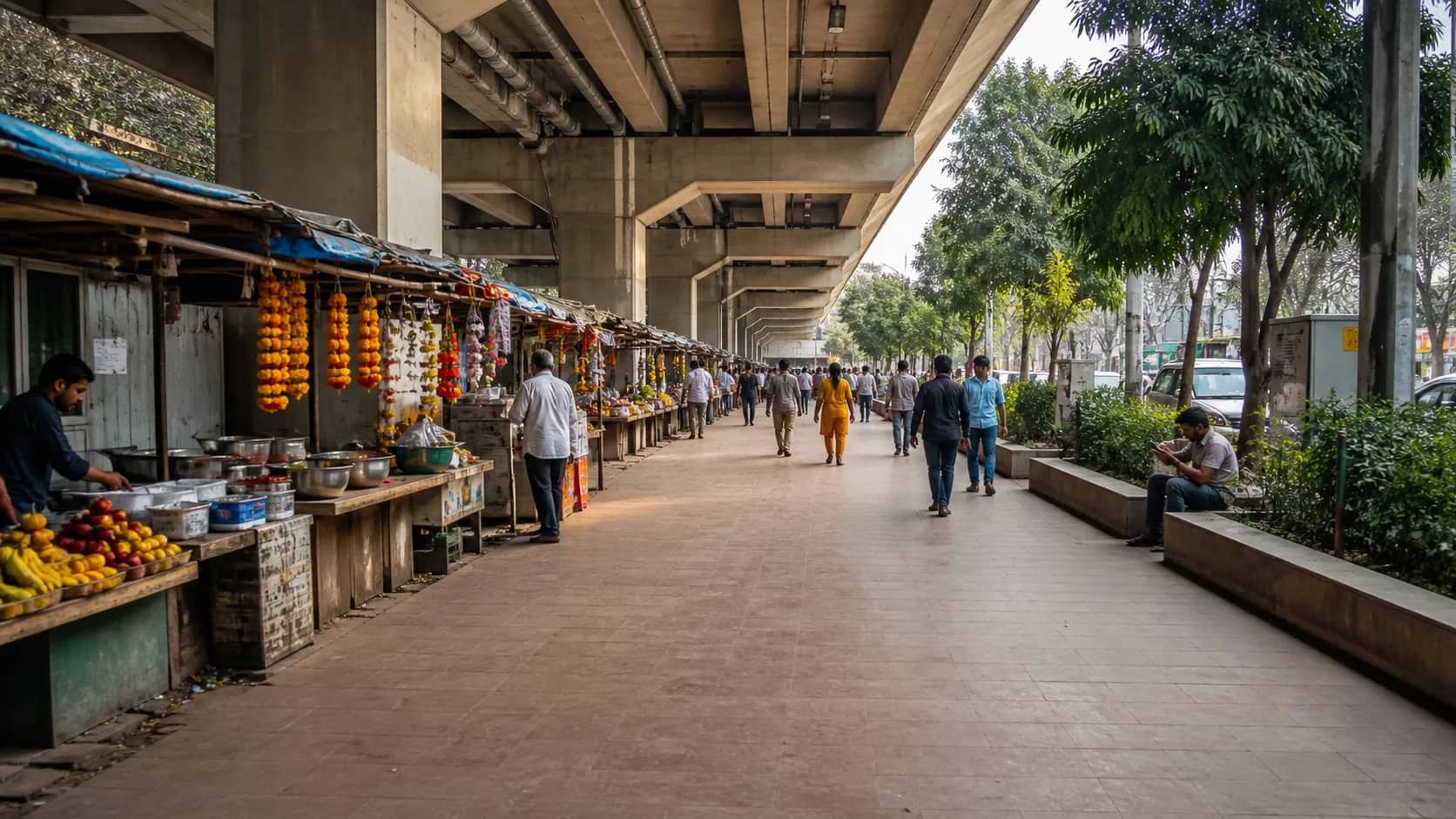
Varanasi Municipal Corporation is surveying spaces beneath railway overbridges and flyovers for organised vending zones, a move intended to give street vendors designated places while reducing conflict over footpaths and traffic corridors. Temporary shop structures may be developed at locations found suitable.
The survey follows a meeting in which vendors approached Mayor Ashok Kumar Tiwari and Municipal Commissioner Himanshu Nagpal. The revenue department has been asked to identify sites, and the commissioner said spaces would be provided. The proposal also links eligible vendors with loans of ₹10,000 to ₹50,000 under PM SVANidhi.
Using the space beneath elevated roads can be practical, but only if the site is designed rather than casually occupied. Clear pedestrian routes, access for emergency vehicles, drainage, lighting, waste collection and distance from moving traffic must be built into the layout. A vending zone that blocks a service lane simply moves the original problem under concrete.
For vendors, a recognised pitch offers more than protection from eviction. It can provide a stable customer location, make it easier to keep goods and equipment organised, and support access to formal credit. Many street businesses operate on thin daily margins, so a sudden removal or repeated relocation can erase income even when stock is not confiscated.
PM SVANidhi loans can help purchase a cart, utensils, stock or small equipment, but borrowing should match a vendor’s repayment capacity. Applicants need clear information on eligibility, interest, digital incentives and the consequences of missed instalments. Loans are useful when paired with a workable site; debt cannot compensate for a location where customers cannot safely stop.
The allocation process will require transparency. Municipal records should identify existing vendors, publish the criteria for selection and prevent pitches from being captured by intermediaries or transferred informally. Women vendors, people with disabilities and long-established hawkers should be able to participate without navigating an opaque chain of recommendations.
The city’s aim should not be to hide vendors beneath flyovers. Street commerce is part of Varanasi’s everyday economy and deserves infrastructure proportionate to its role. If the survey produces safe, clean and well-connected sites, the plan can improve both livelihoods and public movement. Its success will be measured at ground level: whether vendors can trade without harassment, pedestrians can pass without obstruction and the space remains usable after the first round of markings and stalls.
A pilot zone would allow the corporation to test the idea before scaling it. Footfall, waste volume, traffic impact and vendor income can be measured, then used to correct stall size, opening hours and maintenance arrangements at later sites.