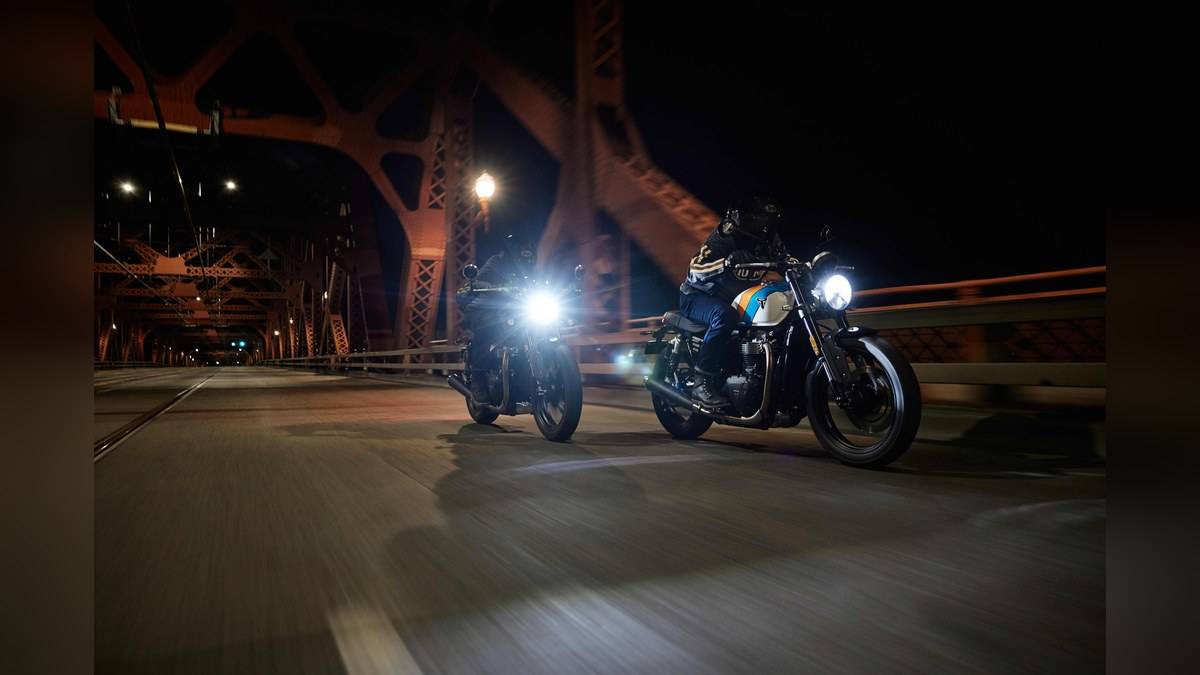
NEW DELHI: Triumph India lists the Speed Twin 900 from Rs 9,71,300. That is a starting figure, rather than a complete colour-wise price list or an on-road quotation. The model combines a Bonneville twin with contemporary chassis hardware, while retaining the compact silhouette of a traditional roadster.
| Item | Official listing |
|---|---|
| Published price | From Rs 9,71,300 |
| Engine | 900 cc parallel twin |
| Output | 65 PS at 7,500 rpm; 80 Nm at 3,800 rpm |
| Transmission | Five-speed |
| Seat height | 780 mm; accessory low seat 760 mm |
| Wet weight | 216 kg |
| Fuel tank | 12 litres |
What the published price establishes
Price as of 9 November 2026, 23:41 IST. The readable product page does not map separate prices to individual paint schemes. Its headline figure therefore establishes an entry point only. A full amount payable cannot be reconstructed from that number without registration, insurance and any separately selected equipment being itemised.
That distinction matters on this motorcycle because several useful conveniences appear in the accessory discussion. A page showing navigation capability, a low seat or luggage does not establish that every photographed part is included in the starting price. The equipment list and the price reference need to be read together, rather than treating the lifestyle images as an invoice.
The engine puts the emphasis on accessible torque
The official engine figures place peak torque well below the engine speed needed for peak power. Read as a specification, that suggests a roadster intended to offer useful drive before the upper end of the rev range. It does not establish acceleration times, overtaking distances or a particular cruising speed, none of which can be inferred reliably from output alone.
The five-speed transmission belongs to that same discussion. Counting gears is a poor substitute for examining how a motorcycle responds at ordinary road speeds. For an Indian city-to-highway routine, the meaningful questions are how often the rider needs to shift, whether the chosen gear suits the traffic and how comfortably the engine responds. Those require riding evidence, rather than assumptions from engine capacity.
Modern hardware beneath familiar proportions
Triumph specifies Marzocchi upside-down forks, cast wheels and a radial front caliper acting on a 320 mm disc. Road and Rain modes are listed, along with lean-sensitive braking and traction assistance. The visual language is classic, but the specification makes clear that this is a contemporary road motorcycle rather than a recreation of an older mechanical package.
The relevance of that combination is especially clear when considering broken urban surfaces followed by faster open roads. Suspension, tyres and braking response all influence confidence during that transition. Their brand names alone cannot tell a reader how compliant the motorcycle feels over a sharp edge, so there is no basis here for calling the ride either plush or firm.
The single front disc also needs context. Disc count is visible and easy to compare in photographs, but it does not independently establish stopping performance. The caliper arrangement, control system and complete chassis package deserve consideration together. This report makes no measured braking claim and does not rank the Speed Twin against motorcycles tested under different conditions.
Seat options change the fit question
The standard and accessory seat heights provide a useful starting point for understanding the model. A lower saddle may change ground reach, while seat shape and the path of the rider's legs still affect the result. Neither measurement guarantees that a particular rider can put both feet flat on the road, especially when footwear and posture differ.
The published wet weight is relevant even with a relatively accessible saddle. At a standstill, pushing backwards or turning within a parking space asks something different of the rider from balancing once moving. That makes the Speed Twin's fit question more specific than simply describing it as a low motorcycle. Reach to the controls and the ability to manage its mass remain separate considerations.
Connectivity and ownership need separate lines
The instrument arrangement combines LCD information with a colour TFT element. Triumph describes My Triumph connectivity functions through accessory equipment, while a USB-C socket provides a charging connection. A charging port and a navigation system perform different jobs: seeing the former should not be taken as proof that phone integration has already been fitted and configured.
The compact tank is another detail to interpret carefully. Fuel capacity is confirmed, but a dependable touring range requires evidence about actual consumption and the conditions of use. A city commute, luggage-laden highway run and relaxed weekend outing cannot simply be assigned the same distance between fills. No real-world economy or range promise is being made here.
The Speed Twin 900 therefore has a clear identity within this price reference: a twin-cylinder roadster with traditional styling, accessible seat options and modern control hardware. The unresolved part is the final configuration cost. Keeping the starting figure distinct from accessories and on-road charges preserves a useful, accurate reference without manufacturing a variant table the official page does not provide.
Related coverage: Triumph Speed T4 price report, Scrambler 400 X and Speed 400 comparison, Scrambler 400 XC price explainer.
Official source: Triumph India Speed Twin 900 product page.