
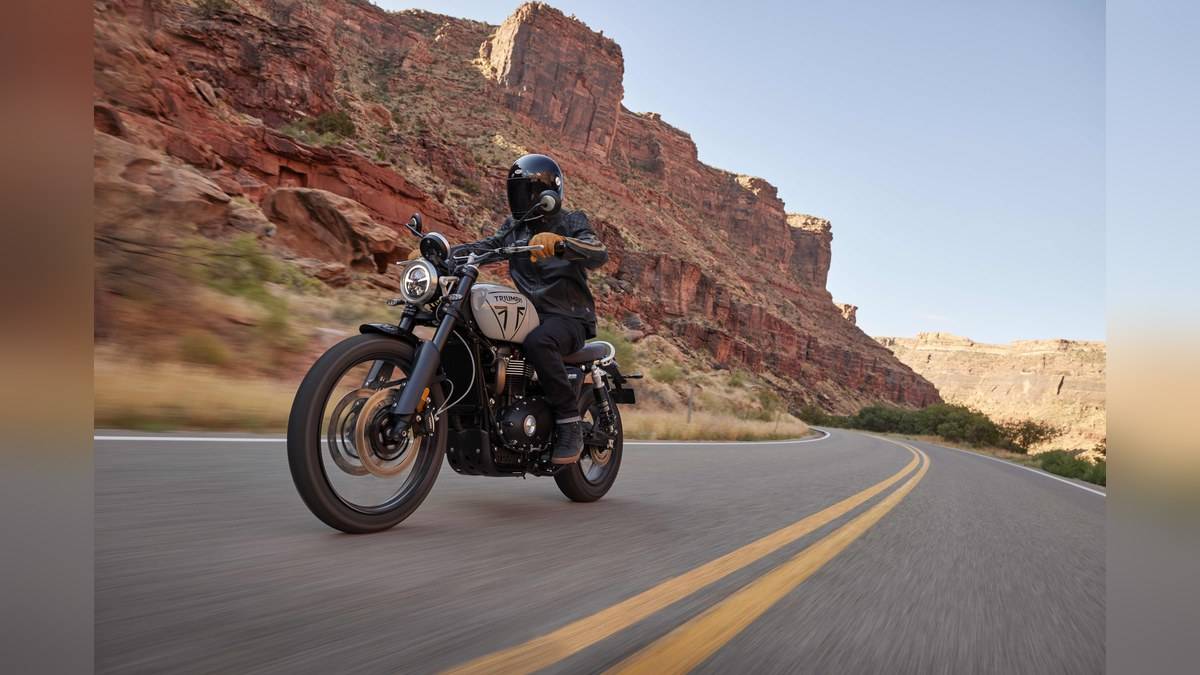
NEW DELHI: Triumph specifies a tubeless spoked 21-inch front wheel and 17-inch rear wheel for the Scrambler 1200 X. This is a useful distinction for readers who associate all wire-spoked wheels with inner tubes. The X combines its classic appearance with a wheel specification that needs to be understood on its own terms.
| Item | Official listing |
|---|---|
| Front wheel | Tubeless spoked, 21 inches |
| Rear wheel | Tubeless spoked, 17 inches |
| Front tyre | 90/90-21 |
| Rear tyre | 150/70 R17 |
| Seat height | 820 mm |
| Wet weight | 228 kg |
| Tank capacity | 15 litres |
Spokes and tubeless construction can coexist
A wheel's visible spokes do not, by themselves, establish whether an inner tube is required. The complete wheel construction and the approved tyre arrangement determine that. Triumph's specification explicitly identifies the Scrambler's wheels as tubeless. That confirmed description is more dependable than making an assumption from a photograph of the rims.
This matters when documenting the motorcycle for maintenance or planning a journey. The exact wheel and tyre arrangement should be recorded rather than reduced to a broad label such as classic wheels. A replacement tyre discussion needs the fitted size and its suitability for the wheel. Visual resemblance to another scrambler is not evidence that the same replacement arrangement applies.
The larger front wheel is part of the brief
The front and rear dimensions give the X its recognisable scrambler proportions. They also identify a different chassis starting point from a motorcycle with equally sized wheels. That does not establish a universal handling advantage. Wheel diameter works with geometry, tyres and suspension, so a single measurement cannot rank the motorcycle on every surface.
For Indian riders, the useful context is a route that can change from regular tarmac to an uneven access road. The wheel specification helps explain why the X is presented as a motorcycle with scope beyond smooth roads. It does not certify that any rocky track, water crossing or damaged section will be manageable at a particular speed or with a particular load.
Nor does a larger front wheel eliminate the need to judge an obstacle. The rider still has to account for the surface, visibility and available grip. Claims that the motorcycle simply rolls over everything would turn a measurable design choice into an unsupported promise. The official dimensions are useful without attaching that kind of exaggeration to them.
Read the tyre sizes as a matched specification
The listed front and rear tyre sizes belong to different positions and should be kept distinct when recording the motorcycle's details. A supplier listing only the model name leaves less information than a record that also identifies the correct size and position. Any replacement still needs to meet the applicable handbook requirements and the wheel manufacturer's restrictions.
A tubeless description is also not a guarantee against punctures or wheel damage. It explains the intended air-retaining arrangement, rather than promising that every roadside problem can be solved with a repair kit. The condition of the tyre, rim and valve matters, and damage needs proper assessment. No universal roadside repair method is prescribed in this equipment explainer.
The relationship between tread and intended use deserves equal care. A tyre that suits a road-focused journey can involve different compromises from one chosen for loose surfaces. The correct comparison therefore needs to identify the actual fitted tyre and the relevant approved alternatives. A photograph with a rugged backdrop cannot establish grip in a different set of conditions.
The chassis still asks the rider to manage its size
The official saddle height and wet weight add necessary context to the wheel discussion. The X may have a classic bench-seat appearance, but a rider still needs to account for the complete motorcycle when stopping or turning in limited space. A large front wheel does not independently make those manoeuvres easier, and a measurement cannot predict personal fit.
This is especially relevant when a journey ends at a hotel entrance, a gravel parking area or an uneven roadside stopping place. The moving motorcycle and the stationary motorcycle pose different balance questions. Route planning should include places to stop and turn, rather than treating the ability to travel over a surface as proof that every stopping point is equally suitable.
Keep confirmed dimensions separate from disputed figures
The readable India page contains differing descriptions of some engine and suspension details across its narrative and specification sections. Those conflicting figures are excluded here. The wheel dimensions, tubeless description and tyre sizes provide a coherent, useful subject without requiring a choice between inconsistent numbers. There is no claim here about the exact front suspension travel.
The result is a focused account of what distinguishes the Scrambler 1200 X wheel package: classic spokes, explicitly tubeless construction and unequal front and rear diameters. Those details explain its layout and give owners precise reference points for a maintenance discussion. They do not replace the handbook, establish a measured off-road limit or settle the suitability of an unfamiliar route.
Related coverage: Triumph Speed T4 price report, Scrambler 400 X and Speed 400 comparison, Scrambler 400 XC price explainer.
Official source: Triumph India Scrambler 1200 X product page.