
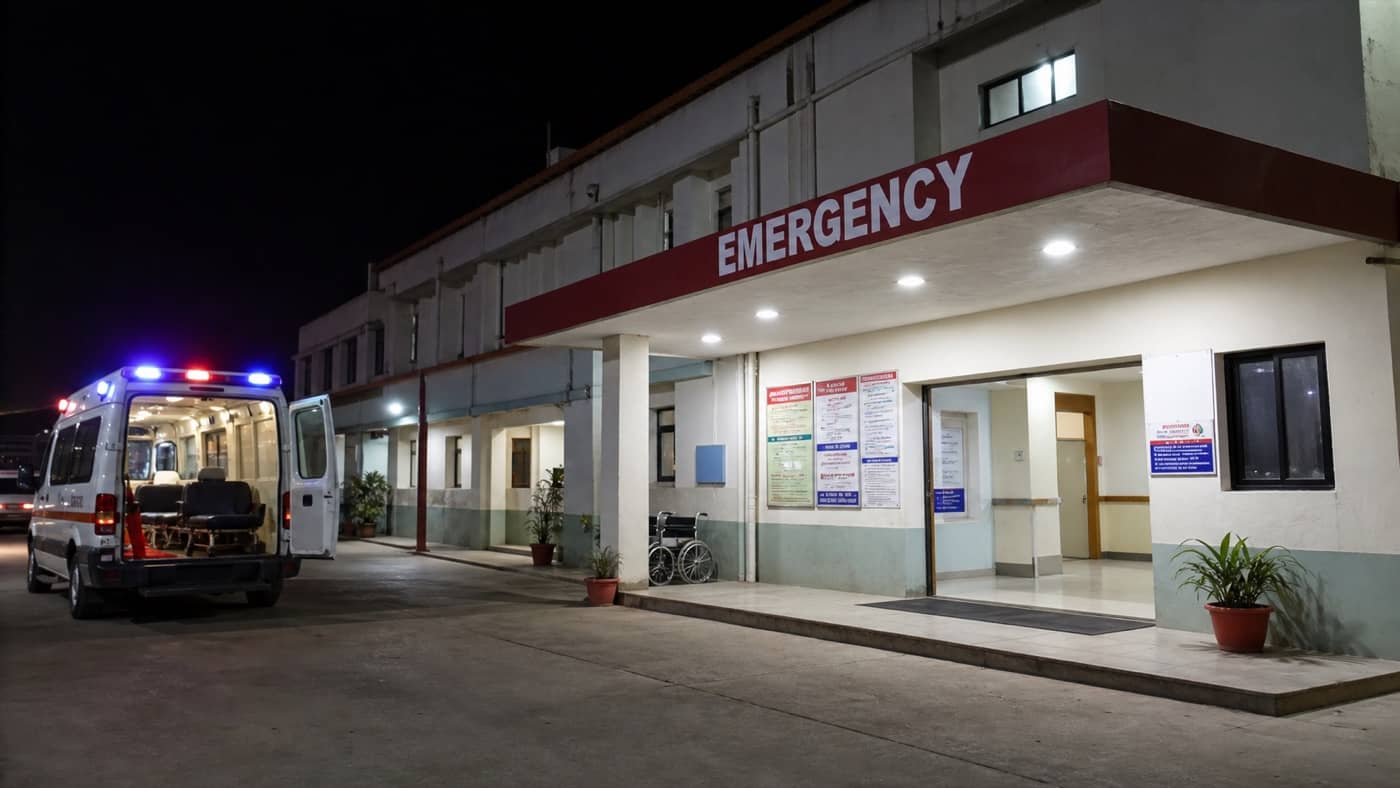
VARANASI: A snakebite patient was sent from Shivpur Community Health Centre to Deen Dayal Upadhyay Hospital after a staff member allegedly said anti-venom was unavailable. The CHC’s medical officer later said the medicine was in stock and attributed the referral to a newly posted employee who did not know where it was kept.
The patient, Adarsh Mishra of Holapur, was reportedly bitten on the leg at about 8 pm on Saturday while walking from home towards the market. His family brought him to the CHC emergency unit around 9 pm. Relatives said the staff member on duty came out of a room, told them treatment could not be provided because there was no anti-venom and advised them to go to Deen Dayal hospital.
The family followed that advice. Adarsh was taken to the district-level hospital, where he was reported to be under treatment. A relative, Akshay Mishra, questioned what would have happened if the patient’s condition had deteriorated during the additional journey. The concern is understandable: suspected snakebite is time-sensitive, and families arriving at a health centre need a rapid clinical assessment rather than uncertainty about inventory.
Shivpur CHC in-charge Dr Manoj Dubey offered a materially different account of the facility’s preparedness. He said adequate anti-venom doses were available and that the staff member involved was new and unaware of the stock. That explanation shifts the immediate issue from procurement to induction, handover and emergency communication.
Anti-venom should not be administered automatically in every suspected bite; trained clinicians assess symptoms and the likelihood of envenomation because the medicine itself can cause serious reactions. But the ability to make that decision depends on qualified staff, a working protocol and ready access to the drug when clinically required. A patient should not be referred merely because the person at the desk lacks basic stock information.
The incident warrants a documented internal review: who assessed the patient, what observations were recorded, when the referral was made, whether a doctor was contacted and how emergency medicines are displayed to each shift. A simple inventory board and signed shift handover could prevent a repeat more effectively than a verbal warning after the fact.
The case also carries a broader monsoon lesson. Snake encounters rise when water and vegetation disturb habitats. Residents should avoid cutting or sucking a bite, keep the person still, remove tight jewellery and seek medical care quickly. The public-health system’s part is equally clear: the first facility must know what it has and act without avoidable delay.
Health officials should also make the review’s outcome visible without disclosing private medical details. If the problem was training, every emergency shift should be briefed; if the stock register was unclear, it should be standardised. Families need assurance that corrective action reached the night desk, not only the administrative office. A time-sensitive medicine is functionally unavailable when staff cannot locate it.