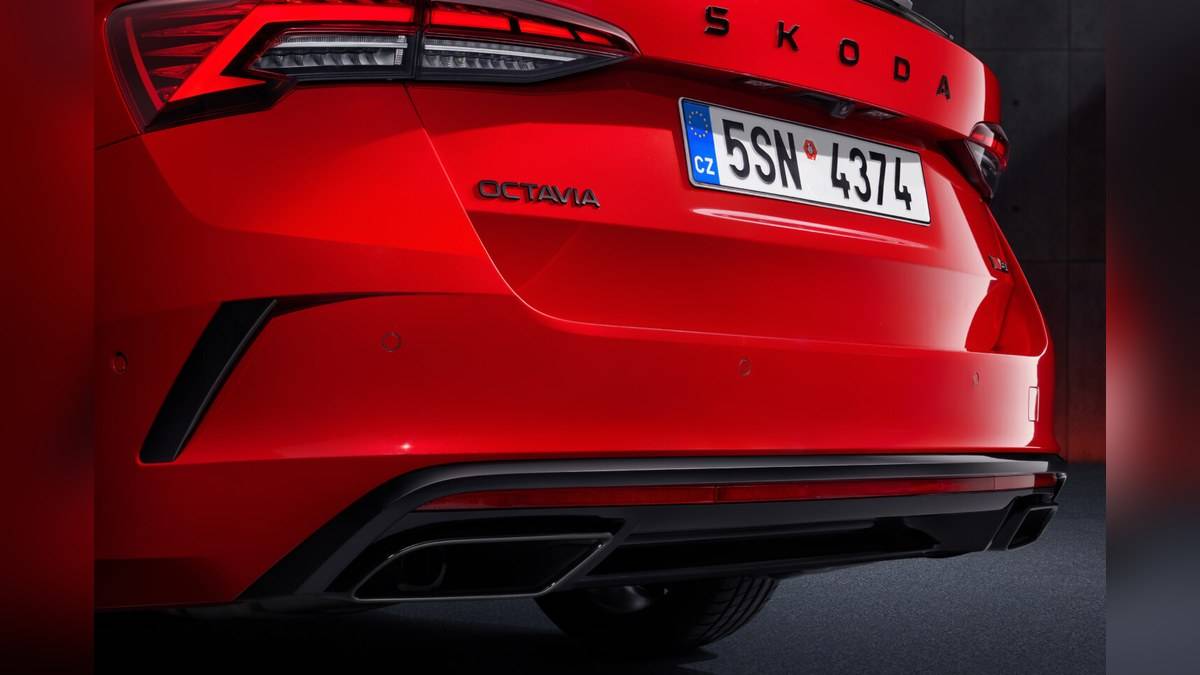
NEW DELHI: Skoda describes the Octavia RS sports chassis as sitting 15 mm lower, with shorter springs and specific sports dampers. The India specification page also identifies progressive steering, reinforced brakes and a multilink rear suspension. For an Indian owner, those details make the test route and parking access as relevant as the advertised acceleration.
| Item | Official specification |
|---|---|
| Sports chassis | 15 mm lower ride height |
| Engine | 2.0 TSI petrol, 195 kW or 265 PS |
| Transmission and drive | 7-speed DSG automatic, front-wheel drive |
| Steering | Progressive ratio |
| Rear suspension | Multilink |
| Claimed acceleration | 0 to 100 km/h in 6.4 seconds |
Read the ride-height figure correctly
The 15 mm number describes a reduction associated with the sports chassis. It is not an absolute ground-clearance measurement. Skoda's global technical description places that reduction against the standard Octavia. Do not subtract it from the clearance of a different Skoda model or treat it as the distance between the RS underbody and the road.
For a real access check, the useful question is whether the exact car can negotiate the places you use. Ask to include a representative parking entrance on an approved test route, where practical. A steep transition between a basement ramp and the street deserves attention even when the rest of your commute uses smooth roads.
Assess the suspension at everyday speeds
Skoda's India highlights page specifies shorter springs and sports shock absorbers, alongside reinforced brakes and the rear multilink arrangement. These are mechanical differences worth assessing separately from the RS exterior treatment. A car can look right in the showroom while still needing a careful comfort check for its intended passengers.
Include an ordinary broken surface and a familiar speed breaker on the route, approached appropriately and with the demonstrator's agreement. Listen for cabin movement and ask a passenger for their impression. This is an assessment exercise, not a road test verdict: no ride-comfort claim here is based on an independent drive of the car.
A useful Octavia RS demonstration would cover both access and seating. The India page describes electrically adjustable sports seats with lumbar support, massage and memory, plus adjustable seat-base depth. Set the seat properly before judging the driving position. A hurried loop in someone else's stored position can obscure how well the controls fit you.
Understand progressive steering before judging it
Skoda explains that the steering ratio changes with the amount of steering lock, reducing the need to shuffle hands through larger turns. The feature deserves a demonstration during a slow parking manoeuvre as well as a normal bend. Keep the evaluation at legal, appropriate speeds and let the representative explain the operation.
The key question is whether the response feels predictable to the person who will drive the car. Do not infer a turning-circle measurement from the word progressive, and do not confuse steering ratio with a change in tyre grip. Ask for those specifications separately if they matter to a tight home parking space.
Separate engine performance from chassis suitability
The India model page lists a 195 kW, 265 PS petrol engine and a seven-speed DSG. The highlights page confirms front-wheel drive. Skoda advertises a 6.4-second acceleration time to 100 km/h. These figures describe the powertrain and claimed performance; they do not answer how the car fits a particular driveway or how passengers experience a rough commute.
For readers comparing the financial side, our Octavia RS price explainer and Octavia RS and Golf GTI comparison cover separate questions. The chassis checks here are intended to add practical context rather than repeat a variant price table.
Ask for equipment confirmation on the actual car
The India highlights page also lists a Virtual Cockpit and head-up display. Use a stationary demonstration to check visibility from your chosen seating position, then ask which settings are available. The page carries a general warning that specifications can differ and change, so retain the equipment sheet associated with the car being offered.
A useful test-drive note has separate entries for access, passenger comfort, seating adjustment, steering feel and equipment confirmation. That keeps a strong engine impression from answering every other question by default. Readers looking at Skoda's broader sedan range can consult our Slavia range explainer.
Ask which wheel and tyre specification is fitted to the demonstration car and compare it with the vehicle offered. Recording that detail makes your comfort notes more useful, especially if the showroom has more than one RS available for inspection.
Official sources: India chassis and equipment details, India powertrain page and global RS technical overview.