Infant screen time linked to brain network changes and teen anxiety in Singapore cohort study
NEW DELHI: A long-running Singapore birth-cohort study has mapped a pathway connecting higher screen use in the first two years of life with faster specialisation of certain brain networks, slower decision-making in mid-childhood, and higher anxiety scores by age 13. The peer-reviewed paper, by researchers tied to A*STAR's Institute for Human Development and Potential and the National University of Singapore's Yong Loo Lin School of Medicine, appears in eBioMedicine under the title Neurobehavioural links from infant screen time to anxiety.
The work draws on the Growing Up in Singapore Towards healthy Outcomes cohort, better known as GUSTO. For this analysis the team worked with 168 children who had parent-reported daily screen time at ages one and two, diffusion MRI scans at 4.5, 6 and 7.5 years, a Cambridge Gambling Task measure of decision-making at 8.5, and Multidimensional Anxiety Scale for Children scores at 13. That span is what makes the paper stand out. Most screen-time neuroimaging papers still lean on a single scan. This one follows network change across childhood and then watches behaviour into early adolescence.
What the researchers measured
Higher infant screen time was associated with a steeper decline in integration within visual and cognitive-control networks between 4.5 and 7.5 years. In plain terms, those networks specialised earlier than in children with lower early exposure. The accelerated pattern mediated longer deliberation times on the gambling task at 8.5. Longer deliberation, in turn, tracked with greater anxiety symptoms at 13. The authors report a significant full serial mediation pathway from infant screen time through network maturation and decision latency to adolescent anxiety.
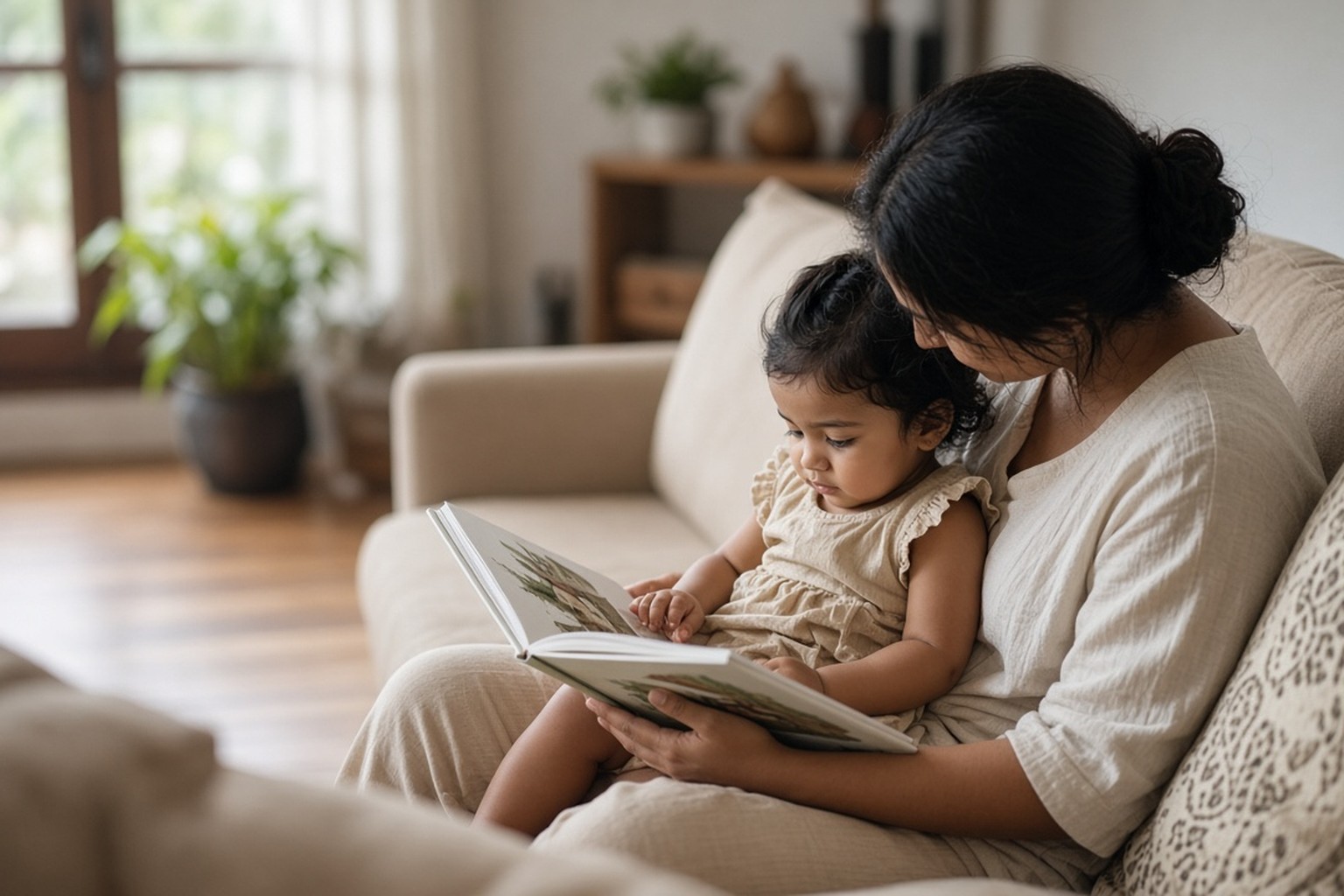
Dr Huang Pei, first author and a senior scientist at A*STAR IHDP, put the biology in classroom language in the agency's research release. Accelerated maturation, he said, can arrive before the brain has built efficient connections for complex thinking, which can limit flexibility later. Asst Prof Tan Ai Peng, principal investigator at A*STAR IHDP, clinician-scientist at NUS and senior author, said the work offers a biological reason to keep screens limited in the first two years, and she stressed parent-child engagement, including shared reading, as a practical counterweight.
The same group has previously reported, in Psychological Medicine in 2024, that frequent parent-child reading at age three weakened the link between infant screen time and altered emotional-regulation networks. That finding sits beside the new anxiety pathway rather than inside it, but it is useful for schools and paediatric desks that keep getting asked what parents should do instead of handing over a phone.
Why infancy, not age three or four
The A*STAR summary of the study notes that screen time measured at ages three and four did not show the same network effects in this analysis. The first two years remain the sensitive window the authors keep returning to. Brain volume expands quickly in infancy, and higher-order networks reorganise sharply in that period. Screens, the researchers suggest, deliver intense sensory stimulation that may push visual and control networks to specialise sooner than is helpful.
The paper is careful about what it can claim. It is longitudinal and uses structural equation modelling on observational data. It does not prove that screens alone cause teenage anxiety. Family factors that shape both early screen use and later mental health can still matter. The authors themselves flag sensory processing as a possible underlying target for early intervention, not a finished clinical recipe.
Collaborators listed with the work include teams at the National University Hospital of Singapore, KK Women's and Children's Hospital, and McGill University. Funding acknowledgements in the journal summary include Singapore's National Research Foundation, the Ministry of Health's National Medical Research Council, A*STAR's Institute for Human Development and Potential, and international foundations.
Why an Indian education desk is reading this
Indian classrooms and homes are deep into phone-and-tablet childhood. Pre-primary centres, after-school programmes and board hostels all see parents who use screens to settle toddlers. WHO guidance has long urged no sedentary screen time for infants under one year and limited exposure for older toddlers, with interactive play preferred. Singapore's Ministry of Health has its own screen-use guidance for children, which the eBioMedicine authors cite as local context. The GUSTO pathway gives education reporters something sharper than a general warning: a decade-long trail from early exposure to brain network change, decision latency and adolescent anxiety scores.
For school counsellors and early-years teachers, the takeaway is not panic. It is timing and substitution. The researchers keep pointing at the first two years, and at reading and other back-and-forth adult attention as the kind of stimulation passive screens do not supply. That is actionable in parent workshops and preschool orientation sessions without waiting for a perfect causal trial.
I have not interviewed the Singapore team for this piece. The facts above come from the eBioMedicine paper and the A*STAR research release that accompanied it. Parents who want numbers should open the journal article for the beta coefficients and confidence intervals. What belongs on an education page is the shape of the finding: early screens, accelerated network specialisation, slower mid-childhood decisions, higher anxiety scores at 13, and a reminder that shared reading still shows up as a protective habit in related GUSTO work.
Screens will not leave Indian family life. The question this study sharpens is how much of infancy we are willing to hand to them before the brain's early wiring window closes.
Sources and reporting
eBioMedicine paper Neurobehavioural links from infant screen time to anxiety (Huang et al., GUSTO cohort, DOI 10.1016/j.ebiom.2025.106093); A*STAR Institute for Human Development and Potential research release on the study (Owen Sia media contact), including quotes from Dr Huang Pei and Asst Prof Tan Ai Peng; related Psychological Medicine 2024 parent-child reading paper cited in the release. Tip originated from a public Instagram post highlighting the study; published copy uses journal and institutional primaries only. Checked 21 Sep 2026 IST.
Related Stories

Ministry of Education opens Solid Waste Management Rules quiz for schools till 17 October

NBEMS opens FMGE October 2026 applications; exam on 31 October, apply by 25 September

Maharashtra extends B.Arch and M.Arch admission cut-off to 30 September

Tamil Nadu shares three M.Sc Critical Care seats at Dhanvantri under 200-point roster
Tamil Nadu lets MPT applicants upload self-declaration if B.PT ends by 30 September