
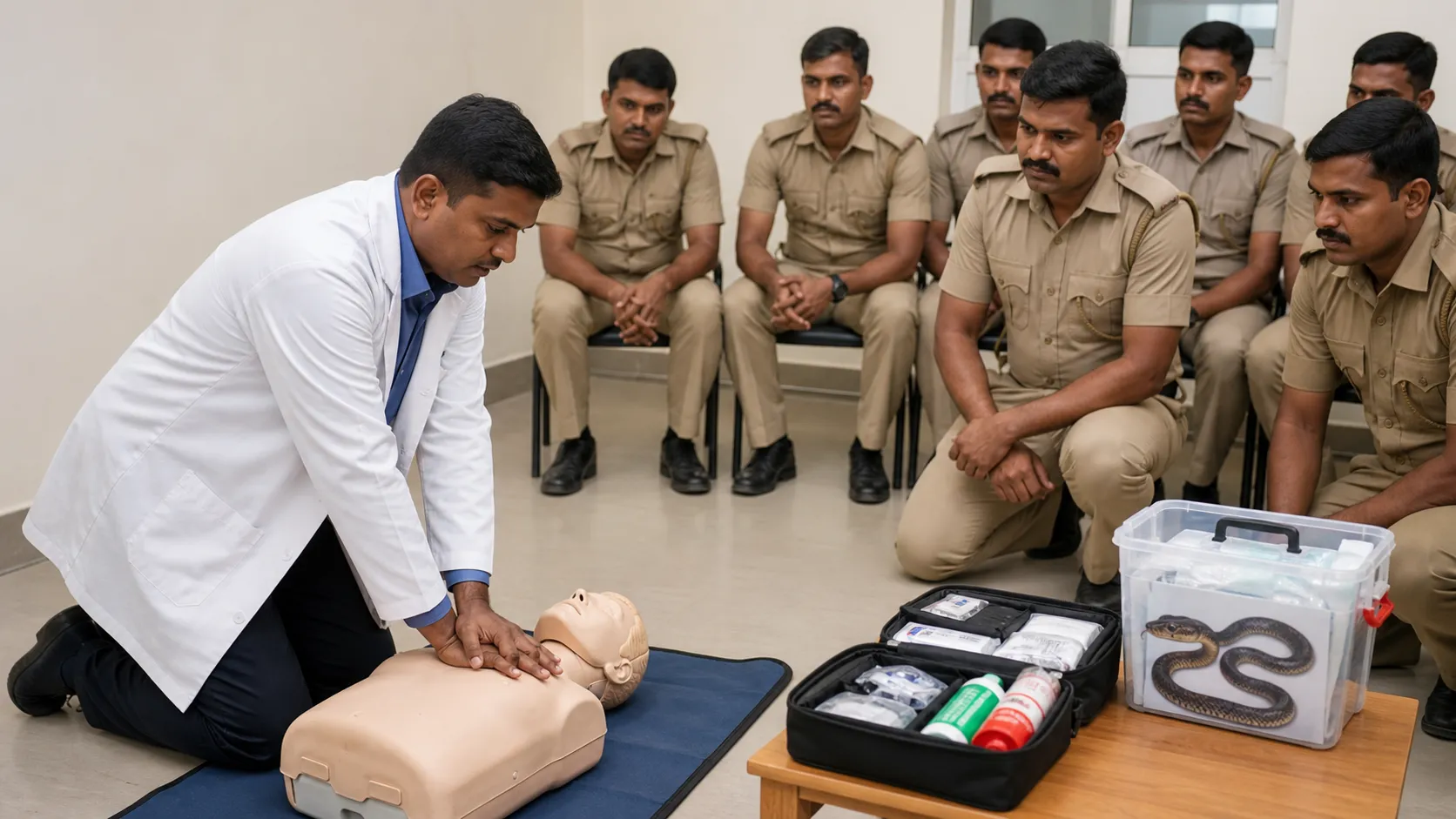
VARANASI: Police personnel at Sigra station have been trained to deliver cardiopulmonary resuscitation and provide the correct first response after a snakebite, two emergencies in which the first few minutes can change the outcome.
A team of doctors conducted the session on Monday, with station in-charge Shivakant Mishra and other officers present, Live Hindustan reported. The programme was framed around the conditions police encounter during the monsoon and flood season, when waterlogged lanes, electric shocks, falls, drowning incidents and snake encounters become more common.
Police are frequently the first uniformed responders to reach a home, roadside or public space. An ambulance may still be navigating traffic while an officer is already beside an unconscious person. CPR training gives that officer a structured way to check responsiveness, call for medical support and begin chest compressions when a person is not breathing normally.
The skill is physical and time-sensitive. It cannot be learned reliably from a poster alone; responders need practice on a mannequin, correction of hand position and an understanding of when an automated external defibrillator is available. Refresher sessions are important because confidence and technique fade if they are never rehearsed.
Snakebite care also suffers from dangerous myths. Cutting the wound, applying chemicals, trying to suck out venom or tying an extremely tight tourniquet can worsen injury and delay treatment. The safer response is to keep the person calm and still, remove restrictive items, immobilise the affected limb and arrange rapid transport to a hospital equipped to assess and treat envenomation. The snake should not be chased or handled for identification.
The report did not specify the doctors' names, the length of the course or whether participants received certification. Those details would help measure whether Monday's exercise was an introductory demonstration or a competency-based programme. Extending similar sessions to beat constables, traffic teams and flood-response units would increase its practical reach.
Basic first aid does not turn police personnel into doctors, and it should not delay professional care. Its purpose is to keep a patient alive and prevent avoidable harm until medical teams take over.
At Sigra, the value of the training may never show up in a routine station diary. It will appear on an ordinary day when an officer kneels beside a stranger, remembers the sequence and buys an ambulance crew a few vital minutes.
A simple audit after three months—how many officers can still demonstrate the steps correctly—would show whether the lesson lasted. Training becomes operational capacity only when equipment, refresher practice and clear medical referral routes remain available together.