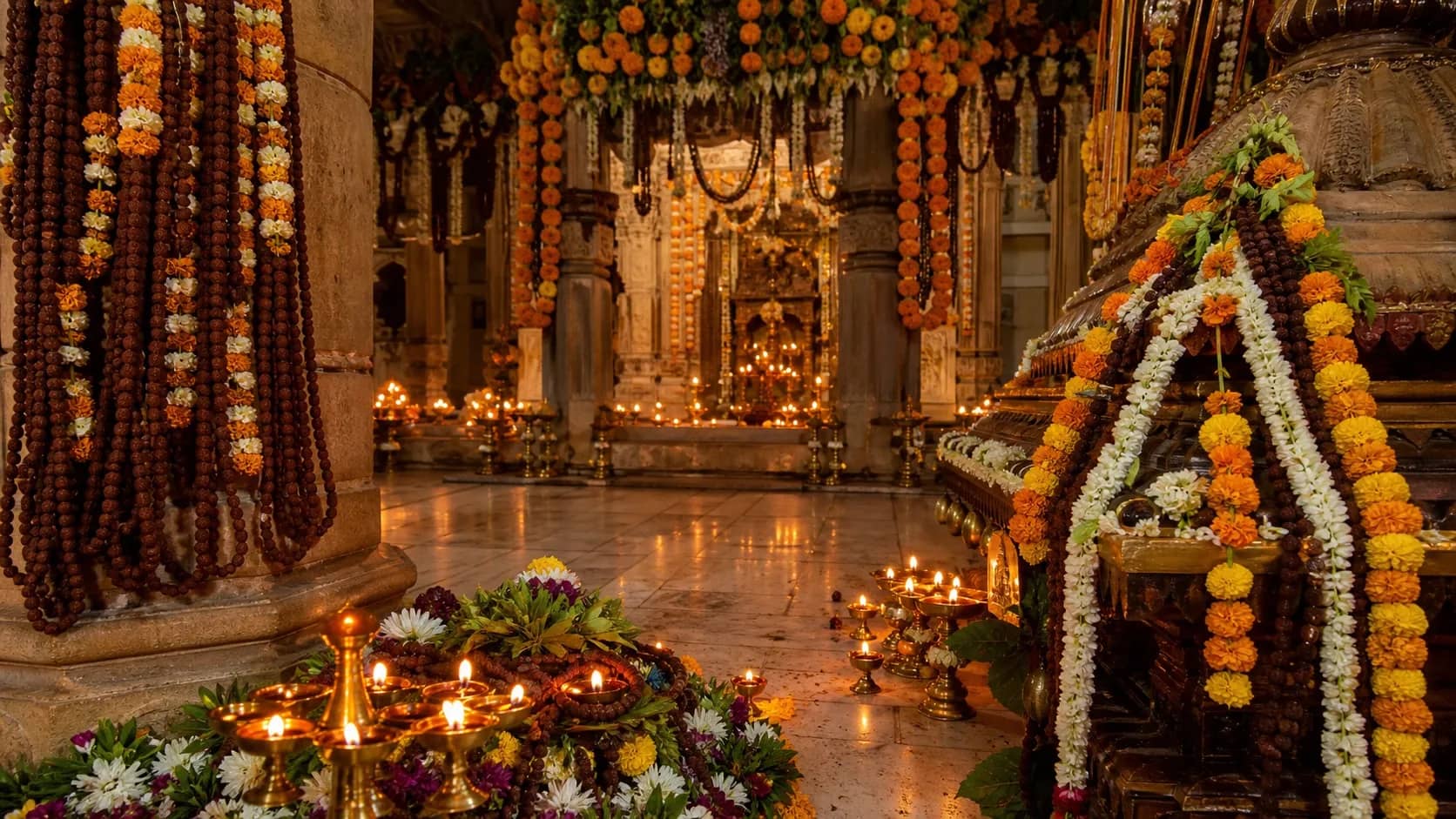
Temples across Varanasi marked Shravan Purnima with distinct forms of shringar, worship and music, turning the final day of the holy month into a citywide sequence of smaller celebrations. Rudraksha garlands, greenery, flowers and jal vihar tableaux gave each shrine its own visual language.At the Kushmanda temple, the goddess was adorned with 1,008 rudraksha garlands, a decoration that linked the day’s full-moon observance with a bead closely associated with Shiva worship. Devotees arrived for darshan as the arrangement transformed the sanctum without changing the familiar rhythm of offerings and aarti.Other shrines chose water and greenery as their central motifs. Visheshwarnath and Siddheshwar temples were among those where jal vihar or seasonal decoration formed part of the programme. These displays evoke relief from the monsoon’s humidity and recall the traditional practice of placing deities in a cool, garden-like setting during the rainy season.A large aarti using 51,000 wicks was also part of the day’s observances. The number gave the ceremony scale, but the labour behind it was equally striking: preparing lamps, arranging wicks, managing oil and keeping movement orderly around a crowd requires hours of coordinated work by temple staff and volunteers.Shravan Purnima carries several meanings in Varanasi. It closes a month of intensified Shiva worship, coincides with Raksha Bandhan and is associated with Upakarma traditions among Vedic communities. The temple decorations therefore shared the day with family rituals, sacred-thread ceremonies and neighbourhood gatherings. A person moving through the city could encounter several traditions within a few kilometres.Such decoration is temporary by design. Flowers fade, lamps are extinguished and the jal vihar arrangement is removed, but the brief transformation is part of the attraction. It offers regular worshippers a different darshan and gives temple communities a way to express local artistry within established ritual boundaries.The celebrations also brought the familiar responsibilities that accompany crowded festival days: keeping access routes clear, preventing congestion near entrances and ensuring lamps and electrical decorations are handled safely. For devotees, however, the emphasis remained devotional. From rudraksha at Kushmanda to water-themed displays elsewhere, Varanasi’s temples used Shravan Purnima to close the month not with one uniform ceremony, but with a mosaic of traditions rooted in each shrine.The variety also disperses festival crowds. When neighbourhood temples create their own programmes, devotees do not have to depend on a single major site for every observance, allowing local communities to participate close to home.
For visitors, the day also offered a reminder that Varanasi’s temple calendar is experienced through sight, sound and movement. Decorations change by the hour, and devotees often plan separate stops to see the distinct traditions maintained by individual shrines.