NEW DELHI: Redmi 15A 5G is listed with four years of Android updates and six years of security updates on Xiaomi's India specifications and FAQ. It starts from Android 16 with HyperOS 3.0 in those documents. These are separate support commitments, and neither should be read as a promise of a particular update arriving on a particular day.
| Software detail | Official India statement |
|---|---|
| Android foundation | Android 16 |
| Interface | HyperOS 3.0 |
| Android updates | 4 years |
| Security updates | 6 years |
| Dated release calendar | Not specified on the pages reviewed |
For an owner planning to keep the handset, the important task is understanding what each commitment covers. A major Android update and a security patch are different deliveries. The published durations provide a support framework, while the software installed on the individual phone establishes where that device currently stands.
What the India pages actually promise
The specifications state four years of Android updates and six years of security updates. The FAQ repeats the same figures and identifies Android 16 as the software foundation. Neither page checked for this report supplies a dated calendar of individual releases. There is therefore no basis here for assigning a month to the next Android version or promising that every owner receives it simultaneously.
Do not simply add the advertised security period to the date you opened the box. The product pages reviewed do not define a fresh support term beginning with every retail purchase. Without an explicit commencement and end date for this model in these documents, an exact final support date would go beyond the evidence.
A useful way to retain the promise is to save the official India page and keep the purchase record separately. The page describes the model's software policy; the invoice identifies the particular transaction. Keeping both avoids asking a receipt to establish a software rollout schedule that it does not contain.
Check the software on the phone
Before troubleshooting an update, record the model name, installed Android version, HyperOS version and displayed security patch date from the handset's software information. The wording of settings can change with software, so this guide does not invent a fixed sequence of menu labels. The purpose is to establish the actual starting point rather than guess it from advertising.
Next, use the phone's own update facility to check what is available for that device. If no package appears, the support commitment alone does not prove that a particular file should already be offered. A product policy, an announcement and an update notification answer different questions. Keep those questions separate when looking for an explanation.
For a handset used for study or work, choose a quiet period for installation and retain a current backup of important files. That is practical preparation, rather than a model-specific instruction about a mandatory battery percentage or free-space threshold. Xiaomi's pages checked here do not specify those installation thresholds, so no numerical requirement is presented.
Support does not change the hardware variant
Redmi 15A 5G has an octa-core T8300 5G chipset, and Xiaomi lists 4GB + 64GB, 4GB + 128GB and 6GB + 128GB configurations. The storage system is UFS 2.2 with LPDDR4X RAM. These are hardware distinctions within the model, while the support statement is published for Redmi 15A 5G as a product.
The distinction matters for a family keeping a phone over several school or college terms. An update policy does not turn the smaller storage configuration into the larger one. Organising downloaded lessons, photographs and application data remains an ownership task even while software support continues. Xiaomi separately lists microSD expansion up to 2TB; that is an expansion ceiling, not storage supplied inside every phone.
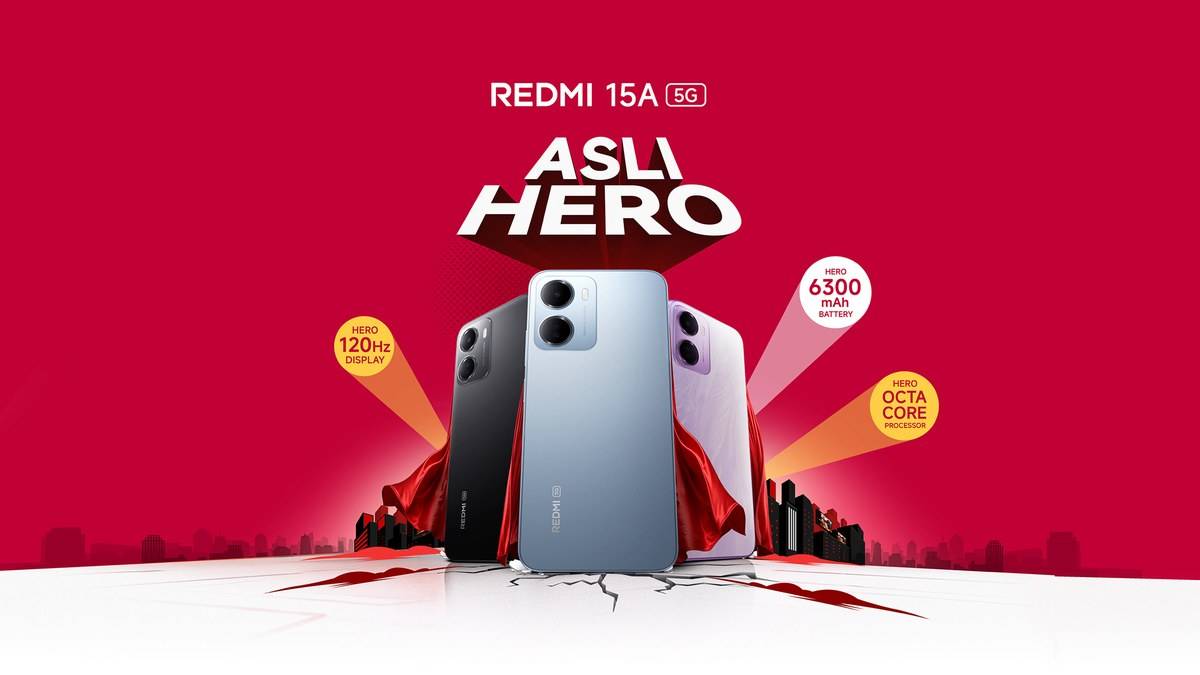
The India FAQ also specifies a 6.9-inch HD+ screen with up to 120Hz refresh rate and a 6300mAh battery. Those features describe the device on which future software will run. They do not establish that every feature introduced on another Xiaomi product will eventually appear here. A support duration should not be expanded into an unrestricted feature guarantee.
Keep expectations tied to the right model
Check the full name before relying on an update article. Redmi 15A 5G, Redmi 15 5G and Redmi A7 Pro 5G are different product names. A familiar number or a similar body design is not enough to transfer a policy from one device to another. Use the India documentation carrying the exact name on your handset.
Our separate coverage of Redmi 17C 5G vs Redmi 17 5G: is the Rs 3,000 extra worth it? shows why model names matter. Readers can also compare the wording in our Redmi budget phone price list: 17C Rs 20,999, 15A Rs 16,499, A7 Pro Rs 14,499, A7 Rs 12,999 and Redmi Note 15 series price list: Pro+ Rs 39,999, Pro Rs 31,999, SE Rs 25,999, without assuming that another model's starting date applies to this one.
The defensible reading is specific: Android 16 and HyperOS 3.0 are the documented starting software, with four years of Android updates and six years of security updates advertised. Keep checking the installed software and official model information. An exact retirement date, patch frequency or release timetable requires further official confirmation.
Official sources: India FAQ, specifications and overview.