President Droupadi Murmu has asked graduating students of the National Institute of Fashion Technology to keep a global outlook while remaining connected to India's cultural roots. She was speaking at a combined convocation ceremony covering all 18 NIFT campuses on 31 August.
The format brought together graduates from a national network rather than treating each campus as a separate island. That is significant for an institution whose students work across fashion, textiles, communication, management and technology, often moving between local craft clusters and global consumer markets.
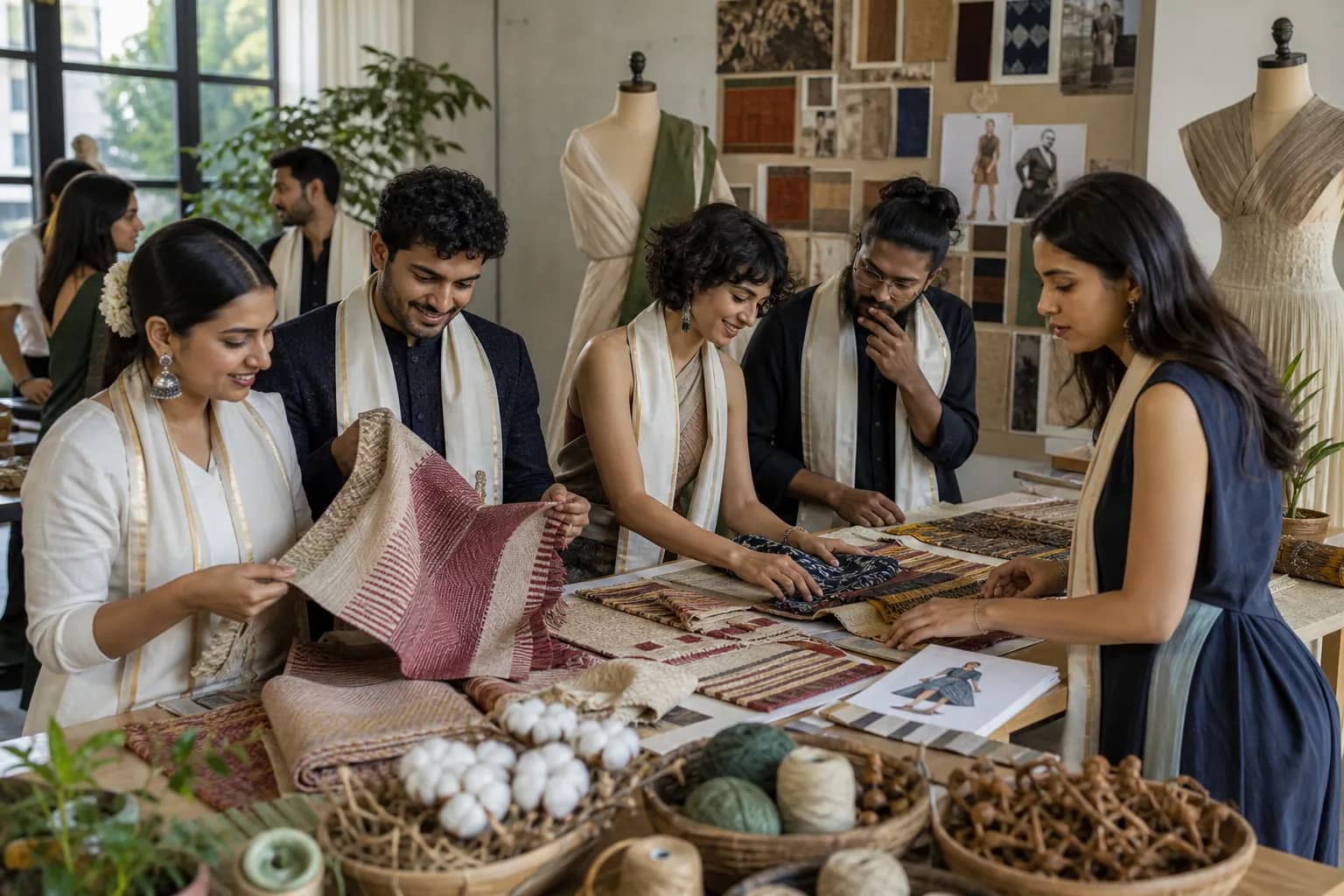
The President placed Indian artisans at the centre of that connection. She referred to NIFT's Craft Cluster Initiative, through which students interact with craft communities, and said design and technology should help improve artisans' productivity and income. The point was not to preserve craft as a museum object; it was to make traditional knowledge economically viable for the people who carry it.
Design after the convocation stage
For graduates, the speech framed fashion as a field with public consequences. Decisions about fibre, dye, production volume, packaging and disposal affect water, energy, waste and working conditions long before a garment reaches a shop.
President Murmu urged young designers to work with local materials, reuse remnants and think in terms of a circular economy. These are familiar phrases in international fashion, but their practical value depends on choices that can be measured: how much fabric is wasted in cutting, whether a product can be repaired, whether a material can be separated for recycling and whether a collection gives artisans predictable, fairly paid work.
Sustainability also has to survive the pressure of price and speed. A student collection can be carefully handmade; a commercial order has deadlines, margins and repeatability. NIFT graduates entering companies will have to argue for responsible processes inside those constraints, while entrepreneurs will have to disclose what their labels can and cannot guarantee.
Indian roots without a narrow aesthetic
Remaining rooted in culture need not mean putting a familiar motif on every product. India's textile and clothing traditions include systems of material knowledge: fibres suited to particular climates, natural colour practices, hand skills, repair habits and ways of using cloth with very little waste.
The stronger design response is to study those systems closely and collaborate with practitioners, not merely borrow surface decoration. Attribution, consent and payment matter when a commercial collection draws from a community's identifiable craft language.
At the same time, a global outlook asks graduates to understand new materials, digital tools, international standards and changing markets. The two directions are not opposites. A designer can use advanced prototyping to reduce sampling waste, digital documentation to preserve a technique, or supply-chain tools to give a craft producer more reliable demand.
A national institute with local responsibilities
NIFT's 18-campus footprint gives it unusual reach. Campuses operate in regions with different craft economies, industrial bases and environmental pressures. That creates an opportunity for research and student projects to be locally specific rather than built around a single metropolitan idea of fashion.
A campus can help document a cluster's production bottlenecks, test safer processes, improve tools with artisans and study whether a design intervention actually raises earnings. The outcome should be evaluated with the community, not only displayed at an exhibition.
The President's message ultimately set a demanding brief: compete internationally, respect cultural knowledge and reduce the industry's environmental burden at the same time. Convocation speeches are easy to applaud and easier to forget. For the graduating cohort, the real evidence will appear later—in contracts that credit collaborators, products designed for longer use, factories that waste less, and enterprises in which craft workers share the value created from their skill.
That is a wider definition of success than a striking runway image. It treats design as an economic and ethical practice, and it gives NIFT's newest graduates a clear question to carry into their first jobs: who benefits from what they make, and what does it leave behind?