
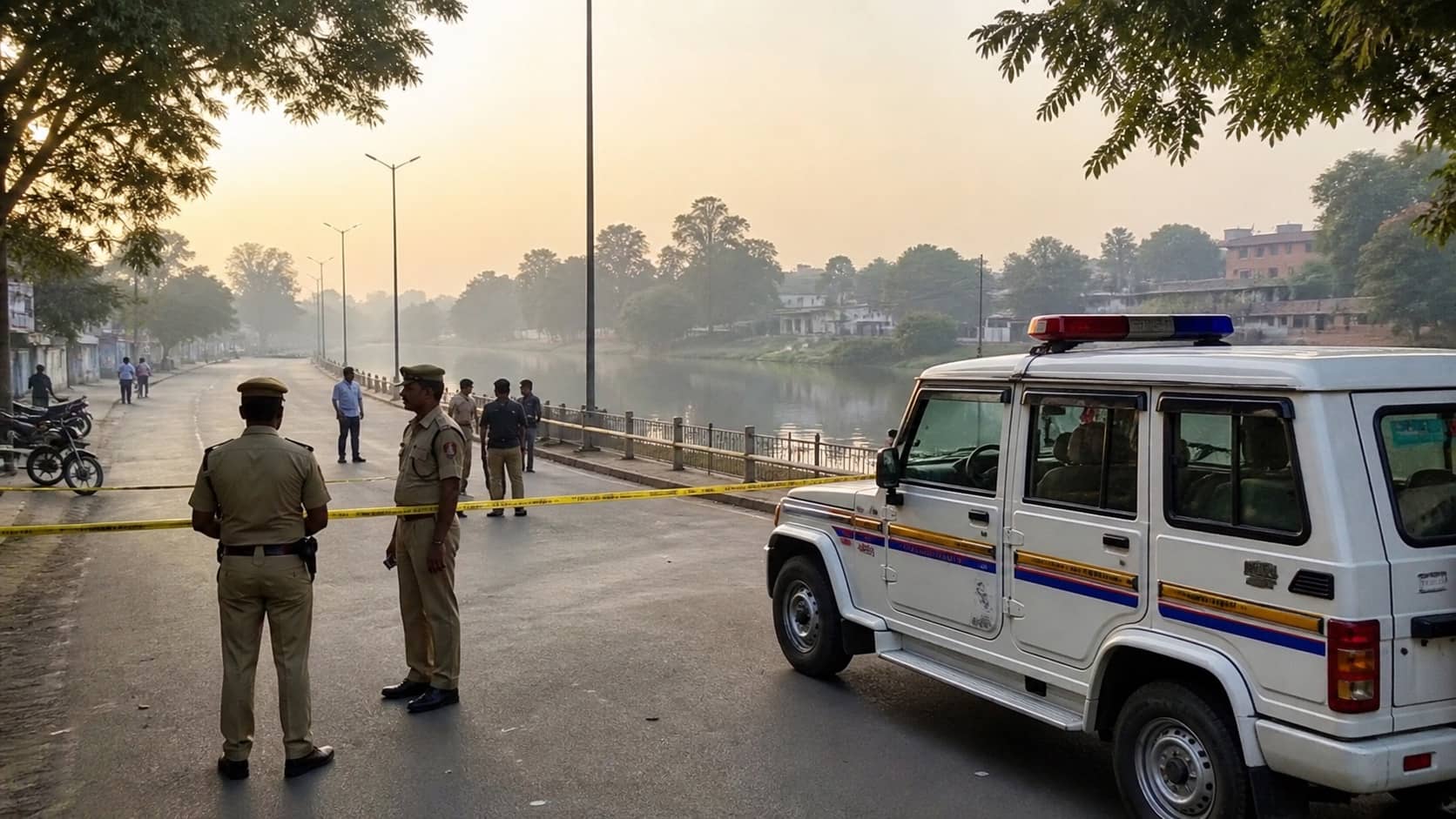
Varanasi police have arrested a man accused of sexually assaulting a mentally ill woman, after an exchange of fire near the Varuna corridor, according to the police account. The accused, identified by police as Shubham Bharati of Chuppepur in the Gilat Bazar area, sustained a gunshot injury to his right leg.
Police said Bharati worked at a hotel and was wanted in connection with the complaint filed by the woman’s family. A country-made pistol and cartridge were recovered during the arrest, the police account said. He was produced before a court and sent to judicial custody after medical treatment.
The complainant’s family is originally from Gumla and has reportedly lived in the Cantt area for about 35 years. No detail that could identify the woman should be circulated. Reporting on a survivor of sexual violence requires particular care, and mental illness increases the need to protect her privacy and dignity.
An encounter narrative is a police version of events and must be treated as such until examined through investigation and judicial proceedings. Key questions—including the circumstances of the alleged assault, the evidence collected, the sequence of the exchange of fire and the recovery—will be tested through official records and, if a chargesheet is filed, in court.
The arrest does not amount to a finding of guilt. The accused is entitled to legal representation and due process, while the survivor is entitled to support, privacy and a fair investigation. Medical evidence, witness statements, digital or location records and the manner in which the initial complaint was handled may all become relevant to the case.
For families caring for people with serious mental-health conditions, the case also highlights vulnerability in public and semi-public spaces. Dependence on others for travel, work or daily needs can expose a person to exploitation. That risk should not be used to restrict a woman’s movement; it calls for responsible supervision where needed, responsive institutions and prompt action when abuse is suspected.
Police have stated that the suspect is now in judicial custody. Further claims should be based on the case record rather than social-media speculation. The priority remains a lawful investigation that protects the survivor, preserves evidence and allows a court to determine responsibility. Until then, all allegations against the arrested man remain unproven.
Support for the survivor should not end with registration of the case. Access to trauma-informed medical care, counselling and a trusted support person can help her participate in the process without being repeatedly exposed to distress.