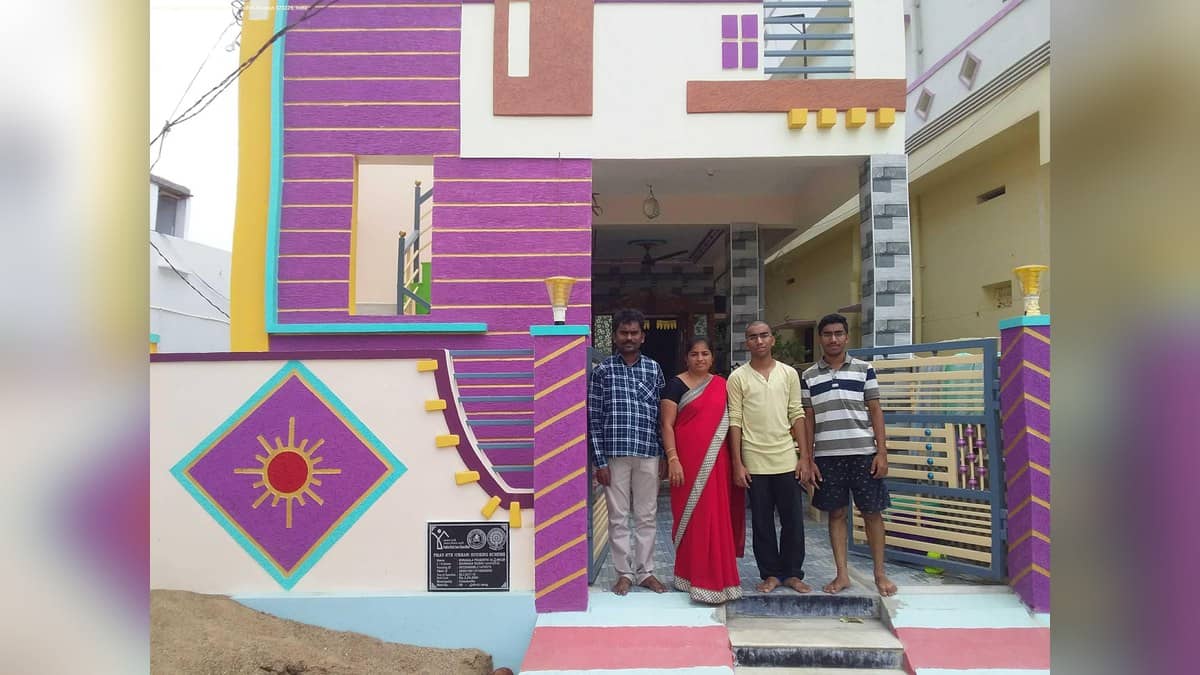
To apply for PMAY Urban 2.0, an eligible urban household can use the scheme's unified web portal, a Common Service Centre or its municipality. The central conditions are household income within the relevant category, no pucca house anywhere in India in the applicant family's name, and no housing benefit from a government scheme in the previous 20 years. The application records a request for assistance; approval follows verification and the rules of the selected component.
| Group | Annual household income |
|---|---|
| EWS | Up to Rs 3 lakh |
| LIG | Rs 3 lakh to Rs 6 lakh |
| MIG | Rs 6 lakh to Rs 9 lakh |
The official PMAY Urban 2.0 FAQs give an implementation period of 2024 to 2029. This urban programme has its own eligibility and application system. Applicants should establish whether their address falls under the urban scheme or the rural programme before trying to locate a beneficiary record.
PMAY Urban 2.0 eligibility and the family ownership test
The September 2024 scheme guidelines define the beneficiary family as husband, wife and unmarried children. The no-pucca-house condition therefore requires checking family ownership, rather than only asking whether the person completing the form owns a property. The FAQs describe a pucca house by its durable roof and wall materials, even where the floor is kutcha.
A household that has received housing assistance under a Central, state, Union Territory or local government scheme in the last 20 years is not eligible under the published rules. Applicants should disclose earlier assistance when the local body verifies demand. A change of address or a different family member completing the application does not by itself resolve a household eligibility issue.
The scheme gives preference to specified groups, including widows, single women, persons with disabilities, senior citizens, transgender persons, Scheduled Castes, Scheduled Tribes and minorities. Preference still operates within the scheme's conditions. Keep the relevant proof available if claiming a preference category, and ask the municipality which documents it accepts.
How much assistance does PMAY Urban 2.0 provide?
There are four components: Beneficiary Led Construction, Affordable Housing in Partnership, Affordable Rental Housing and the Interest Subsidy Scheme. They support different housing needs. For example, Beneficiary Led Construction is for eligible EWS families constructing a new house on their own available land. Its rules do not permit enhancement, extension or renovation of an existing house.
For construction and partnership housing, the official funding table varies the Central and state contribution by location. In states outside the specially listed group, it shows Central assistance of Rs 1.50 lakh and a minimum state share of Rs 1 lakh per eligible unit. The beneficiary still has to meet the remaining cost. These figures should not be read as a promise of the same cash payment for every component or household.
The Interest Subsidy Scheme has a different calculation. It allows a maximum actual subsidy release of Rs 1.80 lakh for eligible cases, paid in five equal yearly instalments. The guidelines specify household income up to Rs 9 lakh, a loan up to Rs 25 lakh, property value up to Rs 35 lakh and a 4 per cent subsidy on the first Rs 8 lakh for a tenure up to 12 years, subject to the detailed conditions. The maximum is a ceiling, not an automatic award.
PMAY Urban 2.0 apply online: documents and status
Start from the official PMAY Urban 2.0 portal and use its application route. Alternatively, visit a Common Service Centre or the urban local body where you live. Ask for help selecting the component appropriate to your situation before completing the household information and declarations. Record the application reference supplied after submission.
The FAQs list Aadhaar, bank account details, the prescribed eligibility undertaking and land ownership documents for construction applicants. States, local bodies and participating lenders may specify additional documents. The construction FAQ also lists identity and address evidence, an income certificate and an affidavit about not owning a pucca house. Check the relevant component's list rather than assuming a single checklist covers every application.
The unified system provides application tracking. Follow the portal's Track Application service or ask the municipality to check your submitted reference. A record showing that housing demand has been entered should be followed through verification and sanction; submission alone does not establish that a payment has been authorised.
The portal publishes WhatsApp support at +91 8810389745. Its FAQs also provide for complaints through the scheme portal and CPGRAMS. The five-year programme period is not an individual application deadline: confirm any local survey, project or submission cutoff with the municipality. This guide was checked on 3 November 2026 and does not announce a new national closing date.
Related guides explain PM SVANidhi eligibility and tracking, e-Shram registration and CPGRAMS complaint status. Registration in another scheme should not be treated as approval for urban housing assistance.