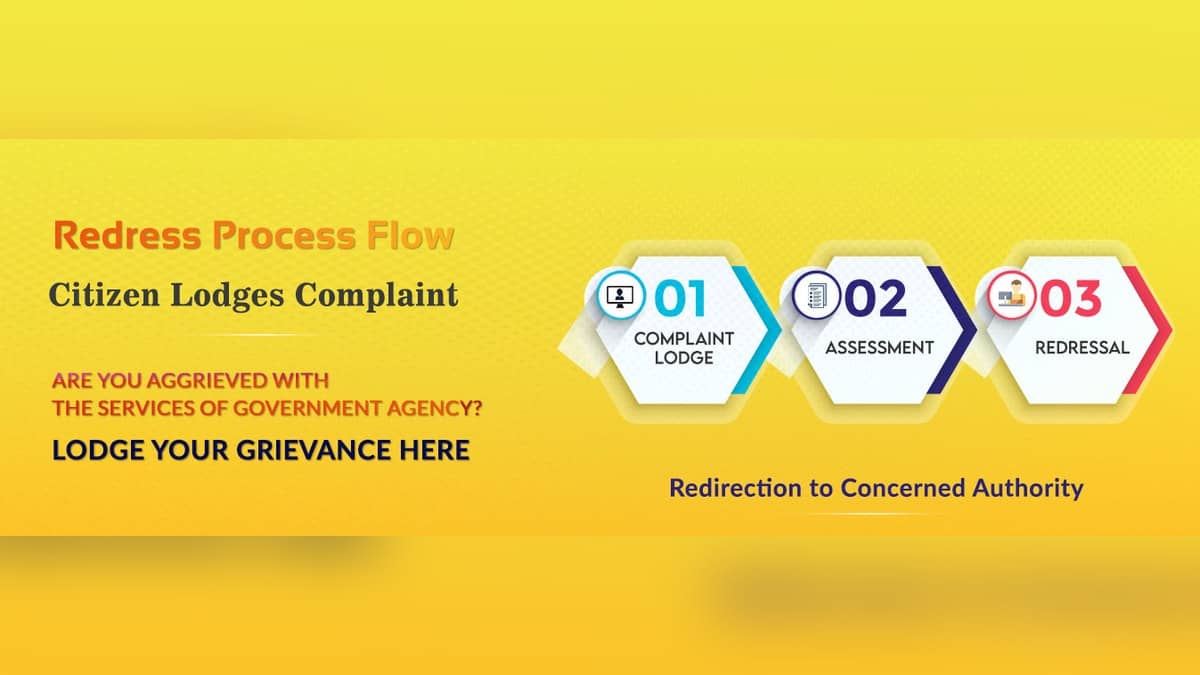
To check a CPGRAMS complaint status, open the official PG Portal, choose View Status and use the registration number issued for your grievance. The current status form asks for that number and provides a grievance password field or an email ID or mobile number alternative, along with a security code. Keep the acknowledgement available rather than searching only by your name.
CPGRAMS stands for Centralised Public Grievance Redress and Monitoring System. It receives grievances about public service delivery and connects central ministries, departments and states. It is a route for seeking administrative redress. Filing a grievance does not itself approve a benefit, award compensation or determine eligibility under the scheme involved.
| Task | Official route or timeline |
|---|---|
| Track a complaint | View Status using the registration number and requested verification details |
| Ordinary grievance redress | 21 days, with an interim response where more time is needed |
| Appeal filing | Within 30 days, under the FAQ provision for central ministries and departments |
| Government filing fee | No fee for filing grievances |
How to check CPGRAMS complaint status
Start with the official CPGRAMS homepage and follow its View Status link. The status form shows which fields are mandatory. Enter the registration number exactly as recorded, supply the applicable verification details and complete the security code before proceeding. This guide checked the public form on November 1, 2026; it did not access anyone's private complaint.
The registration number is also important for following an appeal. Save the acknowledgement, the grievance text and any departmental response together. If the portal requests more information, the original application reference and supporting records help you answer the request without mixing up separate complaints.
For a new grievance, the homepage provides Register / Login. Prepare a short description of the service problem, the authority involved, relevant dates and available supporting records. These are practical preparation steps, not a universal statutory document checklist. The records needed depend on the complaint, and officials may request additional information through the system.
Does CPGRAMS have a 21 day deadline?
The DARPG comprehensive guidelines dated August 23, 2024 reduced the advised maximum grievance redress time to 21 days. Where resolution needs longer, the guidelines call for an interim reply explaining the delay and the expected resolution timeline. The current FAQ also gives 21 days as the redress time.
This administrative timeline should not be read as a guarantee that a disputed claim will be accepted on day 21. Some cases involve procedural requirements or categories needing longer handling. The important distinction is between receiving a reasoned response and obtaining the particular outcome requested. Read the action taken report and any linked order before deciding whether the underlying issue has been addressed.
The guidelines say a grievance should not simply be closed because it does not concern the receiving office. It should be sent to the appropriate authority. They also provide a mechanism for seeking missing documents instead of closing a case without a genuine effort to obtain necessary information from the citizen.
How to appeal after a CPGRAMS complaint is closed
The homepage says a dissatisfied complainant can provide feedback after closure. Giving a Poor rating enables an appeal option. The official FAQ describes the appeal facility for dissatisfied grievances concerning central ministries and departments and says the applicant must file the appeal within 30 days. Check the disposal date and act promptly.
That filing window is separate from the guideline requiring appeals to be disposed of within a maximum of 30 days. In an appeal, identify the response being challenged and explain the issue it left unresolved. Do not assume that every excluded reference or every state grievance follows an identical feedback and appeal workflow.
Fees, excluded matters and official support
The government does not charge a fee for filing grievances on CPGRAMS. The homepage separately explains that money paid for assistance at a Common Service Centre goes to the service centre. The portal also warns that grievances sent by email will not be entertained through that route; use the grievance filing facility.
RTI matters, court related or sub judice matters and religious matters are excluded from the portal's stated grievance scope. Government employee service complaints also have restrictions, including the requirement to exhaust prescribed channels described on the homepage. A public grievance cannot replace the separate procedure that applies to such matters.
For technical problems, the official contact page lists cpgrams-darpg[at]nic[dot]in. For delays in departmental handling, the FAQ points readers to the concerned ministry's Director of Public Grievances. Related reading includes our guides to free legal aid eligibility and e-Shram registration and benefits, plus our report on Uttar Pradesh welfare pension rules.
Official pages rechecked on November 1, 2026, at 22:45 IST.