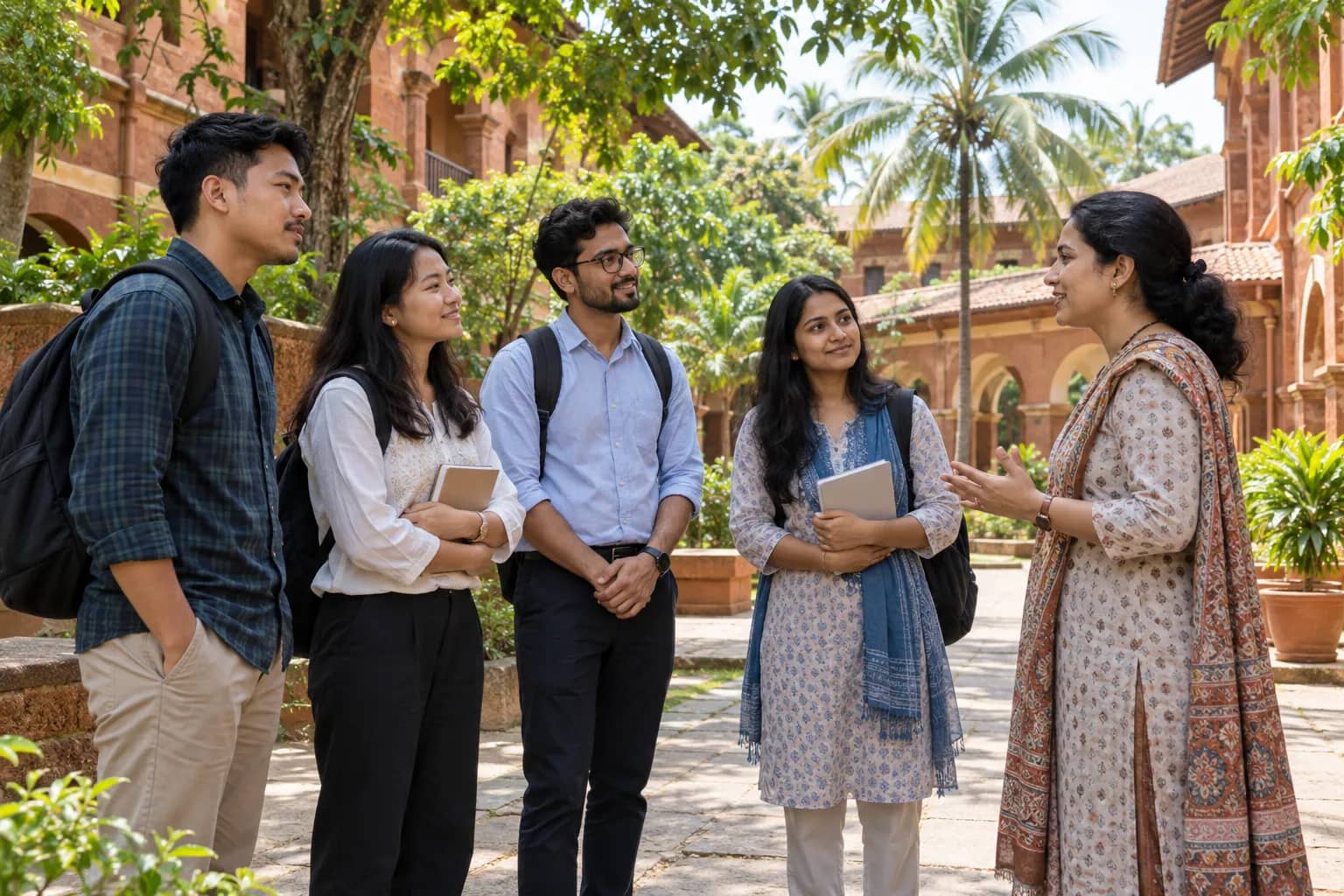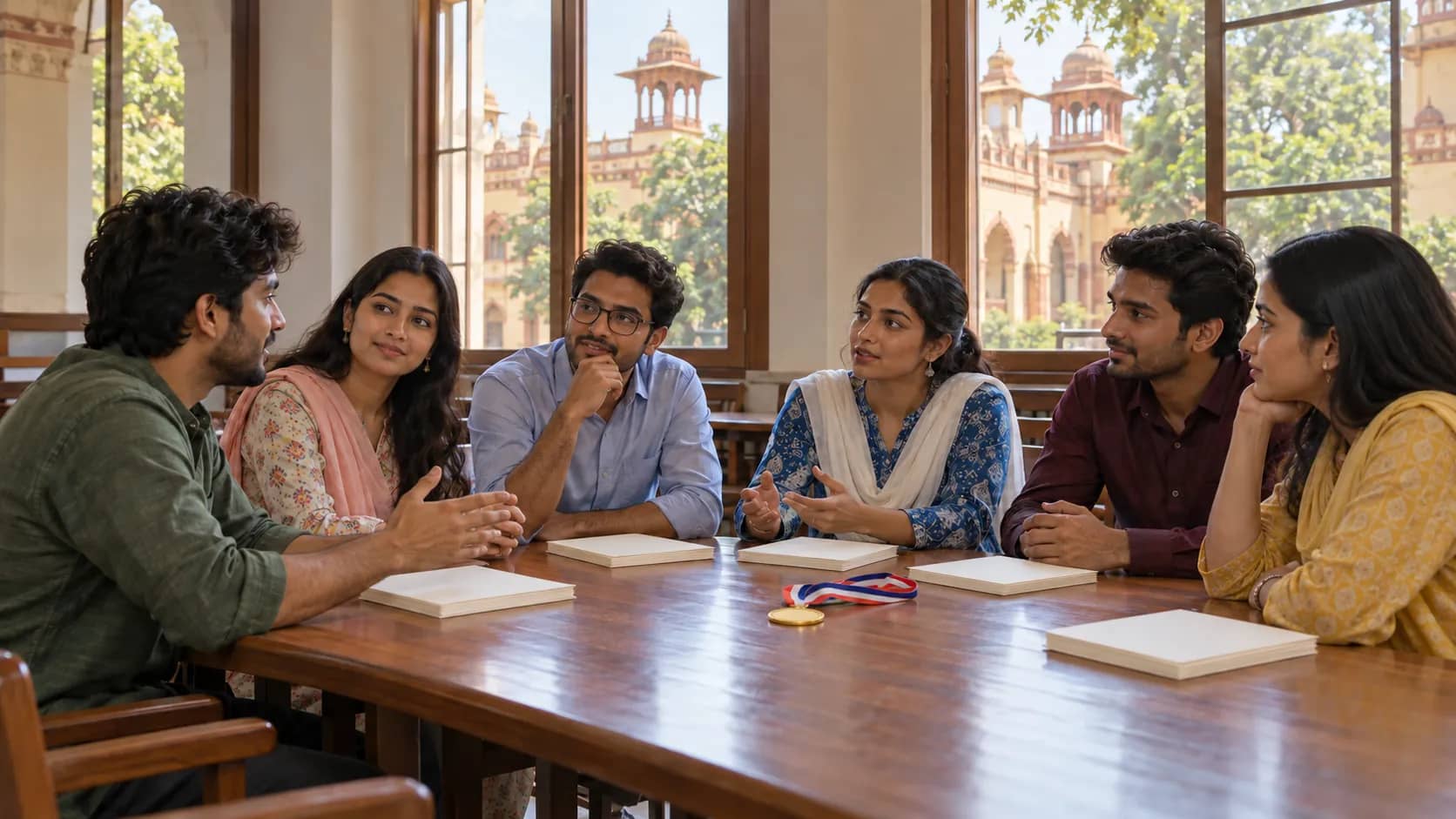

What began with a simple WhatsApp message has grown into an intimate community where women read, exchange perspectives, practice the art of listening, and rediscover a part of themselves beyond their everyday roles.
Varanasi, a city which is rich in culture and heritage , widely known for it's spirituality and religious significance is now witnessing the rise of a quiet reading culture exclusively among the women of the city. At the centre of it is On the Same Page, a women’s book club founded by Manisha Shewaramani.
In conversation with DALIMSS News, Manisha spoke about how a personal need to discuss books gradually became a community, why she deliberately keeps the club intimate, and how its meetings have evolved into a space built around reading, listening and belonging.
It Started With a Need for Conversation
The idea behind On the Same Page was remarkably simple: Manisha loved reading, but she did not have enough people with whom she could discuss what she had read.
A good book, for her, did not end with its final page or a happy conclusion. Reading could mean experiencing unfamiliar emotions, teleporting and encountering perspectives different from one’s own. Naturally, she wanted to talk about those experiences with someone who could listen and discuss the same thing with different perspectives.
“I realised I need to find a community. I need to build a community,” she recalled.
So she sent a simple WhatsApp message to her contacts, looking for women who read or wanted to begin reading. That small message eventually brought together the first members of On the Same Page.
The beginning was modest. The first group consisted of only three to four people. Manisha admits that there were moments when she wondered whether Varanasi had enough people interested in this concept or whether busy lives simply left too little time for reading. Nevertheless, she continued to build the community with utmost determination.
Three years later, the community has grown considerably. Manisha spoke of 2 solid groups as of now, with roughly 13 and 20 members in each group respectively, alongside growing interest from people who regularly message the club on social media wishing to join. Yet expansion for its own sake has never been the objective. For her, intimacy is essential because it allows meaningful conversations to take place.
Why ‘On the Same Page’?
The name captures the philosophy of the club.
Women from different backgrounds and with different experiences come together to read the same book. They may arrive at completely different interpretations of its characters, ideas and events, but for those few hours, they are quite literally on the same page.
That difference of perspective is not an obstacle instead it is one of the club’s greatest strengths.
Manisha explained that ten people can read exactly the same passage and understand it in ten different ways because every reader brings her own experiences to the text. It is only when those interpretations are discussed that a reader begins to discover dimensions of a book she may never have noticed on her own.
Besides Reading: Learning to Listen
One of the most distinctive aspects of On the Same Page is something surprisingly simple yet most important : members are expected to listen.
When someone is speaking during a session, others do not interrupt. If a member disagrees with a point or has something to add, she can note it down and wait for her turn.
For Manisha, this is not merely a meeting rule. It is central to the culture the group has built.
In everyday conversations, people frequently listen while simultaneously preparing what they want to say next. At On the Same Page, members consciously practice giving another person the space to finish her thought.
“We are all quiet when somebody is speaking,” Manisha explained. When their turn arrives, members respond and offer their perspectives.
That simple act has helped transform the club into what Manisha describes as a safe space for women : a place where they know they are being heard.
A Space Where Women Can Simply Be Themselves
During her conversations with women in Varanasi, Manisha began noticing a recurring sentence: “I used to read so much in school or college, but I don’t anymore.”
She heard variations of the same response repeatedly. It made her wonder why people gradually stop doing things they once loved.
Her conclusion was that women often place their own interests behind their responsibilities. They may simultaneously be daughters, daughters-in-law, wives, mothers and professionals, leaving little time reserved entirely for themselves.
On the Same Page attempts to create that time which re discovers their habit of reading.
Inside a book club meeting, Manisha says, a woman does not have to arrive primarily as somebody’s mother, wife or daughter. She can simply arrive as herself.
“You are just yourself ” she said.
Members can sit down, have coffee, laugh and talk - but the conversation remains centred on books and not beyond that.
Interestingly, Manisha is quite particular about the boundaries regarding her club. The meetings do not deliberately turn into general social gatherings or discussions about members’ personal lives. There is already more than enough within a book to fill a session: its plot, characters, captivating lines, writing style, disagreements, interpretations and sometimes activities inspired by the book itself because a typical session lasts around 2 to 2 hours 30 mins.
From Casual Readers to ‘Full Nerd Mode’
The club has also encouraged its members to challenge themselves as readers.
Manisha says members have progressed from barely reading to completing books running to hundreds of pages within a matter of weeks. They now arrive at meetings having marked passages, written notes and identified lines they specifically want to discuss.
As Manisha laughingly described it during the interview, they have gone into “full nerd mode.”
The reading choices have expanded as well. Rather than remaining within one comfortable genre, members explore contemporary and historical fiction, memoirs, thrillers and other forms of writing. Manisha herself said that thrillers were once among her least preferred genres, but being part of the book club encouraged her to try them.
This willingness to read outside one’s comfort zone reflects a larger purpose of the community: a book club should not simply reinforce what its members already like instead it should occasionally challenge them to discover something new.
Building a Community Was Not Always Easy
The club’s present momentum hides a much smaller and uncertain beginning.
Manisha recalled an early meeting at Roots Cafe when the expected participants cancelled. On her way to the venue, she called her husband and told him that even if she were the only person there, she would still go.
Eventually, two people showed up. That small gathering became another step forward.
They discussed characters, plots and favourite passages. Over time, members began making notes while reading because they knew they would soon have an opportunity to share their observations with the group.
The commitment now comes from the members themselves. Manisha recalled women attending meetings despite knee surgery, illness, sick children, guests arriving at home and other responsibilities.
That dedication is why she refuses to take sole credit for the club’s survival.
She may have founded On the Same Page, but, as she emphasised, the members carried it forward.
Keeping the Conversation Intimate
Even as more people express interest, Manisha remains careful about numbers.
Groups are intentionally kept small, with around 20 members as a maximum limit. Members who repeatedly do not attend may have to give up their place because others are waiting to participate. Any member who is absent for three consecutive meetings are being removed from the group.
The intention is not exclusivity for its own sake. It is about protecting the quality of discussion and maintaining consistency of this initiative.
A smaller group gives everyone an opportunity to speak, listen and respond. The conversation becomes more personal and thoughtful instead of turning into a crowded event.
For those unable to enter the permanent groups, the club has also explored open book club sessions, creating another way for interested readers to experience the community.
Coffee, Books and Varanasi
There is no permanent headquarters for On the Same Page at present.
Manisha’s requirement is considerably simpler: somewhere with good coffee.
The club’s earliest meetings took place at Roots Cafe, which is no longer exists. Other meetings have taken place at cafés and even at Manisha’s home. The suitability of a venue ultimately comes down to whether members can sit comfortably and actually hear one another.
Meetings are generally held once in a month while maintaining continuity, which provide the members with sufficient time to finish the selected book alongside their everyday responsibilities.
The Books Behind the Reader
Manisha’s own relationship with books began during her teenage years.
She remembers reading romantic fiction and authors such as Cecelia Ahern and Judith McNaught, along with popular books such as Harry Potter and the works of Dan Brown during her school days.
Her tastes have changed considerably since then.
During the DALIMSS News rapid-fire round, she described fiction as her preferred choice for someone beginning a reading journey because of its ability to offer different perspectives, teleport readers and stimulate their imagination.
When she was asked to choose between physical books and e-books, her personal preference was immediate: physical books. Although, On the Same Page is equally welcoming members who prefer Kindles or iPads.
She credited The Secret by Rhonda Byrne, which she read during school, changed the way she thought about positive thinking and introduced her towards an optimistic approach.
A book she would love to experience again for the first time is Abraham Verghese’s The Covenant of Water. Despite its considerable length, what stayed with her was not merely its plot but the beauty of its writing.
For someone looking to start reading, Manisha also recommended The Correspondent by Virginia Evans, describing its letter-based storytelling and deeply human quality as particularly affecting.
Reading Through Motherhood
Books have accompanied Manisha through different stages of her own life, including motherhood.
During pregnancy, she extensively read books named What to Expect When You’re Expecting, What to Expect the First Year and What to Expect the Second Year from the series What to Expect. She also mentioned Kalki Koechlin’s The Elephant in the Womb.
Of these, her strongest recommendation for expecting mothers was What to Expect When You’re Expecting, which she described as a practical guide capable of answering many of the questions that arise during pregnancy.
The Woman Behind the Club
Manisha Shewaramani, is herself from Varanasi and did her schooling from DPS Varanasi before moving to Mumbai for her Bachelor’s degree in Mass Media and later moved to Bengaluru, to pursue Postgraduate Diploma in Journalism from the National School of Journalism.
Her journalism training introduced her to practical skills including camera handling and video editing. After working for about a year, she eventually returned to Varanasi to help her father in their family business.
It was after her marriage, that On the Same Page took shape.
The club has also benefited from people who stepped forward when Manisha herself needed support. She specifically acknowledged Nikita, who helped in coordinating and organising the club when Manisha was expecting her baby and could not step out as frequently.
A Dream to Grow : Without Losing What Makes It Special
Manisha has ambitions for On the Same Page, but she does not want growth to come at the cost of intimacy.
She eventually hopes to invite authors and even dreams of organising a literary festival of her own.
The approach, however, remains gradual.
“We are moving slowly, but we are moving towards it for sure,” she said.
She has also imagined collaborations with other communities. As a member of Ladies Circle, associated with Round Table, she expressed interest in bringing its members together for a book club collaboration.
Yet the larger ambition of On the Same Page may be less about numbers, events or expansion and more about preserving what already exists: thoughtful conversations between women who make time to read and to hear one another.
The Word Is ‘Belonging’
Towards the end of the DALIMSS News conversation, Manisha was asked to describe her book community in just one word.
She chose “belonging.”
For her, belonging creates connection. It gives people a community in which they can thrive.
Perhaps that word captures On the Same Page better than any conventional definition of a book club.
It began because one reader wanted someone with whom she could discuss the books she read. Three years later, it has become a space where women arrive with the same book but rarely with the same interpretation; where disagreement is welcomed but interruption is discouraged; where members challenge themselves to read outside their comfort zones; and where, for a few hours each month, everyday roles can be left at the door.
The members may not always share the same opinions. But they are there to read, listen, think and belong.
And in that sense, they really are On the Same Page.
This article is based on DALIMSS News’ interview with Manisha Shewaramani, founder of On the Same Page.