
GURUGRAM: The National Highways Authority of India (NHAI) has reported its winter dust-control deployment across Delhi-NCR highways, with the Dwarka Expressway and DND-Sohna corridor included in its review. Separately, the authority has issued national standards for upgrading toll-plaza toilets and parking, including accessible facilities, digital maintenance alerts and a prohibition on manual entry for sewer cleaning.
The Ministry of Road Transport and Highways published the NCR pollution-control account through PIB on October 22 and the toll-facility guidelines announcement on October 23. They concern separate NHAI responsibilities: regional highway maintenance and national public-amenity standards. Neither announcement certifies that a particular Gurugram toll facility has been upgraded.
Dust-control teams must report daily
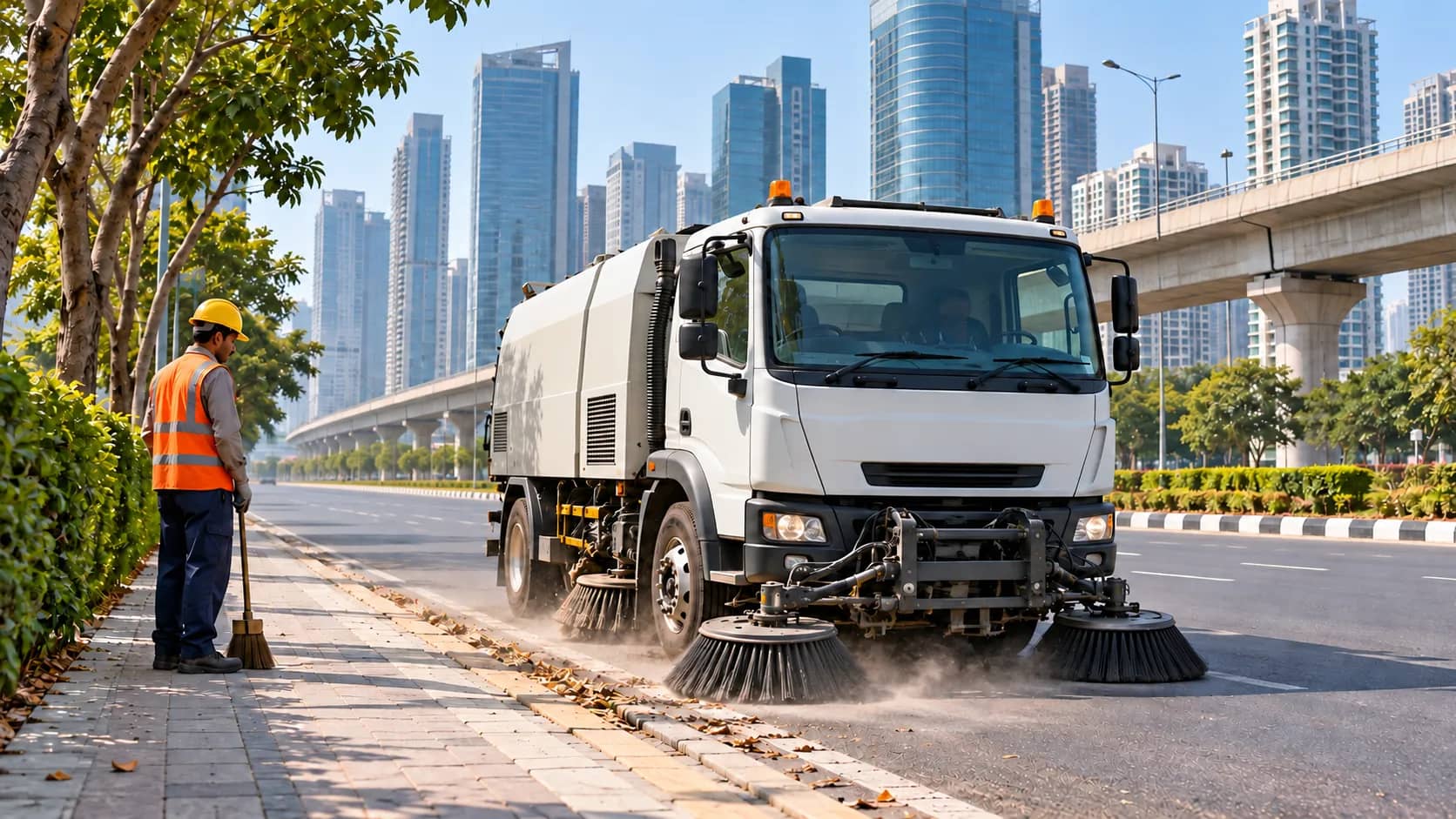
NHAI says it has deployed around 60 water sprinklers and tankers, 14 anti-smog guns, 23 mechanical road-sweeping machines, two tractor-mounted broomers and more than 900 workers for dust mitigation across the region. The release separately records 13 sweepers operating along 157 km of NCR highway stretches. These are regional figures, not an allocation solely to Gurugram or to either of the two corridors.
At the review, NHAI Member (Technical) Alok Deepankar directed field teams to deploy the equipment and workforce fully, carry out water sprinkling, operate anti-smog guns regularly and conduct daily mechanical sweeping. Officials were told to monitor the work every day and submit progress reports supported by photographs tagged with their locations.
The directions also cover keeping construction material covered and road surfaces free of dust, with stronger measures according to the applicable Graded Response Action Plan stage. The release describes maintenance activity and instructions. It does not provide a measured reduction in pollution attributable to the deployment.
Alongside the Dwarka and DND-Sohna expressways, the review considered Urban Extension Road II and the Delhi-Dehradun Expressway. It called for faster progress on proposed congestion-reduction projects and prompt handling of public complaints received through the Green Delhi app and social-media platforms.
NHAI also reported using about 13.58 lakh tonnes of inert material from Delhi's landfill sites in embankments for UER-II and DND-Sohna. Separately, it put NCR planting during financial year 2025-26 at around 9.80 lakh plants against a target of 9.52 lakh, with survival above 90 per cent. Those are reported regional totals, not results of the current winter deployment.
National standards for highway stops
The October 23 guidelines require technical assessments of existing toilet facilities before rehabilitation. The work can include repairs or replacement of flooring, plumbing, sanitary fittings, lighting, ventilation, drainage and signs. Cleaning schedules and housekeeping requirements are to reflect the size of the toilet block and the traffic it serves.
For women and families stopping at night, the measures include proper lighting, surveillance of approaches and parking areas, sanitary-napkin vending machines and visible signs for public amenities. Each covered toll plaza must have at least one universally accessible toilet, with barrier-free access, suitable doorways and grab bars.
Parking improvements include marked bays and drainage, with provision for future electric-vehicle charging infrastructure. This is a planning requirement, not an announcement that new chargers have opened at a named plaza.
The monitoring system is intended to track water, odour, sewage levels, leaks, power supply and toilet occupancy. Alerts for shortages, overflows and equipment failures will feed into corrective action. NHAI's central digital platform is to bring together facility conditions, maintenance, complaints and the performance of responsible agencies.
Feedback, inspections and cleaning safeguards
Highway users will be able to send feedback through QR codes connected to the Rajmargyatra app and touchscreens at facilities. Complaints and suggestions are to be recorded digitally so authorities can follow their resolution alongside maintenance information.
The guidelines require fully mechanised cleaning and desludging of septic tanks, soak pits and sewer lines. They expressly prohibit manual entry into septic tanks, manholes and sewer lines.
The inspection framework runs from daily supervision and weekly technical inspections to monthly joint reviews, quarterly audits and annual third-party assessments. Physical inspections, monitoring records and verified user feedback will inform performance checks. The ministry says deadlines and financial penalties apply to failures, but its announcement does not give the penalty amounts or a plaza-by-plaza completion timetable. Agencies that repeatedly fall short of the standards may face further action, according to the announcement.
Related Dalimss News reports explain the earlier weekly toll-facility inspection mechanism and the separate emission-control plan for Dwarka Expressway generators.