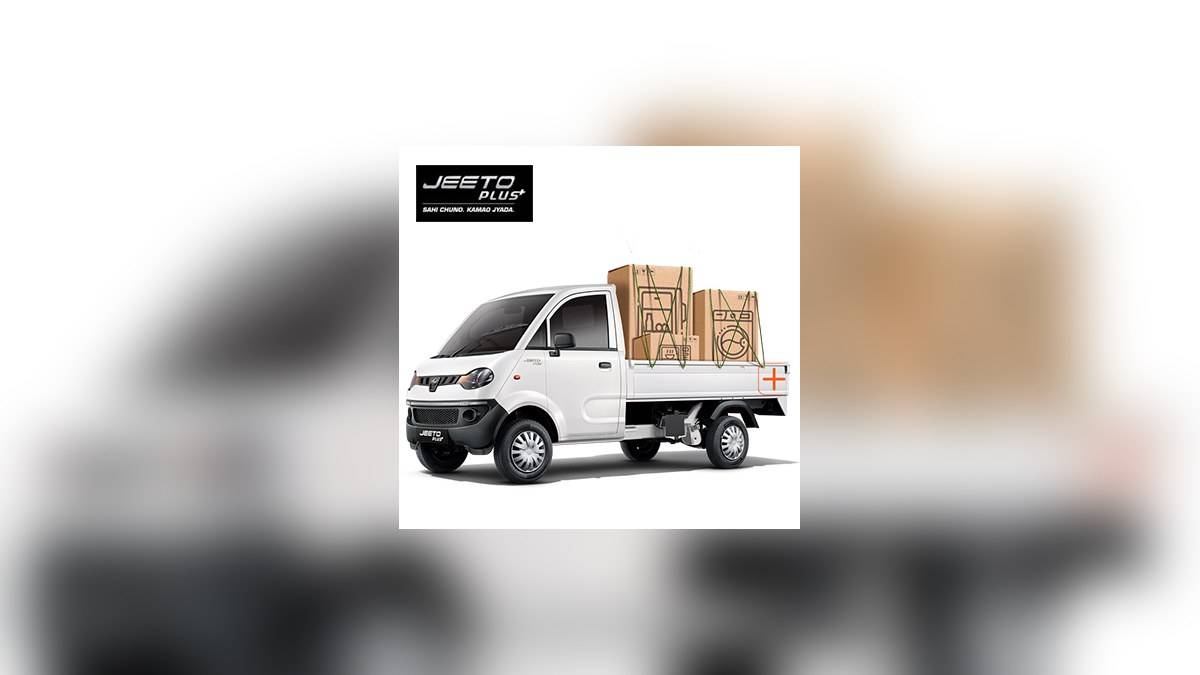
NEW DELHI: The Mahindra Jeeto Plus Petrol has a rated payload of 715 kg and a cargo box measuring 2,257 mm in length, according to Mahindra Last Mile Mobility's product page. Those figures describe different constraints: how much a consignment weighs and whether it can be arranged on the deck. For a small delivery business, both need checking before a route is assigned.
| Jeeto Plus Petrol specification | Official figure |
|---|---|
| Payload | 715 kg |
| Cargo box length | 2,257 mm |
| Engine output | 17.3 kW |
| Torque | 48 Nm |
| Manufacturer mileage claim | 21.2 km/l |
Start with the load, then check the deck
The petrol Jeeto's combination of a relatively long cargo box and a specified weight ceiling makes the loading plan more useful than a visual estimate. A consignment can fill the available floor while remaining comparatively light. Dense goods can create the opposite problem, leaving visible space even when the vehicle has reached its permitted loading limit.
For a kirana distributor, that means the delivery manifest should record the weight of the complete consignment, including its packaging. A stack of cartons that looks manageable is not a measurement. Returnable crates and other material carried with the goods also belong in the loading discussion. Empty space on the deck should never be treated as permission to add more weight.
The cargo box length is particularly relevant when the daily work involves items that must remain upright or cannot be stacked. Measure the actual packs rather than relying on their trade description. Mahindra's quoted length alone does not establish usable floor area, internal width, loading height or the clear opening around any subsequently fitted body.
Why the petrol version needs its own worksheet
Mahindra identifies this vehicle specifically as Jeeto Plus Petrol. Its figures should therefore stay attached to that name in a fleet spreadsheet. Using a generic Jeeto entry risks mixing specifications from different fuel versions. The same discipline matters when a dispatcher borrows a load plan prepared for another truck in the business.
Our separate explanation of the Mahindra BE 6 price list: Rs 19.45 lakh to Rs 26.95 lakh, XEV 9e from Rs 21.90 lakh covers that version. Its mileage figure belongs to that model, and should not be entered against the petrol version. Keeping the version name on the consignment sheet makes that distinction visible to the person doing the loading.
The published engine output and torque provide useful identification details, but neither is a substitute for the payload rating. Pulling away cleanly with a consignment does not prove that the load is appropriate. A vehicle's apparent ability to move goods and the manufacturer's stated carrying capacity answer different questions.
Fit is also about the delivery sequence
Consider a Jeeto Plus Petrol assigned to a mixed shop replenishment run. The issue is not simply whether all the cartons fit at the depot. Goods for an early stop must remain accessible without repeatedly shifting the rest of the consignment. A loading sketch tied to the actual box length can reveal an awkward delivery sequence before departure.
That is original route-planning context, rather than a claim that Mahindra guarantees a particular number of shops per trip. The useful exercise is to match the petrol Jeeto's own deck and payload figures to the business's real packaging. It avoids turning a catalogue specification into an unsupported promise of extra revenue.
Loading practices also need to suit the selected body and its approved arrangement. Operators carrying different goods on different days should retain a separate plan for each regular job. A layout that works for stackable cartons may be unsuitable for fragile packages, loose bags or items that require access from the side.
Mileage remains a claim, not a route budget
Mahindra lists the petrol model's mileage as a manufacturer claim. It should be recorded that way. A business cannot establish its actual fuel bill from the catalogue figure alone, because its own deliveries include waiting, traffic, unloading and the return journey. Logging fuel and distance during normal work gives the dispatcher evidence relevant to that particular route.
Owners reviewing support paperwork can use our separate Preparing a Jeeto Plus Petrol claim: 3 years or 72,000 km. For a useful comparison of how fuel versions change loading specifications elsewhere, see the Mahindra Bolero Neo price: Rs 9.06 lakh to Rs 10.85 lakh for five diesel variants.
The practical starting point remains the petrol Jeeto's own rating and box measurement. Put those against a weighed consignment, a measured package layout and the delivery order. That produces a working loading plan without assuming that every vehicle carrying the Jeeto badge has identical capabilities.
A useful handover between dispatcher and driver would show the same vehicle name and load description. If the consignment changes after weighing, the record needs revisiting. That avoids a familiar paperwork problem: a correct petrol Jeeto specification attached to a manifest that no longer describes what is on the vehicle.
Official source: Mahindra Jeeto Plus Petrol product page, checked on 8 November 2026.