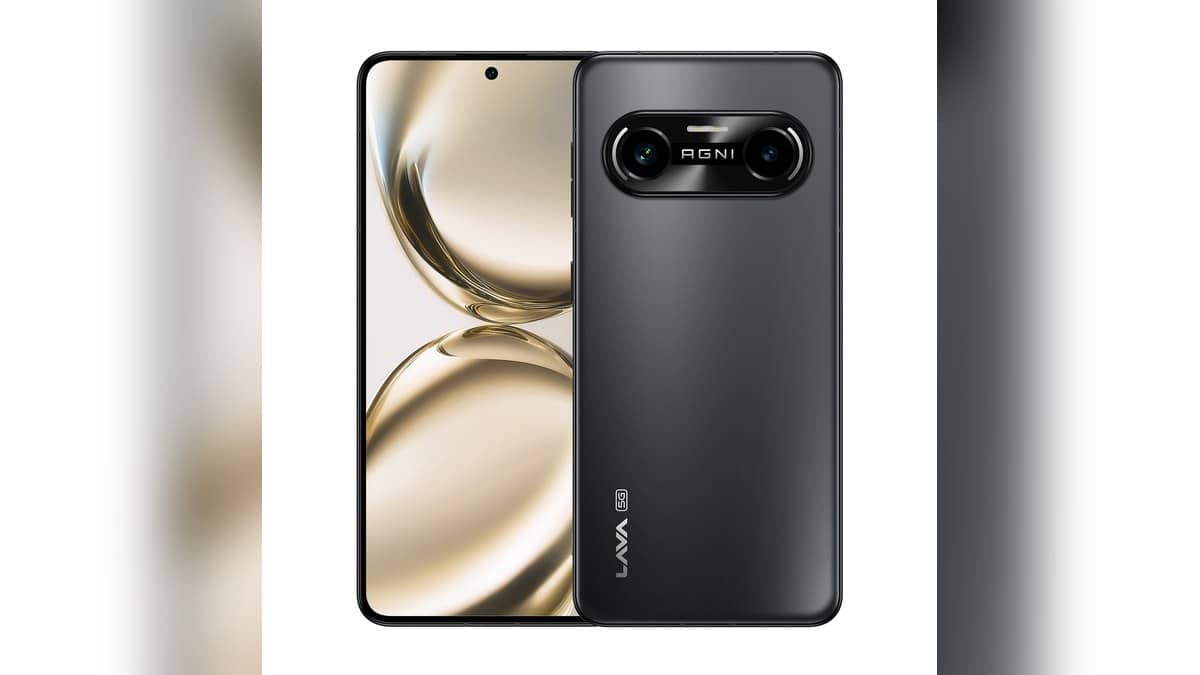
NEW DELHI: Lava's live Indian shop displays Agni 4 at Rs 31,999 and Agni 3 from Rs 21,999. Agni 3 starts lower, while Agni 4 lists a different processor, different memory and storage standards, and a stated software-upgrade commitment. Agni 3 retains its own distinctive dual-display and telephoto-camera features. Price as of 26 October 2026, 23:45 IST.
| Officially listed detail | Lava Agni 4 | Lava Agni 3 |
|---|---|---|
| Price basis | Rs 31,999, 8GB + 256GB listing | From Rs 21,999, range entry price |
| Processor | MediaTek Dimensity 8350 | MediaTek Dimensity 7300X |
| Memory standard | LPDDR5X | LPDDR5 |
| Storage standard | UFS 4.0 | UFS 3.1 |
| Display description | 6.67-inch, 1.5K, 120Hz AMOLED | 1.5K curved AMOLED; dual AMOLED design |
| Main camera | 50MP with OIS | Sony 50MP with OIS |
| Distinct listed feature | IR blaster | 8MP telephoto, 3x optical zoom |
A starting price is not a full variant list
Agni 3's catalogue entry contains storage and charger-package choices. Its entry price must therefore stay labelled as a starting figure. The page reviewed does not establish a complete, readable price for every package, so this comparison does not assign the same amount to all of them. Charger inclusion is part of the configuration, not a detail to assume from the model name.
Agni 4's catalogue identifies an 8GB physical-memory configuration with 256GB storage. It lists Phantom Black and Lunar Mist finishes. Lava separately advertises another 8GB of virtual RAM. That additional allocation should not be combined with the physical-memory figure when assessing the hardware configuration, even though both numbers appear together in the product description.
The distinction between a listed entry price and a fully matched configuration is relevant to anyone comparing the two on a budget. The headline establishes where each listing begins. It does not claim that the Agni 3 charger bundle or storage allocation is identical to the Agni 4 package at that amount.
Two different hardware approaches
Agni 4 combines its named processor with a vapour-chamber cooling system. The memory and storage standards in its listing also differ from Agni 3's. These are changes in the hardware platform, but the specifications alone cannot establish how quickly a particular editing app exports a file or how consistently a game runs through a long session.
For people using demanding applications, the relevant question is how the complete device behaves under that workload. A processor name, a cooling claim and a storage standard describe different parts of that picture. No independent gaming measurements, heat readings or application benchmarks were used for this report, so none are presented as established results.
Agni 3 takes a visibly different approach with its dual AMOLED design. Its main display is described as curved, and the phone also has a customisable action key. Agni 4 advertises a customisable action key too, alongside an aluminium-alloy frame and AG glass back. These details make the comparison broader than a simple difference in model numbers.
The telephoto detail matters
Both listings advertise optical stabilisation for the main rear camera, but Agni 3 explicitly lists a telephoto camera with optical zoom. That is a separate hardware capability, rather than a claim inferred from enlarging a photograph. The Agni 4 shop description checked here does not list an equivalent telephoto specification, and this article does not add one.
Agni 4 instead highlights a 50MP selfie camera as well as its main camera. Neither a sensor-resolution figure nor the presence of stabilisation establishes a photography winner. For another Lava configuration, the Blaze Curve price list provides a separate reference without conflating its specification sheet with the Agni range.
Software promises and availability
Lava states three years of operating-system upgrades and four years of security upgrades for Agni 4. These are manufacturer commitments, not an extra support period that automatically starts whenever a later customer makes a purchase. The listing also advertises a conditional replacement-at-home benefit. No unconditional replacement entitlement has been assumed from that promotional statement.
Both shop pages were marked unavailable when checked. For wider price context, see our realme GT comparison and iQOO Neo 10 and 15R comparison. Here, the verified distinction is between Agni 3's lower entry price and particular display and camera features, and Agni 4's separately listed platform and support commitments.
Official sources: Lava Agni 4 product page, Agni 3 product page and Lava product catalogue.