
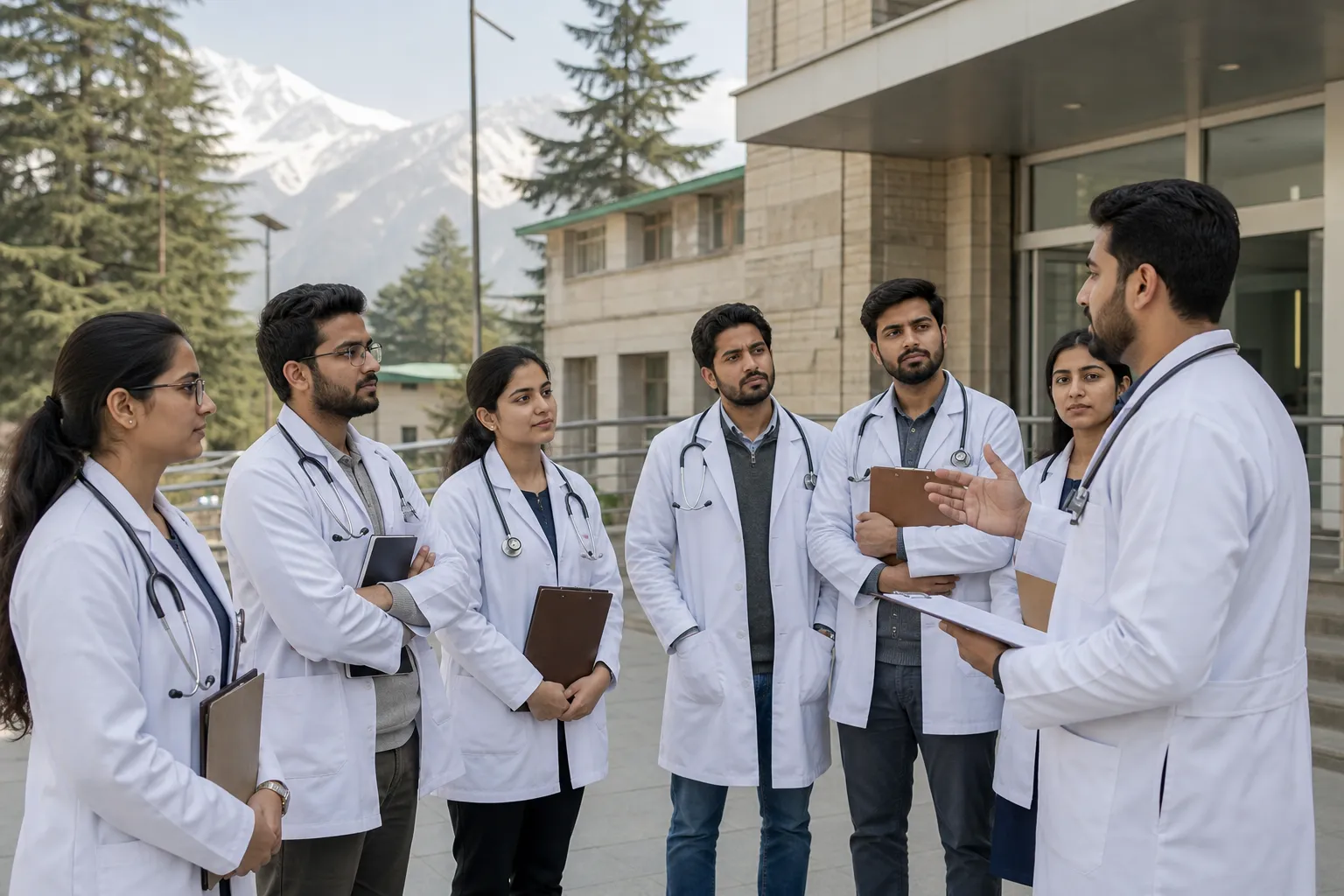
MBBS and BDS interns across government medical institutions in Jammu and Kashmir began an indefinite strike on Monday, demanding that their monthly stipend be increased from Rs 12,300 to Rs 30,000.
Interns held demonstrations at institutions in both Jammu and the Kashmir Valley. Reports named government medical colleges and hospitals in Srinagar, Baramulla, Handwara, Anantnag, Jammu, Udhampur, Rajouri and Doda, as well as SKIMS Bemina. The coordinated action turns a long-running representation over pay into a service and education dispute that the health department will have to address across institutions rather than campus by campus.
The protesters say the stipend has remained unchanged for nearly seven years even as living costs and clinical workloads have risen. Interns work in emergency departments, outpatient clinics and wards, including night duty and rural postings. They have completed the academic requirements of the MBBS or BDS course but must finish the compulsory rotating internship before full registration and the next stage of training.
What the interns are asking for
The headline demand is a monthly stipend of Rs 30,000. The Jammu and Kashmir Students Association has written to Chief Minister Omar Abdullah seeking his intervention and an immediate dialogue between the government and representatives of the protesting interns.
The association's letter supports the interns' account that the existing amount is no longer proportionate to their duties. The requested figure remains a demand, not an announced government revision. Students should be wary of social-media posts presenting Rs 30,000 as already sanctioned.
The dispute also raises a familiar problem in medical education: an internship is both supervised training and essential hospital work. A fair stipend has to recognise both. Treating interns only as students ignores the service they provide; treating them as regular employees ignores the supervision and competency requirements of the course.
Patient care and academic consequences
An indefinite strike can affect outpatient and ward routines, particularly in teaching hospitals that rely on interns for everyday clinical tasks. Senior doctors, residents and administrators may have to redistribute work to maintain emergency and essential services. The precise service arrangement can differ by institution, so patients should follow hospital advisories rather than assume that every department is closed.
For interns, prolonged absence from assigned rotations can also complicate completion dates. Any settlement should state how strike days will be recorded, whether rotations must be extended and how institutions will certify internship completion. Leaving those questions vague can turn a pay dispute into a delayed registration problem months later.
The government, for its part, will need to calculate the recurring cost across the full intern strength, not simply approve a figure for one college. A transparent response would publish the number of eligible MBBS and BDS interns, the current annual outlay, the basis for any revised amount and the date from which it applies.
A comparison needs like-for-like data
Interns have pointed to higher stipends in several other states. Such comparisons are relevant, but they should use the same category of trainee and the same year. Junior residents, postgraduate residents and compulsory-service doctors are paid under different rules, and their salaries should not be presented as undergraduate-intern stipends.
Cost of living, hostel availability and whether deductions apply also change the practical value of a headline amount. Rs 12,300 is particularly difficult for an intern who must rent accommodation or travel to a rural posting, while an institution-provided hostel can reduce—but not remove—the gap.
The strike began on 31 August with no reported settlement at the time of publication. The immediate need is for a recorded meeting between the health and medical education department and authorised intern representatives, followed by a written proposal that covers amount, effective date, arrears if any, attendance and essential services.
Until such an order is issued, the existing stipend remains in force and the Rs 30,000 figure remains the interns' demand. That distinction is central to understanding what has changed: the interns have escalated their protest; the government has not yet announced the pay revision they seek.