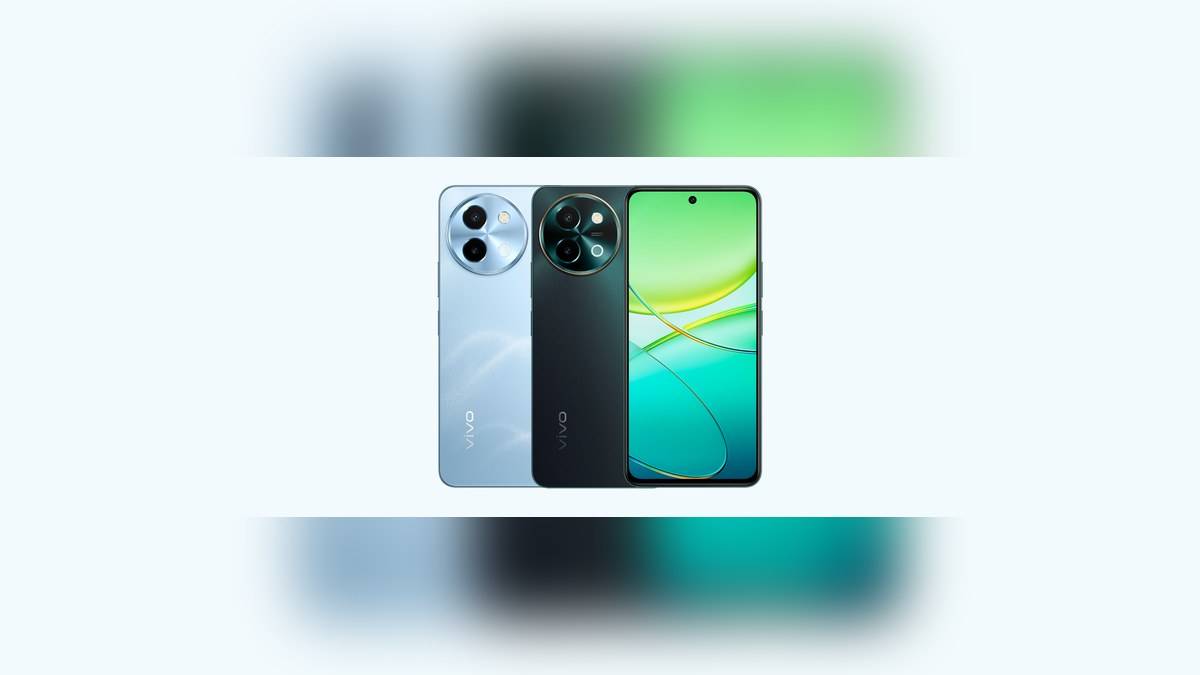
NEW DELHI: The vivo Y58 5G is listed at Rs 17,499 for 8GB RAM and 128GB storage, while the iQOO Z9x 5G begins at Rs 17,999 for 4GB and 128GB on their official India stores. Both publish 6000 mAh typical batteries and 44W charging, but different processors and a RAM-dependent video feature make this more than a comparison of battery sizes.
| Phone and variant | Displayed price | Verified selection |
|---|---|---|
| vivo Y58 5G, 8GB + 128GB | Rs 17,499 | Sundarbans Green |
| iQOO Z9x 5G, 4GB + 128GB | Rs 17,999 | Storm Grey |
| iQOO Z9x 5G, 6GB + 128GB | Rs 18,999 | Tornado Green |
| iQOO Z9x 5G, 8GB + 128GB | Rs 19,999 | Storm Grey |
Price as of 7 November 2026, 00:24 IST. These are displayed product prices, without subtracting exchange values. The Y58 price is the selling figure shown on its page, rather than the higher MRP alongside it. A listed price does not establish immediate delivery availability, and the selections above identify precisely what was checked.
The memory comparison changes with the version
At entry level, the Y58 offers more physical RAM than the Z9x selection. At the upper end of the Z9x range, their advertised physical memory and storage capacities match. That makes it important to name the configuration when comparing the phones. Using only each model's cheapest price can conceal a substantial difference in the specification being compared.
The Y58 uses Snapdragon 4 Gen 2; the Z9x uses Snapdragon 6 Gen 1. These are different platforms even though both phones advertise similar battery and display specifications. This desk has not run a matched performance test, so the processor names are not being converted into a promise of a particular frame rate or an app-opening advantage.
For related examples of why a named configuration matters, see our vivo T5e and T5x comparison. Its conclusions belong to those models, while this comparison uses the specific Y58 and Z9x versions in the table.
Z9x video has an important RAM condition
The Z9x product page advertises 4K recording, but its footnote says that feature takes effect only with at least 8GB RAM. Consequently, the entry Z9x should not be described as having every advertised camera capability of the highest-memory version. A person recording school events or family functions needs to check the hardware configuration as well as the model name.
The official camera specifications otherwise look similar on paper: each lists a 50MP main rear camera, a 2MP secondary camera and an 8MP front camera. Those shared resolutions do not establish identical processing, exposure or video functions. Equally, the Y58's camera list alone is not evidence that it shares the Z9x's specific recording mode.
This is the most consequential wrinkle in the comparison. Paying for the Z9x's upper memory option can affect access to a named video capability, rather than merely providing more room for active apps. It also means a review of the upper version cannot be assumed to describe the recording menu on every cheaper Z9x.
Similar screens and batteries need careful interpretation
Both specification pages describe a 6.72-inch LCD with 2408 by 1080 resolution. Both product pages advertise refresh rates reaching 120Hz. Those similarities establish screen size, pixel dimensions and a refresh ceiling; they do not prove identical calibration or brightness behaviour under the same conditions.
The battery and charging figures also match at headline level. However, equal capacity does not settle which phone lasts longer under a mixed workload. Processor behaviour, reception, screen settings and the apps in use can affect the result. Neither brand's single-scenario endurance claim is a substitute for a controlled comparison of the two handsets.
Our battery-capacity explainer provides background on reading these labels. Here, the comparison consistently uses the published typical capacities, rather than mixing one phone's typical figure with another's minimum capacity.
Shared everyday features, separate decisions
Both models list a hybrid SIM arrangement and support for memory-card expansion. That matters for users who need separate work and personal SIMs: the shared tray position introduces a choice between the second connection and a card. A larger removable card is not an automatic addition to a full dual-SIM setup.
Both brands also advertise stereo speakers and IP64 protection. Their water-resistance footnotes caution that protection can reduce with use, prohibit charging a wet handset and exclude liquid ingress damage from warranty. A shared rating should therefore be understood with those limitations rather than treated as protection against every water exposure.
The published software documentation identifies Funtouch OS 14 based on Android 14 on both. That is a product-sheet description, not an inspection of an individual unit's installed build. Later software announcements are covered separately in our iQOO rollout report.
On the verified listings, the Y58 starts lower and provides its single listed memory configuration. The Z9x has a broader RAM ladder, a different processor and the recording condition described above. Those are the concrete differences to preserve when comparing these two otherwise similar-looking specification sheets.
Official sources: Y58 store page, Z9x store page, Y58 specifications and Z9x product page and footnotes.