VARANASI: IIT (BHU) has joined C-DOT's national network of Centres of Excellence through a new research partnership covering advanced wireless communications, artificial intelligence, quantum technologies and cybersecurity. The Ministry of Communications announced the agreement on October 23, describing the Varanasi centre as the sixth in the telecom research organisation's network.
The ministry's announcement through the Press Information Bureau, issued at 2:15 pm, says the memorandum of understanding was followed by the centre's inauguration. Its purpose is collaborative research and technology development, alongside building specialised skills.
What the Varanasi centre will research
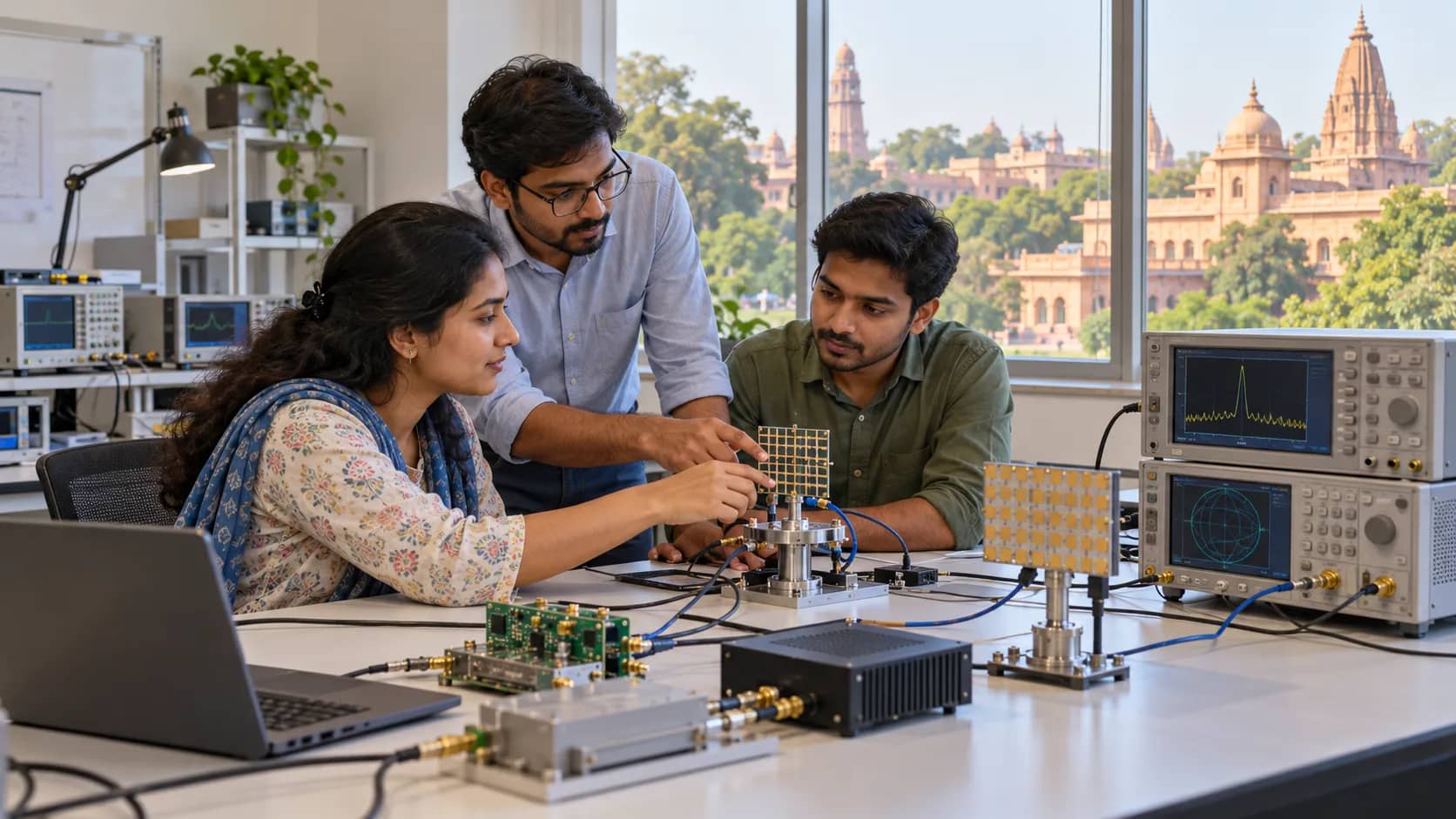
The planned work includes 5G Advanced and 6G technologies, very large-scale multiple-input multiple-output systems, integrated sensing and communication, and AI-native communication networks and devices. Quantum and post-quantum communication technologies are also named in the research agenda.
C-DOT, the Centre for Development of Telematics, is the Department of Telecommunications' telecom research and development organisation. The partnership is intended to connect its technology requirements with IIT (BHU)'s academic research. The ministry says researchers, faculty members, students and C-DOT technology specialists will work together on joint research and exchange knowledge.
For the institute, the local significance is that the collaboration gives its research community a formal platform to engage with problems in telecommunications. The stated aim is to connect academic work with practical technology needs and develop indigenous systems for India's communications infrastructure.
The signing took place in the presence of C-DOT executive vice-president Pankaj Kumar Dalela and IIT (BHU) director Professor Amit Patra, along with institute faculty and senior C-DOT officials.
A sixth centre in a wider research network
The existing C-DOT collaborations listed in the release are with IIT Kanpur, IIT Gandhinagar, IIT Roorkee, IIT Hyderabad and IISc Bengaluru through FSID. Varanasi adds another institutional location to that network. The ministry describes the centres as supporting future communications research, knowledge exchange and specialised talent development.
C-DOT chief executive Rajkumar Upadhyay presented the collaboration as an investment in technology capabilities involving artificial intelligence, quantum research, advanced wireless systems and intelligent networks. Patra said it would allow students and researchers to engage with real-world telecommunications challenges.
The centre also arrives amid broader work on India's future communications agenda. In a separate October 8 announcement, the ministry reported the release of nine Bharat 6G Alliance working-group white papers at the International Bharat 6G Symposium in New Delhi.
The white-paper subjects included integrated sensing and communication, security for 6G, optical technologies, spectrum readiness and a roadmap for research, platforms and trials in India. Other papers covered fixed wireless broadband, sustainable networks, cellular and Wi-Fi integration, and captive non-public networks, illustrating the range of technical questions being examined alongside sensing and security. The symposium also involved five new cooperation agreements and a report reviewing one year of progress under the New Delhi 6G Declaration.
Where this research fits in 6G development
Two of the centre's named research themes, AI and communication, and integrated sensing and communication, also appear among the six uses envisaged in the International Telecommunication Union's IMT-2030 framework. IMT-2030 is the international designation for 6G. The framework also covers immersive communication, highly reliable low-latency communication, massive communication and ubiquitous connectivity.
The ITU's current development page says its Working Party 5D completed draft performance requirements in February 2026 and draft evaluation guidelines in June. The evaluation work includes factory and urban sensing environments, relevant context for researchers examining how communication and sensing can work together. Both draft reports were submitted to the parent study group for consideration in December 2026. The evaluation guidelines distinguish simulation, analytical assessment and inspection as different methods for testing candidate systems.
The same ITU page sets February 2027 to February 2029 as the submission period for candidate radio technologies. That is an international standards timetable, not a deadline assigned to the Varanasi centre. It helps explain why this announcement concerns a research institution rather than an imminent 6G service.
Participation details still awaited
The October 23 release does not specify a budget, staffing number, recruitment window, application process or student intake for the centre. Readers interested in joining its work therefore do not yet have a centre-specific application route in this announcement.
For other institutional opportunities, Dalimss News has reported research-employment notices at IUCTE and IIT-BHU and IIT (BHU)'s even-semester PhD application timetable. These are separate notices, not applications to this centre.