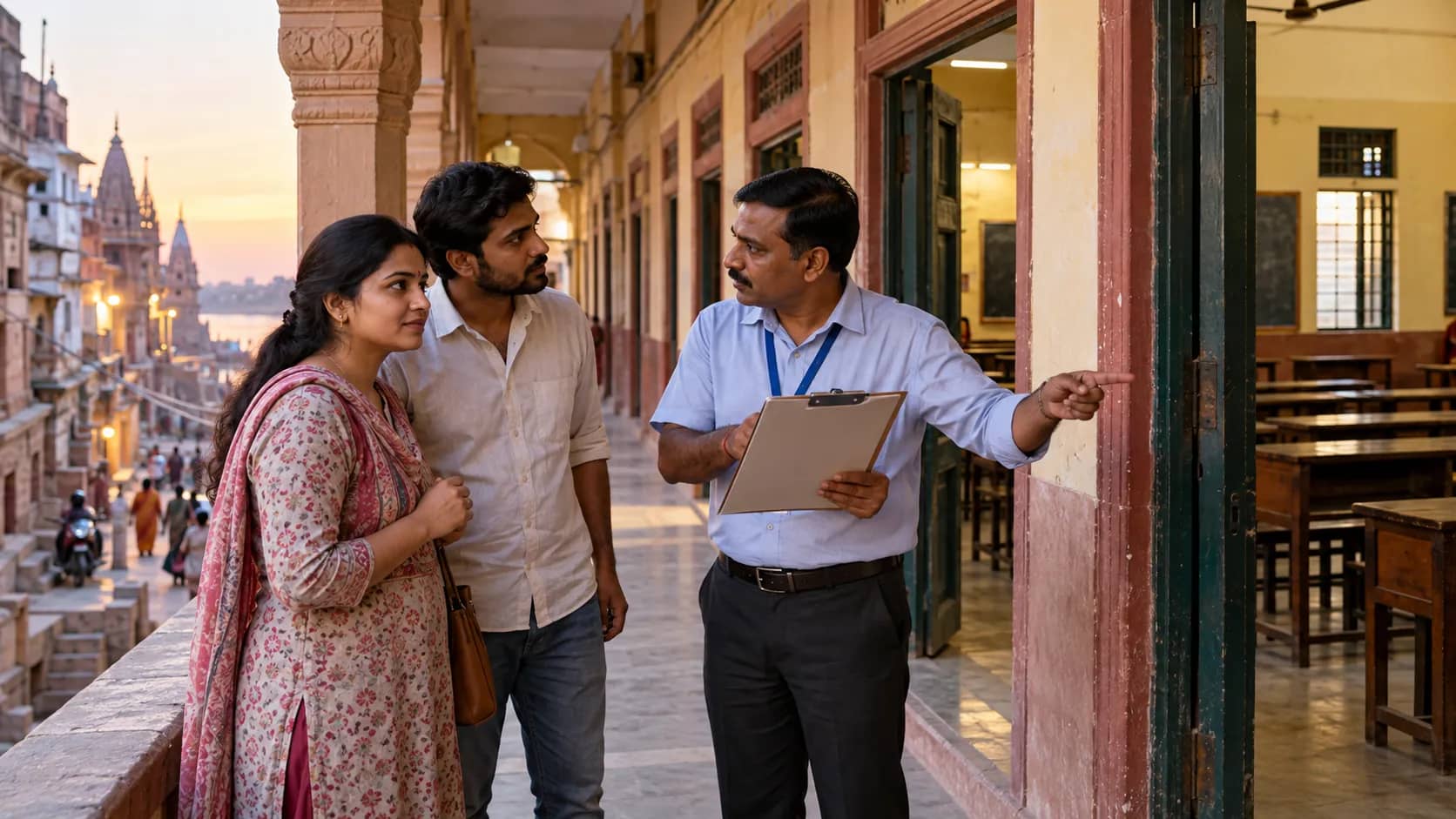
Varanasi’s district administration has published draft polling-station lists for all eight Assembly constituencies, giving residents a constituency-wise record of proposed polling premises, room numbers and the localities attached to them. The official publication is dated October 19, 2026. The documents are available through the District Election Officer’s portal on the Varanasi district website.
The eight files cover Pindra, numbered 384; Ajgara, 385; Shivpur, 386; Rohaniya, 387; Varanasi North, 388; Varanasi South, 389; Varanasi Cantonment, 390; and Sevapuri, 391. The district’s index also identifies their Parliamentary constituencies: Pindra falls under Machhlishahr, Ajgara and Shivpur under Chandauli, and the remaining five under Varanasi.
The room number matters, not just the building
The tables separate the location of a polling station from the area it serves. Alongside each serial number, they identify the building and room, the polling area, the number of electors shown against that station, and whether the entry is for all voters or only men or women. Separate columns record floor area, entrance and exit arrangements, and maximum travel distance.
That format means one familiar building can appear several times, with different rooms or neighbourhood coverage. A resident checking the draft should therefore read across the row rather than stop at the name of a nearby school or public building. The locality and polling-area columns are not interchangeable.
In Varanasi North, the opening entries place stations 1 to 4 in separate rooms of Guru Nanak English School at Bharlai, Shivpur. Stations 5 to 8 list four rooms at St Joseph School in Bharlai. All eight entries identify Bharlai as their polling area, while retaining separate station numbers and elector counts.
The distinction becomes clearer at Mahesh Vidya Mandir in Tarna. Station 9 lists room 1 and Tarna Khas as its polling area. Stations 10 and 11 list rooms 2 and 3, respectively, with Tarna Bazar as the area served. The draft therefore provides more detail than a single school name or a broad neighbourhood label.
What the South and Cantonment files show
In Varanasi South, stations 298 to 301 are assigned separate rooms at Gopi Radha Balika Inter College in Ravindrapuri. Their coverage differs: room 1 includes Nawabganj and Deendayal Nagar Colony, while the fourth room’s entry lists Brahmanand Nagar, Tulsi Manas Mandir and Saket Nagar, with Shakti Nagar in brackets. The intervening rooms have their own Nawabganj entries.
Nearby Durgakund also has several entries within one institution. Stations 302 to 305 list rooms 1 to 4 of the primary school at Durgakund. The polling-area column distinguishes the Brahmanand Nagar and Tulsi Manas Mandir side, Durgakund and Gurudham, and two separately described Kabir Nagar colony areas. Residents should use the exact row in the PDF for the detailed coverage description.
The Cantonment draft lists stations 430 to 433 in rooms 1 to 4 of Cantonment Board Model Primary School. The first entry serves Sadar Bazar; subsequent entries specify parts of Sadar Bazar and associated colonies. Rooms 3 and 4 include Ambedkar Colony and police quarters in their coverage descriptions. These are separate entries even though the institution name is shared.
The same file places stations 435 to 440 at the old Kabir Math site in Lahartara, with separate room or hall designations. Each of those rows identifies partial Lahartara coverage. This is another reason to check the station number and the detailed area together, rather than assume every voter in a locality belongs to one room.
Where to find the correct document
On the official DEO portal, select “List of polling stations published on 19.10.2026”, then the relevant Assembly constituency. The portal still carries an older July 4 draft-list link, so the publication date matters. It separately lists electoral rolls and Graduate and Teacher constituency records; those are different documents from this Assembly polling-station draft.
The district also publishes an Election Office directory identifying the Electoral Registration Officer for each Assembly seat. Readers seeking clarification can use that official directory rather than treating the illustrative locations above as a complete constituency list. This publication describes polling arrangements, not an individual voter’s registration status.
For related public-service coverage, read Dalimss News on Varanasi’s voter-inclusion camps and the separate Census self-enumeration timetable.